
The approval of Proposal 792 marks a momentous milestone in the history of the Cosmos ecosystem: the Neutron blockchain will be the first to adopt Replicated Security (originally Interchain Security). This step makes Neutron the first consumer chain to benefit from the Cosmos Hub validator set, which, as we know, is in the top ten most secure PoS networks in the crypto landscape.
Neutron was created to be the leading network for the development and launch of permission-less interchain smart contracts. Implemented with Cosmos SDK technology, the Neutron network natively supports CosmWasm, a virtual machine that allows contracts to be developed in various programming languages such as Rust and AssemblyScript. Smart contracts developed with CosmWasm benefit from a wide range of testing tools, are simple to launch and update, and can be easily revised.
The Replicated Security adoption allowed Neutron to contain the high costs of supporting its own set of validators, and thus concentrate solely on product development. Thanks to this new protocol, Neutron will enjoy the security provided by the 175 validators on Cosmos Hub and, in return, provide them (and their delegates) with additional rewards in the native NTRN token.
The launch
A few days ago, Neutron began producing blocks, officially starting the warm-up period, which will last for a two-week period. During this phase, projects and validators will have to test the stability and security of the network, as well as optimise the dApps that will be launched on the platform. In this phase, transaction fees will be paid in ATOM, since the network’s native token, NTRN, will only come into circulation in the next phase.
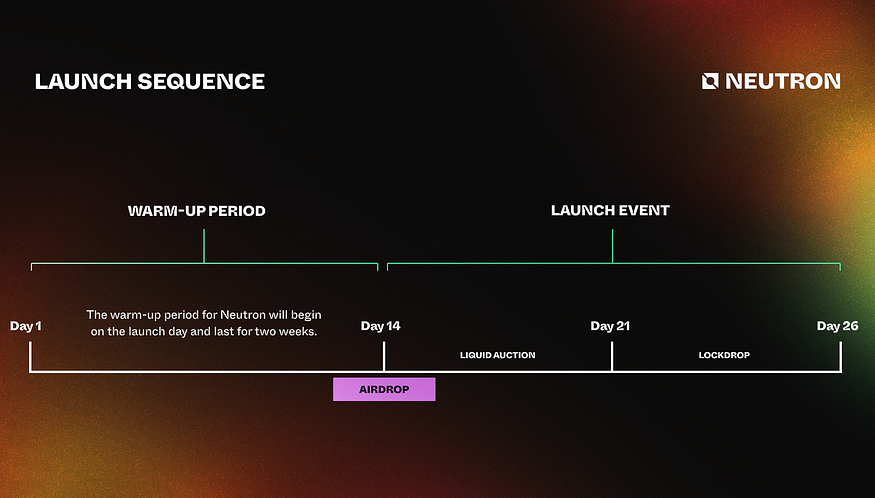
Once the warm-up is over, the actual launch will begin, consisting of three key events:
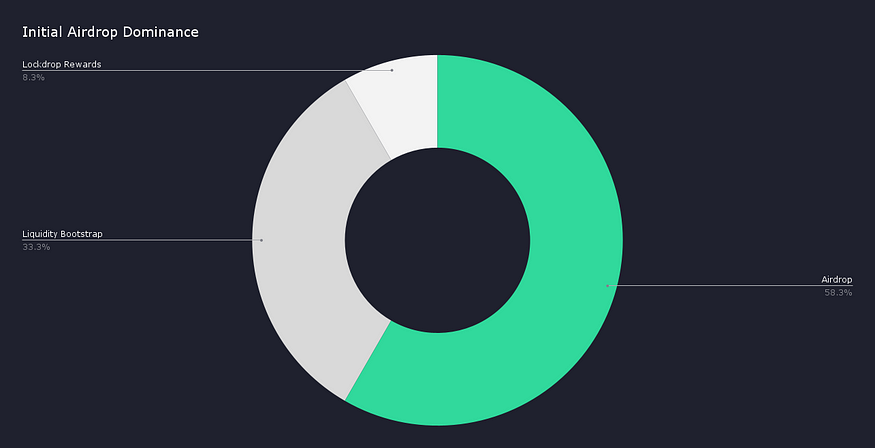
- Airdrop (70 million NTRN): eligible users will have three months to claim. The tokens obtained will be bound for 3 months and initially only grant the holders voting power in the governance of the network;
- LP auction (40 million NTRN): starting on the day of the airdrop and for one week, participants in this event will be able to provide liquidity through ATOM and axlUSDC to enter the two liquidity pools that will be made available: NTRN-ATOM and NTRN-axlUSDC.
- Lockdrop (10 million NTRN): one week after the auction, users will be able to lock up liquidity tokens obtained in the previous event for a certain period of time to obtain NTRN rewards, which will be distributed at the end of the launch event. Through the lockdrop, users who benefited from the airdrop will be able to release a portion of tokens from vesting: for every NTRN obtained from the lockdrop, they will receive one from the airdrop.
The Airdrop
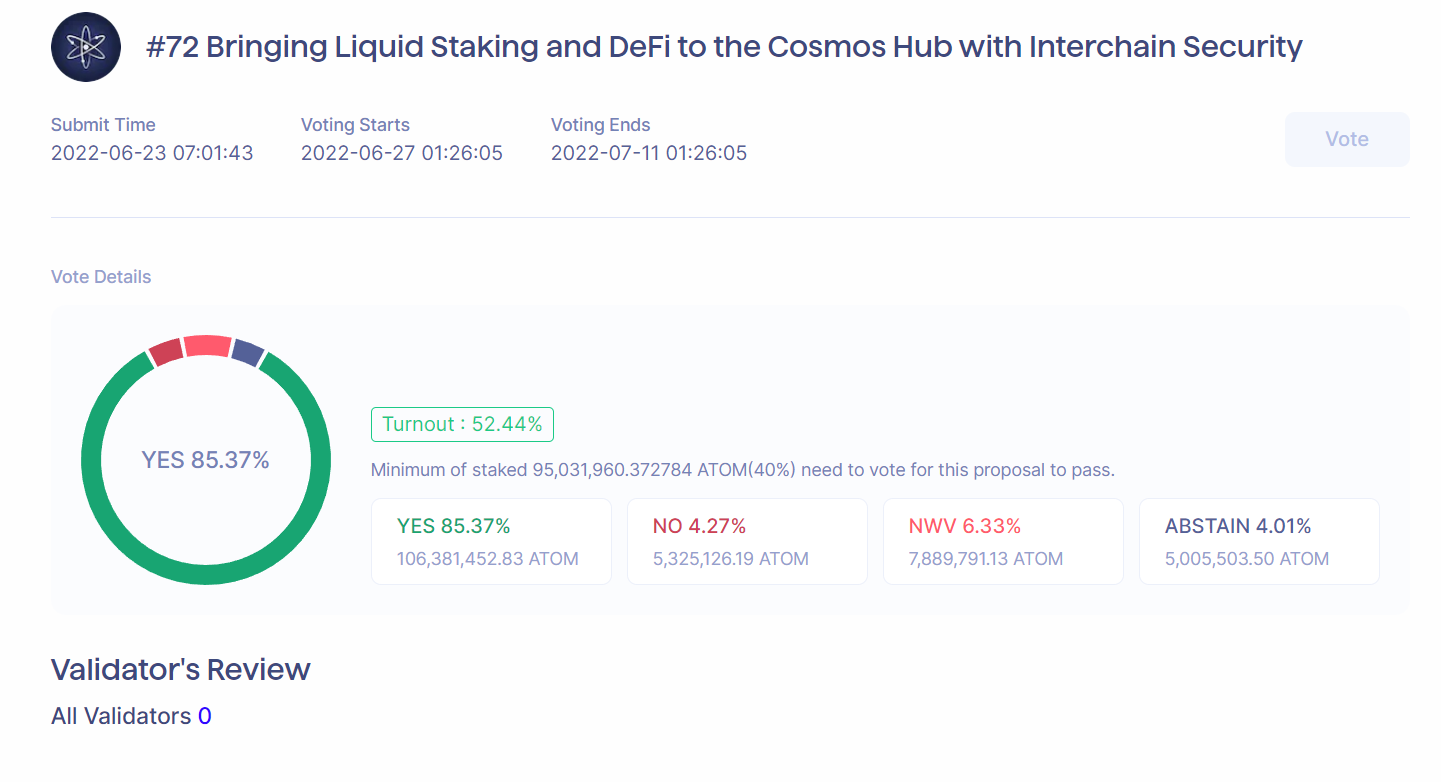
More than ever, is it good to say a few words about the airdrop, in specific about the mechanism for choosing beneficiaries and calculating the allocation. As the more informed cosmonauts will know, in July 2022, Proposal 72 on the Cosmos Hub was voted on and approved, which allocated as much as 50,000 ATOM for the development of the Neutron blockchain. In gratitude to the community, Neutron decided to allocate 70 million tokens (7 percent of the total supply and almost 60 percent of the initial supply) to ATOM stakers:
- 40 million NTRN are earmarked for those that held at least 1 ATOM in staking at the time of the snapshot (19 November 2022);
- 30 million NTRN are instead reserved for those who took part in the Proposition 72 vote, regardless of how they voted.
As is now customary in the Cosmos ecosystem, wallets that have delegated their tokens to validators traceable to centralized exchanges are excluded. U.S. residents are also excluded from airdrop due to the current regulation in the country.
Concerning the calculation mechanism for the distribution of airdrop, the team tried to find a balance between a fair distribution (which is not unbalanced in favor of the large holders) and the risk of manipulation by Sybil accounts (large accounts splitting their staking positions between several sub-accounts). To do this, the amount of NTRN received will be weighted linearly according to the ATOM staking of each account. In this way, the amount of airdrop remains the same, regardless of the number of addresses into which the staking position is divided.
Finally, a minimum staking threshold (1 ATOM) was set to eliminate ‘dust’ wallets, estimated to be around 38% of all those on Cosmos Hub, and a maximum threshold of 1 million ATOM, to exclude the 25 or so ‘richest’ wallets and increase the allocation for eligible users. To ‘unearth’ any whales staking positions in multiple wallets, Neutron will organize a hunt for ‘Sybil accounts’, in which these wallets can be reported by the community or, in the case of the most honest, self-reported.
Conclusions
These distribution choices underline how important (and profitable) it’s in the Cosmos universe to contribute to network security through staking and to participate in governance through on-chain voting. The mechanisms for rewarding the most virtuous members of the community, as we have seen, are becoming increasingly sophisticated. Even the choice of token vesting, in my opinion, is far from wrong (however criticized). Every project has the right to protect itself from the risk of seeing its token immediately dumped by the recipients of the distribution. On the other hand, their token, their rules.
Decentralized finance desperately needs more security to attract new capital and Replicated Security seems to be a potentially winning solution. Neutron has the burden and the honor of being the first consumer chain in the Hub Cosmos. Will it be able to establish itself as a major player in the universe of cross-chain smart contract platforms? We will soon find out. In the meantime, let us prepare for the arrival of NTRN, the launch event is just around the corner.
This article was originally published here.
Sources:
https://www.stakingrewards.com/
Follow me on Twitter: @ifiwasfrank






