
Communist countries in Europe were poor, and opressed. Lands and means of productions got nationalized. Everyone knows how communism worked: shortages, lack of basic goods, technology, housing, opression of free oppinion. After the Hungarian revolution in 1956, which the soviets crushed, however, a compromise has been made. The Hungarian culture was incompatible with communism. The new Hungarian leadership partially gave up building communism, in exchange for keeping the country under the warsaw pact. Private business were allowed in Hungary, and personal level of freedoms were mostly restored.
In the Soviet Union, or East Germany, Czechslovakia, the policians followed a hardline communist doctrine. These countries were industrial superpowers on paper, the Soviet Union managed to put the first satelie on orbit, and put the first man in space. They were however unable to put a piece of meat into the people's refridgerators, so people can't ate properly. They failed to put the refridgerators to people's kitchens either. They mostly failed to make kitchens too... Typical soviet workers lived in shared apartments, where multiple families shared the same tiny house with a shared bathroom and toilet.
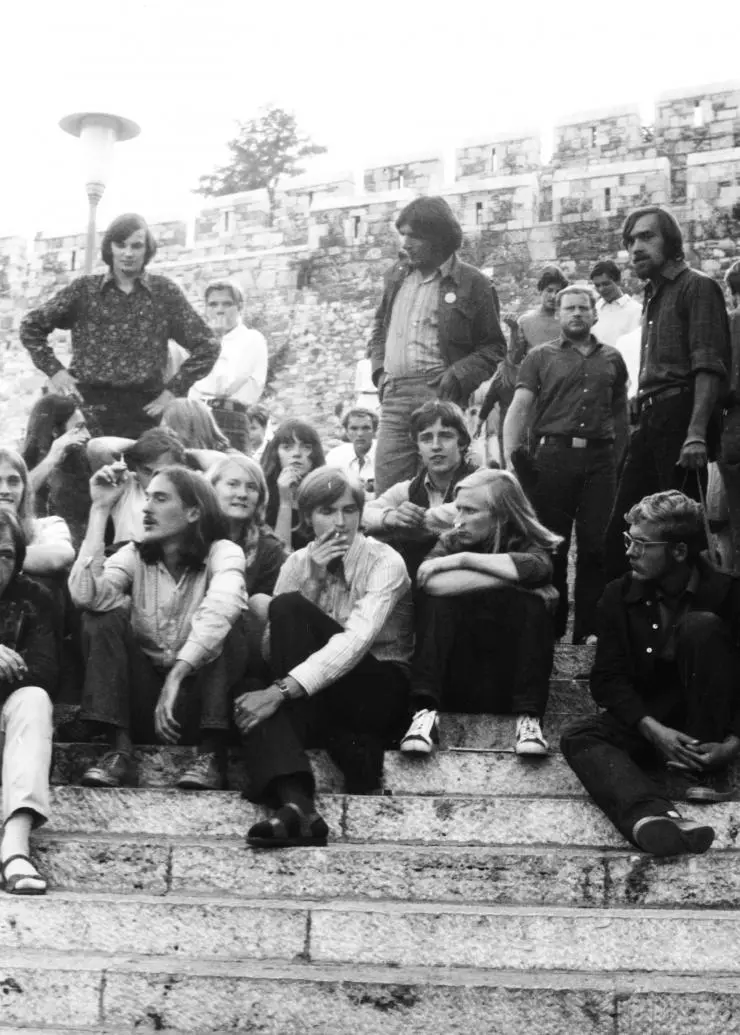
image: Hungarian youth chatting -picture from Fortepan
Basic items
People had to stand in lines to buy soap for hours. Proper quality of food was non-existent. In the soviet union, people had to wait for months to receive boots. Shelves were empty. Westerner brands were non-existent. Domestic brands were unexistent too, as communist nations didn't allowed private business, those who had no connections, or had no means to use as a bribe, had serious issues to buy basic neccessities. People had to be creative: they had no toilet paper, so they had to wipe their asses with newspapers.
Television and radio
People were able to buy television and radio. The television and radio was important for the state, so the state propaganda could be heard everywhere. Nothing else were available tho. Every channels were about strictly controlled propaganda: the greatness of communism, the increasing production numbers, fighting against imperialism. Movies served party propaganda, a conclusion of a movie were always to praise socialism, and these movies were unwatchable. Most cartoons were about grailing the communist system as well, such as Sandman in Germany. Watchable TV shows were existing, but rare, such as Masha, or Nu Pugodij. Entertainment was non-existent. The everydays were boring.

Illustration: Hungarian TV casually airing the local F1 race
Clothing and apperance
Clothes were made from cheap materials and leftovers of military factories reallocated for civil usage. Western clothes and western styles were banned, and viewed as anti-communist. Jeans, leather, and other high quality clothes were banned, and viewed as a symbol of capitalist decay. Wearing these in public would lead to being arrested. Hair style were strictly controlled. Communist countries heavily penalized the so called punk style. The soviet youth police could have dragged the soviet youngsters and forcefully cut their hair, and destroy their clothing, if it was considered provocative or anti-soviet.
Travel ban
Soviet citizens were not allowed to travel freely. Even traveling to other socialist countries required strict permits, and it was heavily restricted. A soviet tourist had to be accompanied by a handler all the time. Western travels were non available for ordinary citizens at all. Just like in today's North Korea, leaving the country illegally were considered a crime. This was most heavily enforced in East Germany, where they simply shot the "defectors" on the border. Speaking to a westerner in East Germany alone, was considered to be a crime. Smuggling or owning westerner literature or any sort of westerner products influenced by the western culture, were illegal in communist countries.
Crackdowns
Detaining young people on the streets and searching their pockets to find westerner products were routine. A pack of Marlboro tobacco, chewing gums, rock, metal and punk music tapes were the sign of anti-soviet behavior, which resulted an arrest on the spot. Listening to metal music were considered a mental illness. Wearing jeans were considered burgoise degeneracy. Having an oppinion on something which contradicted the communist doctrine, was considered illegal agitation, and was a straight road to a prison camp, or losing job, or being expelled from school.
Then they visited Hungary, unprepared what they will see...
When a Soviet, an East German, Romanian, or Czechslovak tourist first stepped out from the bus, or from the train, they usually thought they accidentally landed in some West European country. When they stepped down from the train, they have seen things they couldn't imagine at home. Hungarian men were walking confidently in jeans, leather jackets. Boys wore leather jackets with studs and chains. Girls wore erotic clothes hugging their curves and showing their skin: with modern terms, Hungarian girls wardrobe would be considered gothic loli fashion, or punk-rocker in leather skirts. People walking with walkmans and listening to loud rock music. In contrast, the outdated soviet clothes looked like wortless trashbags, and they instantly realized by just looking at Hungarians, the indoctrination about communism are a lie. Some tourists just sat for hours on the train station to observe the people, shocked and mesmerized by what they saw.
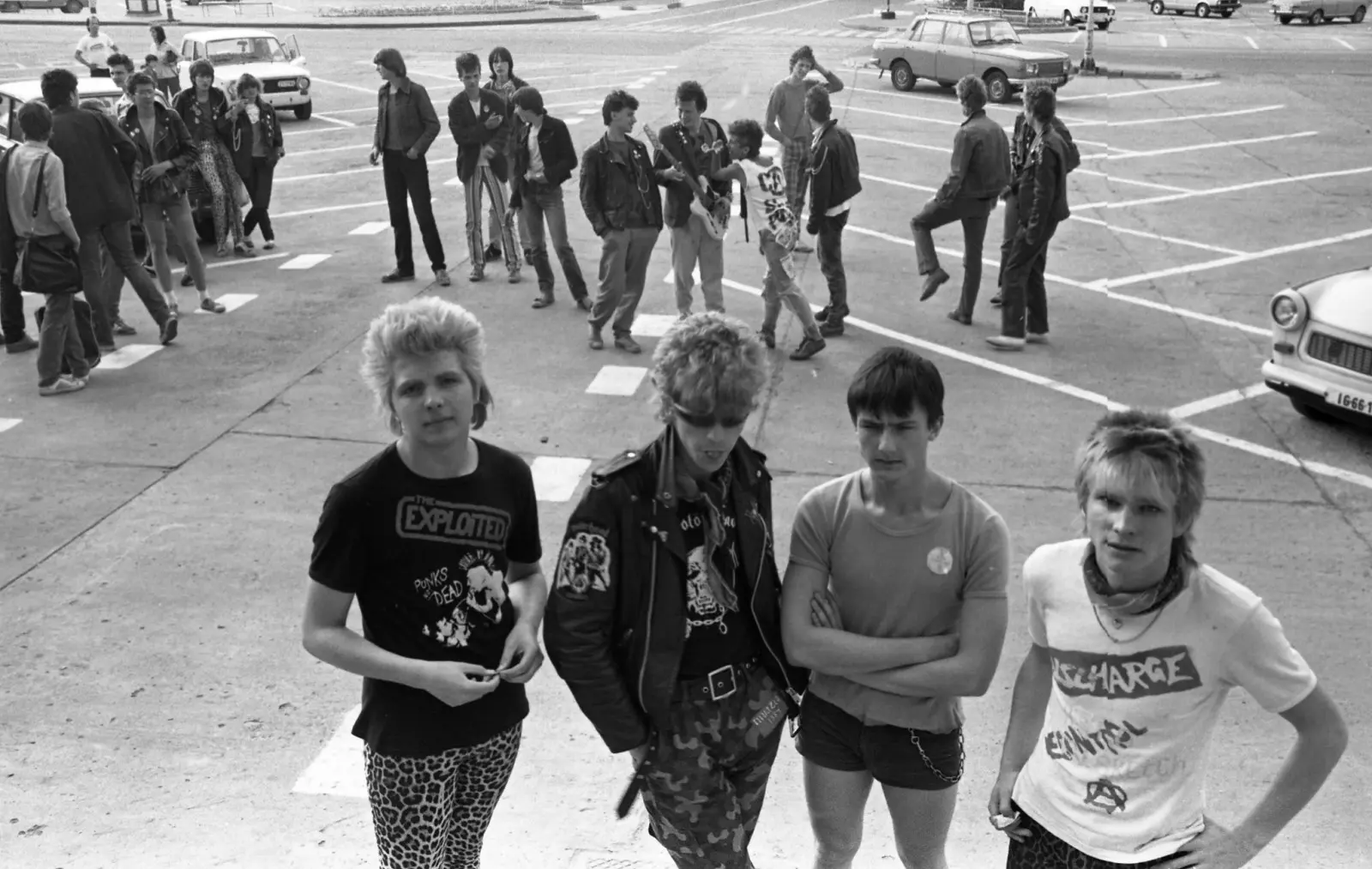
Picture: Hungarian youngsters -picture from Fortepan
From the aspect of a soviet, clothing having sexual appeal was unheard of. In Hungary, the clothing was to serve the erotic desire. Boys with unbottomed vests, pamut pleated shirts, and girls with mini skirts emphasizing their asses in tiny bras and corsets, stylish hair cuts and makeups. The tourist felt themself to be teleported to a different planet which was based on an american movie. People were happy, girls and boys publicly kissing, hugging each other on the steets. In the soviet union, everyone would be arrested for openly expressing sexuality, decadency, or westernish style, and here this was just a normal day.
When visiting a shop for the first time, the soviets had to be dragged out by their handlers, because they tried to buy as much soap as they could in the first hours of their visits. The handlers had to explain to them, the shops will be there the next day as well, and they shouldn't buy the nonsense. There are stories where an older soviet women stepped into a Hungarian shoe shop, and started crying. At her home, she was already on a waiting list to buy some boots for herself. Here she saw about 500 pair of shoes casually waiting on the shelves to be bought.
Shelf shock
In communist countries, shops were rigind, and sellers were rude and condescending. In hungary, when tourists entered to buffets to eat hungarian foods, such as lángos, they were surprised how friendly the seller was. They were shocked when they learned the seller is actually the owner of the shop, and this form of private capitalist is existing in Hungary, where they are selling their own products. Tourists were surprised when the sellers of butiques and cloth shops friendly approached them to ask them what clothes they want and what they sizes are - because the tourist expected the sellers will chase them out from the shop. Of course, the Soviet Rouble, the money of the Soviet Union, was worthless in Hungary. Those who haven't managed to bring enough money with themself, couldn't afford to buy any meaningful products in Hungary. Clever ones brought a few Soviet rarities with themself to sell it on Hungarian markets (photo cameras, soviet lenses) to gather the required currency.
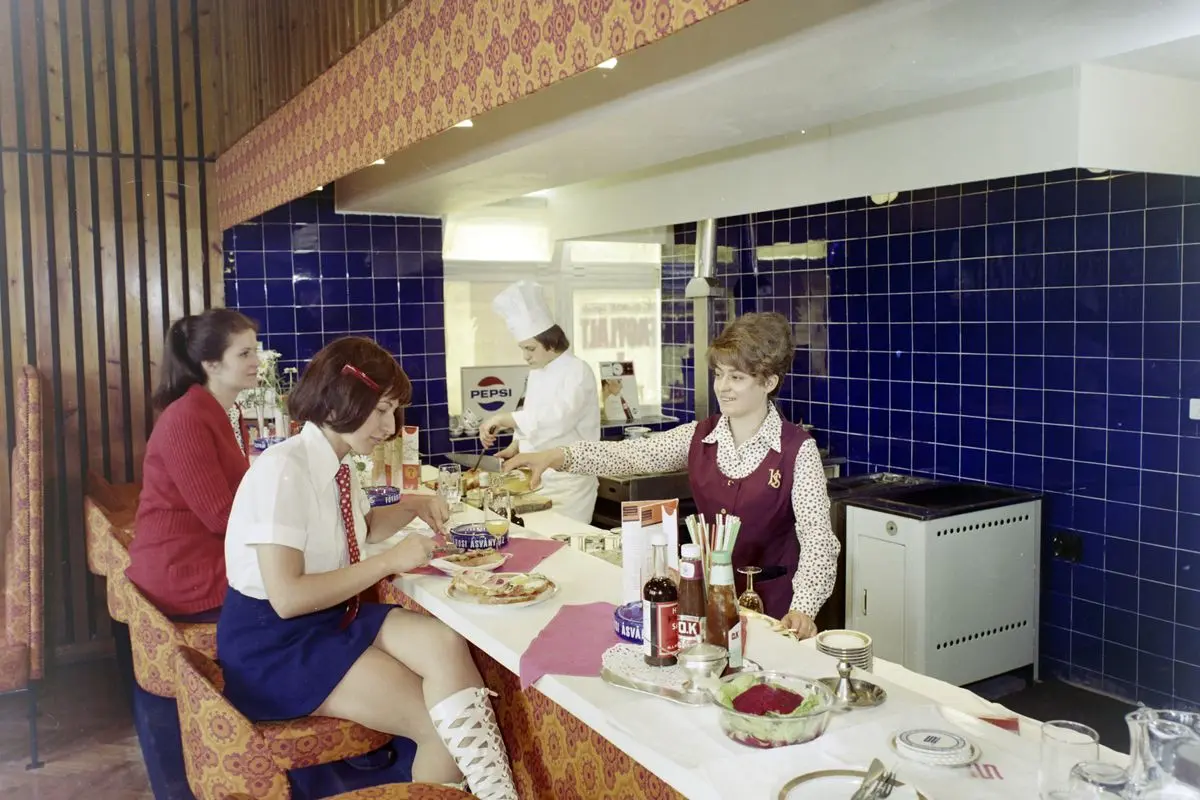
Hungarian fast-food restaurant -picture from Fortepan
Tourism
One of the frequently visited areas were the lake Balaton, which was full of Eastern and Western tourists. In soviet-type countries, it was illegal to even talk with a foreigner, and it was a straight way to jail for treason. In Hungary, this was not the case: Hungarians were able to chat to anyone, and they used to it. The East German government was deeply concerned for East Germans mingling with West Germans on the lake Balaton, and the East German secret service (Stasi) was monitoring the situation with agents there. Balaton became one spot where West Germans could meet with their East German relatives, and the quantity of tourists increased year by year.
Movies and media
Soviet citizens were instructed not to be attached into Hungarian movie and media culture too much. Soviets however managed to break free from their group, and sneak into Hungarian Cinemas. Sometimes ended up watching contents outright illegal in the Soviet union: porn movies or hentai cartoons. Being shocked what they saw and crime they might committed just by watching them - only to discover their handlers were sitting next to them and enjoying the movie. VHS video tapes and players were also a popular thing in Hungary. In the soviet union, watching a horror tape or porn tape, or even owning an action movie was considered a crime, and the person could have jailed for years for possessing it. In Hungary, people watched Alien, Evil Dead, Nightmare on Elm street openly on the television channels, and exchanged VHS tapes openly, they even had their own VHS camcoders sometimes. A VHS technolgy was unknown for a regular soviet citizen.

Picture: Hungarian VRC, based on the technology of Panasonic
You had to belong to the soviet elite, and had to wait a year to get a domestically made soviet VCR which was notoriously unreliable. People trying to smuggle VHS tapes back to the Soviet Union had to hide the tapes carefully, because if the Soviet border guards discovered it, they would destroy the tapes. A trick was to record some nonsense to the beginning of the tape, so if they qucikly checked it, it will only contain some Hungarian dance. Hungarian fashion newspapers, youth magazines were also banned, and it was hard to bring them back. But what people were able to bring back was already inside their head, and it was very hard to take it out. Russians, Czechlovaks, Romanians, East Germans didn't just wanted the VHS tape - what they really wanted was the culture and the mind which was able to produce this consumer paradise.
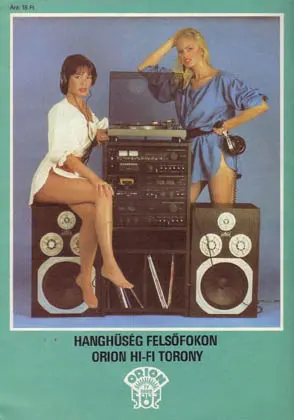
Picture: Hungarian hi-fi tower brand's advertise campaign
The metal destroys the soul
In Soviet propaganda, punks and metal fans were dangerous, fasistoid elements, who beat up and stabbed each other, their music and behaviour was the expression of their agression. When soviet tourists ended up accidentally walking onto metal or rock concerts, got surprised how happy the people were. The soviet propaganda was a lie, the people were enjoying the party without any violence.
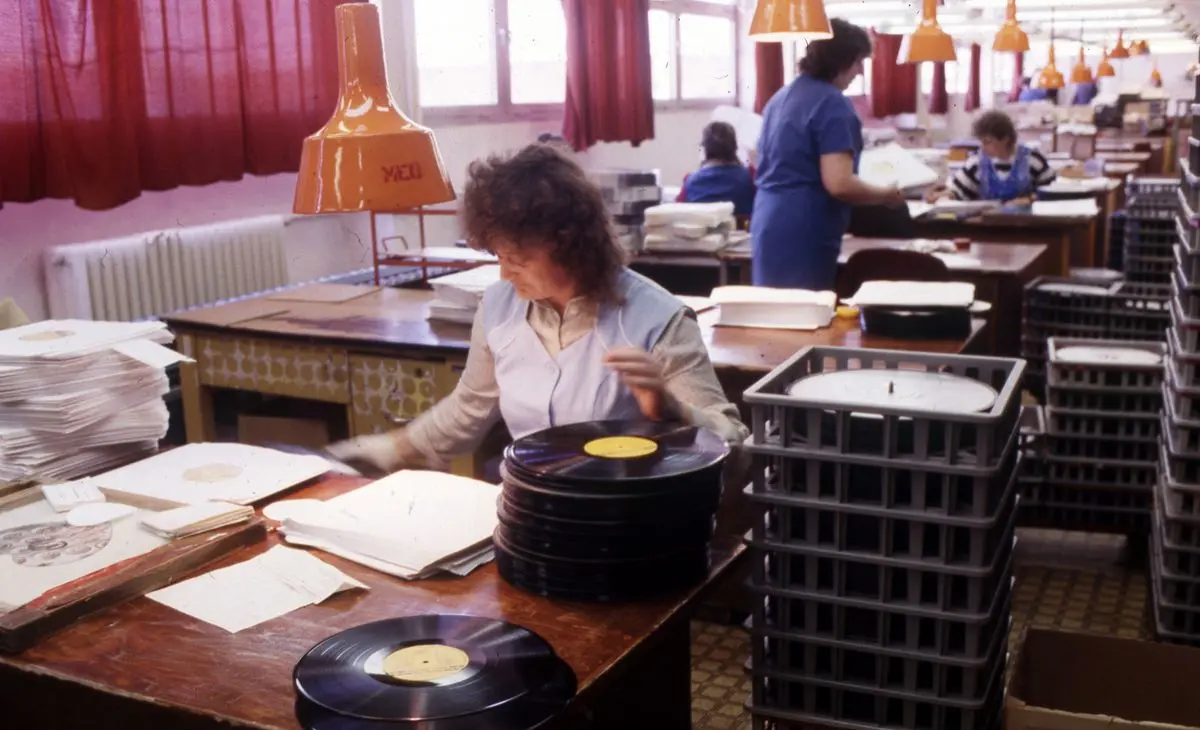
Picture: Hungarian vynil factory -picture from Fortepan
Hungarian music from 1978 (Omega: Ezüst Eső)
Hungarian tourists
Hungarians also visited the Soviet Union, East Germany, and other eastern countries, which sometimes resulted in funny situations. There were plenty times when a normal Hungarian just simply walked on the street, or an exchange student simply entering the school buiilding, and got into conflict with the law enforcement. The local police or youth police thought they are local citizens who bought their clothes and personal electronics illegally, or they were confused with punks, and get screamed at, get dragged or even hit by the police. As the police patrol screamed slurs, accusing them of unsoviet behavior and degeneracy, of course the clueless Hungarian tourists had no idea what is going on, as they usually didn't spoke Russian or German. When his passport was finally checked, the ego of the policemen quickly deflated, as they realized they basically illegally assaulted a foreigner citizen who were there legally - frequently a scientist, or a member of an exchange student program. Arresting a foreigner from a fellow communist country would automatically trigger a diplomatic contact and the secret services being involved. Finding out he was assaulted for walking on the street by a local policeman, would end the career of the police officer, and end up in an instant criminal investigation against him. The police officers usually went pale, and with shaking hand, giving his passport back, then quickly fleeing the scene.
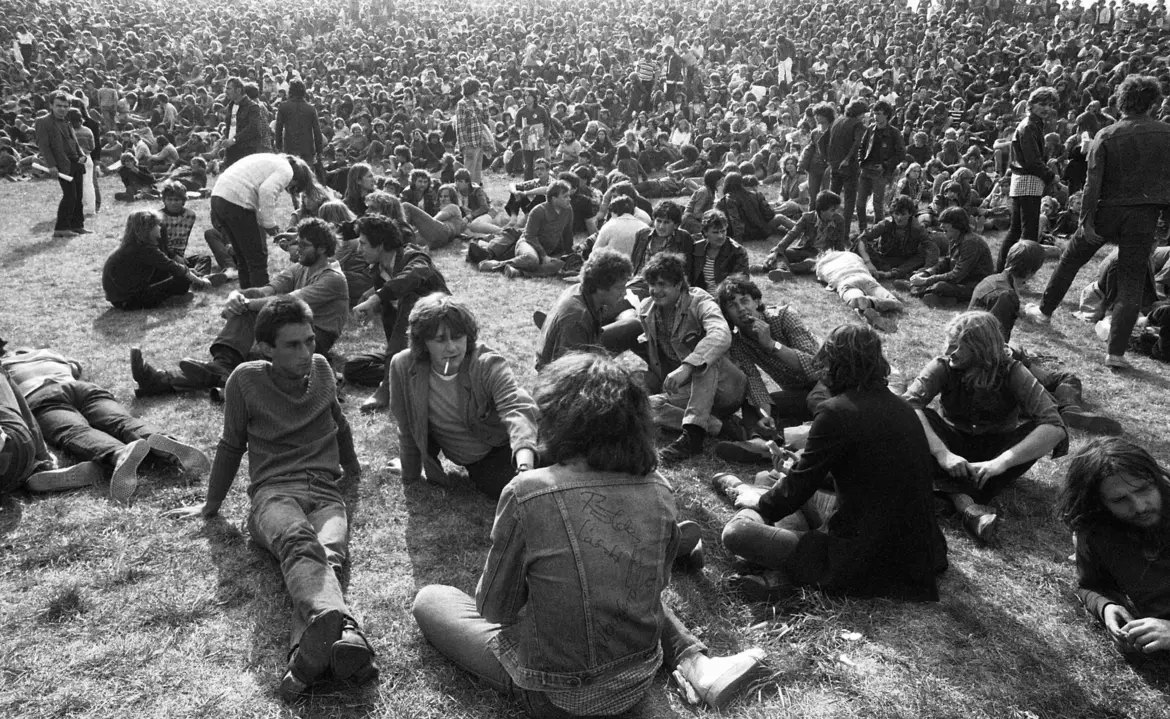
Picture from Fortepan
Back at home
If people managed to smuggle home a few hungarian pieces of freedom, they could usually sell it for extremely high prices. Hungarian jeans alone were sold for the price of multiple months of soviet salary. Some tourists fell into depression when they realized how oppressed their country is. The ghost escaped the bottle. Most of the kids who were previously terrified by the government's authority, stopped fearing the soviet state. They openly laughed at the police when they tried to intimidate them, even when they arrested them. Some were desperately trying to modify their TV and radio sets to tune onto Hungarian channels. Hardliner parents sometomes condemned the kid for speaking highly about the decadent Hungarians, ending in huge debates. Youngsters frequently stopped believing in communism alltogether after a trip to Hungary, they changed their apperance, changed their music taste and even good party members ceased their party career. This not just outraged the parents, but secret services were also deeply concerned about it. After the tour, soviet tourists had to write essays about what they saw: and it was wise to mention the dangers of decadent burgoise capitalism of Hungary in it. Those who have tasted this level of personal freedom, there was no go back to believing the soviet propaganda any more. Soviet tourists sometimes nicknamed Budapest as "Sin City". If they managed to smuggle home hungarian metal or rock tapes, they created copies from it for their entire friend circles, and they tried to tune to Hungarian radio stations to record more similar music tracks.
Aftermath
The Hungarian culture was one of a nail in the coffin of communism. And no matter how hard they tried, the soviets were unable to pull this nail out. Hungary was not a perfect country either. On the higher levels, it was still an authoritarian communist state. Even in Hungary, there were some shortages, such as shortage of cheap and affordable cars (people had to wait for years to get one). Partially, the Hungarian lifestyle was financed from loans, and most of the hi-tech Hungarian industry was built on top of western licenses. Compared to more repressive regimes, it was still the land of freedom and wealth. Ultimately, the private freedom of individuals, and the freedom of small scale private business is which saved Hungary from poverty and eventually shown a path for a capitalistic transition in the region.





