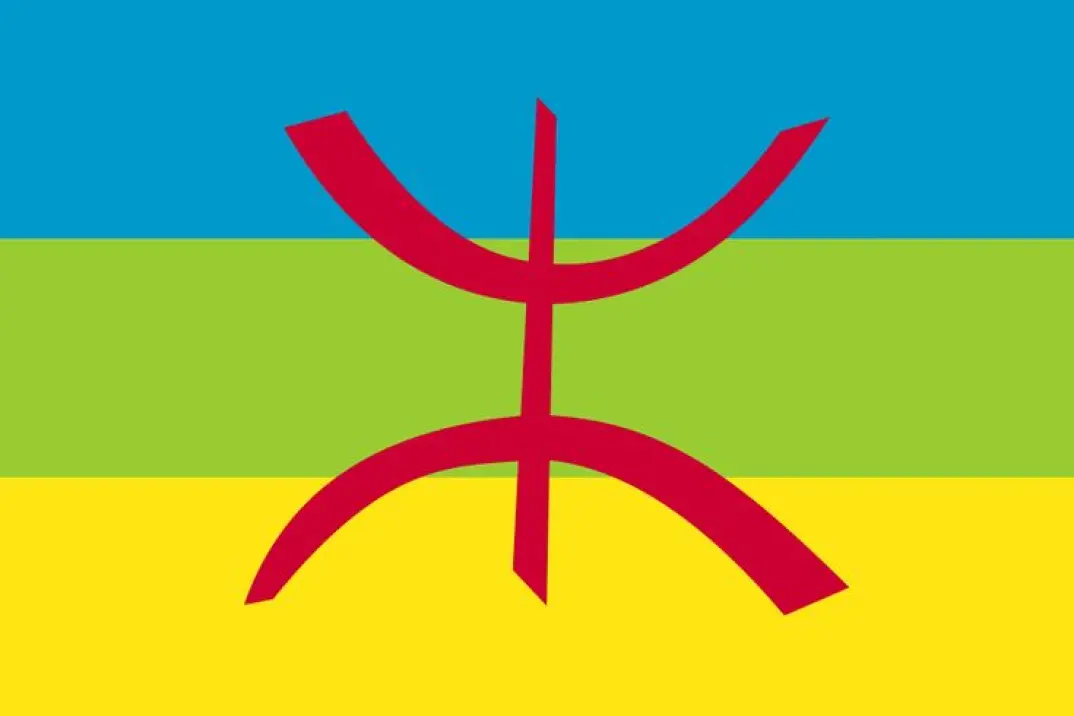
amazigh culture ⵣ
The Amazigh people are an ancient indigenous nation spanning North Africa, traditionally bound together by shared roots, language, and cultural heritage, while being made up of diverse communities and tribes across the region:
-
In Morocco:
-
Shilha (Ishelhin): Settled mainly in the High and Anti-Atlas mountains and the Souss region.
-
Riffians (Irifiyen): Inhabiting the northern Rif mountain region.
-
Zayanes & Middle Atlas Tribes: Centered in the Middle Atlas mountains.
-
-
In Algeria:
-
Kabyles (Iqbayliyen): Located in the coastal Djurdjura and Kabylie mountain ranges.
-
Chaouis (Ichawiyen): Settled in the Aurès mountains of eastern Algeria.
-
Mozabites (At M'zab): Living in the M'zab Valley within the northern Sahara (Ghardaïa).
-
Shenwas: Inhabiting Mount Chenoua and surrounding coastal regions like Tipaza.
-
-
Across the Sahara:
-
Tuareg (Kel Tamasheq / Imohag): Nomad and semi-nomad communities across the Sahara, spanning southern Algeria, Mali, Niger, Libya, and Burkina Faso.
-
-
In Libya, Tunisia, and Egypt:
-
Nafusis & Zuwarans: Located in the Nafusa Mountains and the coastal city of Zuwarah in Libya.
-
Tunisian Amazigh: Inhabiting regions like Matmata, Chenini, and Djerba.
-
- Siwis (Isiwan): Settled in the Siwa Oasis within the Western Desert of Egypt.
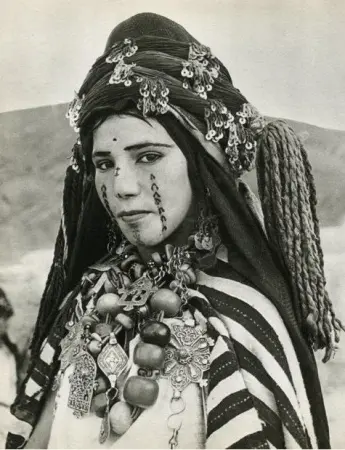
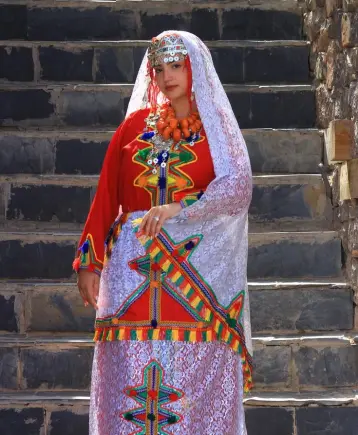
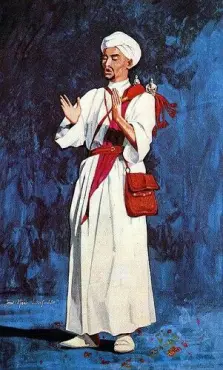
Amazigh Traditional Clothing
Amazigh traditional clothing is far more than a simple fabric worn for warmth; it is a woven poem filled with love and pride, telling the story of an ancient nation rooted in North Africa. Its true beauty shines through vibrant colors that capture the eye as if borrowed from mountain blossoms and desert sunsets, seamlessly woven with intricate embroidery and geometric symbols that carry deep heritage and meaning passed down through generations. When an Amazigh woman adorns herself with the traditional attire and silver jewelry inlaid with precious stones, she becomes a living piece of art—vibrant, graceful, and proud. It is a wardrobe that effortlessly blends modesty with elegance, and simplicity with sophistication, standing as a living testimony to refined taste and an enduring cultural identity that has never faded through time.


2976: A New Year Gathering Around Taglla and Berkoukes
Today, we live in the year 2976 according to the Amazigh calendar—a rich history deeply rooted in North Africa's ancient soil. As one year ends and another begins, families gather in the warmth of home to share moments filled with love and hope, where the table comes alive with traditional culinary treasures, led by Taglla and Berkoukes.
Prepared with love from the earth's yield, Taglla is adorned with pure olive oil, honey, or clarified butter, symbolizing fertility, abundance, and blessing for the upcoming agricultural season. Tucked at its heart is the tiny date seed that sparks laughter and delight when discovered, crowning its lucky finder as the blessed one of the year! Beside it sits Berkoukes, crafted with tender hands into hearty grains cooked in a flavorful dish that brings comfort and warmth during chilly winter nights.
These are far more than traditional meals; they are heartfelt human rituals connecting us to our land and ancestors, rekindling values of solidarity, gratitude, and hope for a brighter, more bountiful tomorrow for everyone. Happy New Year to all!

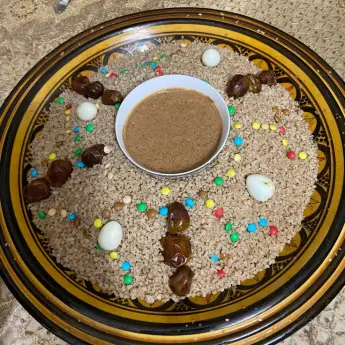
TAGLLA BERKOUKES
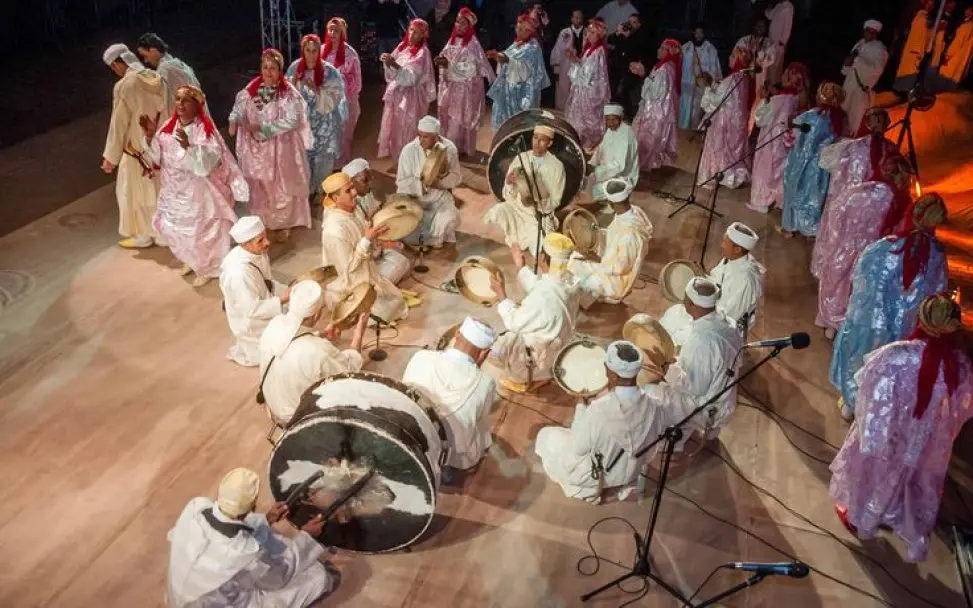
Ahwach: The Pulse of the Mountains and the Soul of Community
Ahwach is far more than a mere folk dance or a fleeting song; it is the language of the heart spoken by the Amazigh villages across the High Atlas and the Souss region. Performing Ahwach is a living embodiment of unity and togetherness. Men and women stand side-by-side in structured rows like an unbreakable wall, their steps moving in perfect harmony with the resonant beats of the bandir (frame drum) and the rhythmic stomping of feet that makes the earth vibrate. In this art, longing merges with hope, and wisdom flows through oral poetry improvised by poets (anḍḍam) to reflect human emotions, celebrate harvests, and honor warm reunions.
Poetic Verse Example
Shilha (Latin Script / Tachelhit):
Ur imik ur ikin umarg uraġ iskir
English Translation:
"It is no small amount of longing that moves our hearts."