
Qubic is a layer-1 blockchain protocol that uses a mechanism called Proof of Useful Work (PoUW): miners' computing power is not wasted, but used, for example, to train a decentralized AI model called Aigarth. The goal is therefore to create an infrastructure in which the network of computers not only validates transactions but also performs complex calculations, including training an AI.
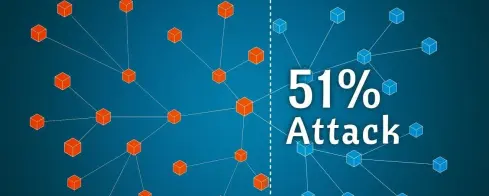
The Qubic network rose to prominence for the "51% attack" it performed on Monero. This was possible thanks to financial incentives and a selfish mining strategy. In this case, Qubic temporarily acquired enough computing power to exceed 51% of Monero's hashrate.
SELFISH MINING
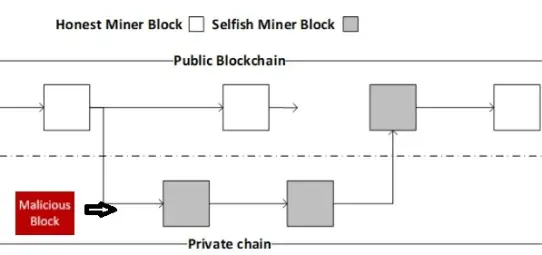
Selfish mining is a strategy whereby a group of miners, who control a significant portion of the hashrate, do not immediately publish the blocks they find, but keep them hidden to gain an advantage.
In short:
- I find a block but keep it secret (the selfish miner doesn't publish it immediately, but continues to mine privately on their own chain).
- I create a longer private chain (if I manage to mine other blocks while the "honest" network is lagging behind, this system gains an advantage, meaning its own chain has two blocks, while the public one only has one).
- I publish the chain (when it's convenient, the miner reveals their private chain, which, being longer, is accepted by the network because the rule is to always follow the longest chain).
- All blocks mined by others in the meantime become orphaned and worthless (so selfish miners earn more than they would have earned by playing honestly).
51% ATTACK
Even without having 51% of the hashrate, with this technique you can earn a share of the rewards greater than your computing power. If practiced on a large scale, it can undermine trust in the network and approach a 51% attack.
Imagine two miners:
1) Honest with 65% of the hashrate.
2) Selfish with 35%.
In theory, the honest miner should earn 65% of the rewards, the selfish miner 35%. But with the selfish strategy:
-The selfish miner finds a block: hides it.
-Continues mining in secret.
If he finds a second block, his private chain is now longer than the public one. When the honest miner publishes a block, the selfish miner reveals his longer private chain. The network accepts the selfish (longer) chain and discards the honest blocks, so the selfish miner earns more than 35%, even though he has less power.
Qubic uses a cross-incentivization mechanism: miners who normally mined Monero (RandomX) were incentivized to shift their mining power to Qubic. In return, Qubic ensured that part of the generated value (rewards in Qubic tokens) was "tied" to Monero mining. The result was concentrated hashpower on the Monero chain, reaching 51%, and demonstrating that the Qubic network can coordinate enormous amounts of computational power.
Qubic does this:
-Mine XMR.
-Sell XMR for USDT.
-Buy Qubic.
-A percentage of Qubic tokens are burned, and the other percentage is distributed to those who use Qubic mining pools.
-This supports the value of Qubic (burn = deflation) and increases the mining pool's hashrate.
This system works as a sort of stake: burn reduces the circulating supply and demonstrates your commitment. Miners were rewarded with Qubic, but only if they contributed to the chain's security (hashrate).
NEXT TARGETS
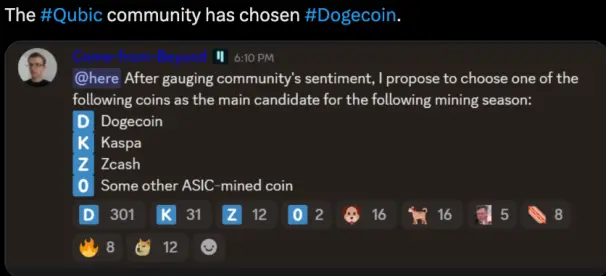
By voting, the next target to suffer the 51% attack is expected to be Dogecoin. Dogecoin is based on the Scrypt algorithm (merged mining with Litecoin). If Qubic could find a way to incentivize Scrypt miners (as it did with Monero's RandomX miners), it could attempt a similar operation, attracting hashpower. The other targets (not yet voted on) are Kaspa and Zcash.
Are you interested in ways to earn crypto bonus? Check it out here: Some Sites To Earn Crypto Bonus (Old & New)






