
On the Bnb Chain but also on others network (such as the layer2 Base and zkSync) Honeypot and therefore Rug Pull are increasingly spreading. The latest ones (of a certain size) were $Fine, $Friend, $BananaGun and $BabyX. Recognizing Honeypots is not easy but not impossible either.
When trading a DEX or buying a token for the long term, traders consider:
1) Market capitalization
2) Liquidity
3) Volume
4) FDV (to see what the inflation rate is over time and how much supply will be issued over time)
5) Fee
You may be dealing with a liquid token, which has volumes and also a high market cap and yet it is a scam. In fact, it is possible to inject a significant amount of liquidity anyway because you are sure that you will not be able to sell and profit (due to the design of the honeypot contract). A honeypot is a scam token that you can buy but not sell.
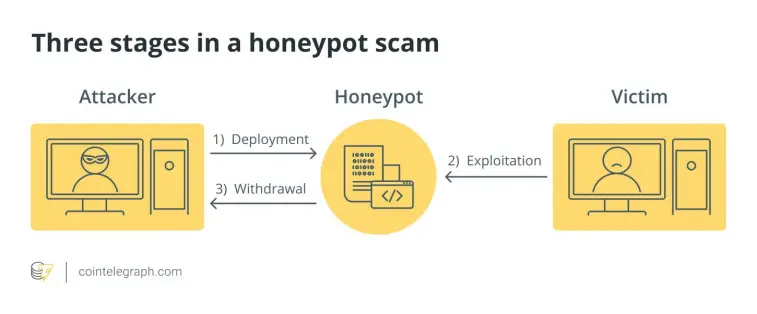
HONEYPOT SCHEME
1) Creators launch a new token and start buying artificially to simulate demand
2) This increases the price of the token, since the contract only allows purchases
3) Investors see the token rising in price and rush to buy (FOMO)
4) Investors then realize that they cannot sell the token due to the contract's sales freeze
5) Creators keep buying to further increase the price and attract more victims
6) Creators sell their tokens, draining value from the pumped-out honeypot
7) Investors remain trapped, unable to sell their tokens
So investors are attracted thanks to purchases that are allowed and sales that are blocked. The increase in purchases is usually simulated with bot. The scammers themselves, meanwhile, have whitelisted addresses for them to sell to, if necessary.
 What characteristics allow us to identify a honeypot? In the meantime, it is possible to verify the presence of a recurring pattern of purchases with minimal or no sales. For example, if there is a series of 90 purchases and only one sale in between, it is likely a honeypot. Bot are used to spam transactions under 0.01 ETH, artificially inflating volumes and trends. Therefore, a fundamental step is the manipulation of token volumes using bots. It's the same old story of bots buying/selling small and insignificant amounts of the token. For example 100 purchases and only 1 sale.
Scammers can also implement zero buy-sell fees. This strategy attracts traders and creates an illusion of generosity. However, it is part of their plan to trap buyers in the honeypot contract for their own personal gain.
PROTECT YOURSELF FROM HONEYPOT
You can use this detection tools and guide for Honeypot: Rugdoc, DetectHoneypot, Metasleuth, TokenSniffer and Honeypot
Just paste the token contract address to check if it is a honeypot.
This address creates a honeypot token every single day: 0x8281b589ea0c0b126af00df3fae781140920500a
If you encounter a token distributed from this address, proceed with caution.
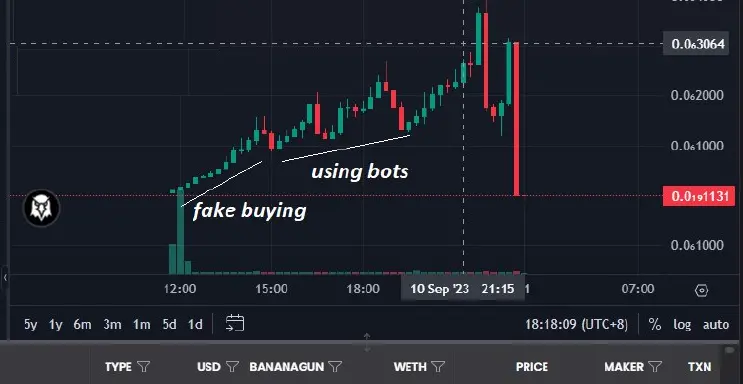
HOW SCAMMERS WORK
1) They create a token
2) They add 10 ETH of liquidity
3) They participate in buy-sell maneuvers worth around 30 ETH using other addresses to increase the volume
4) They attract unsuspecting newbies
5) They remove liquidity quickly
6) They create another Honeypot (it's like an infinite chain: three rugs a day and pass the gain onto the next token)
As you can see, creating Rug Pull and Honeypot is very simple so when you buy a token you should always pay attention because you may no longer be able to sell it.
Are you interested in ways to earn crypto bonus? Check it out here: Some Sites To Earn Crypto Bonus (Old & New)






