
In the criminal world, arson is frequently dismissed as ordinary vandalism or property damage. Yet from the perspective of forensic psychology, it represents one of the most chilling internal struggles between a person's inner rage, unmanaged impulses, and a fractured psyche. Why do certain individuals not merely fear fire, but feel an overwhelming compulsion to submit to it and bend it to their will?
1. What is Pyromania and How Does It Begin?
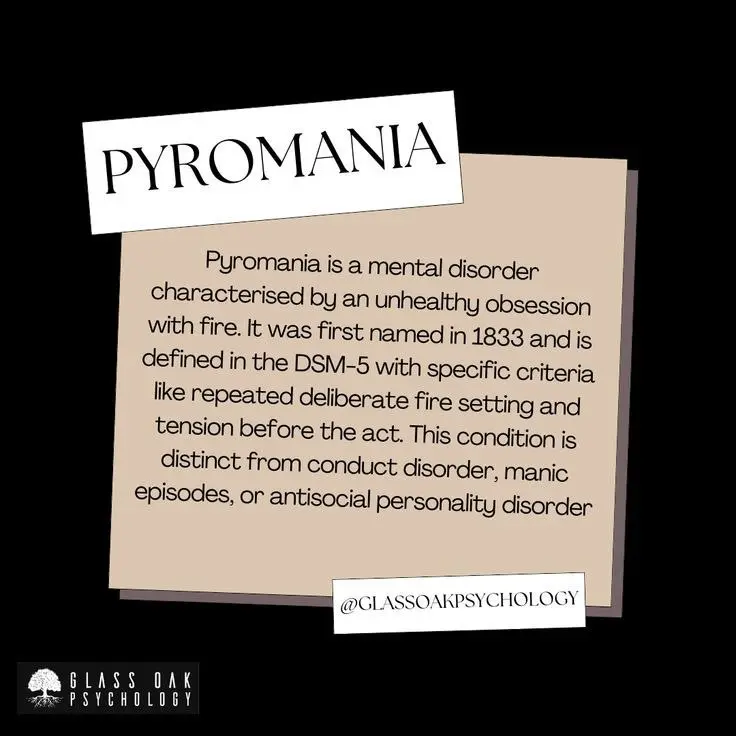
Pyromania is an impulse-control personality disorder characterized by an irresistible urge to start fires, accompanied by an intense surge of excitement or psychological relief derived from the act.
Etiology (Origins): Pyromaniacs are typically individuals who feel they have completely lost "control" over their lives. They perceive themselves as unheard or invisible in a rigid world. Fire, however, breaks every rule, commands immediate attention, and possesses the ultimate capacity to transform reality in seconds.
Historical Context: In the 19th century, psychiatrists broadly categorized pyromania as a form of "moral insanity." Today, we recognize it as deeply rooted in severe childhood trauma—specifically chronic feelings of powerlessness and helplessness.
2. Fire and Murder: The "Progression"
Most pyromaniacs do not start out with the explicit intent to kill; for them, the fire itself is the spectacle. However, this destructive game rapidly spirals into lethal criminality:
The "Hero" Syndrome: Certain pyromaniacs ignite fires specifically so they can later return to the scene posing as heroic firefighters or helpful bystanders, craving validation and applause.
Savoring Chaos: The sudden panic at the scene, the blare of police sirens, and the frantic scramble of emergency responders serve as an intoxicating stage for the pyromaniac to validate their sense of "grandeur."
3. The Macdonald Triad and Pyromania
As explored in our previous files, fire-setting is an integral pillar of the Macdonald Triad. A child's pathological fascination with fire serves as one of the most accurate diagnostic indicators of future violent personality disorders. When a child approaches fire not with healthy caution, but with intense fascination and an obsession with conquest, it represents a blaring red warning sign.
4. Defense and Prevention Strategies
Pyromania is a deeply entrenched, highly complex pathology. To safeguard communities, specific protocols must be observed:
Surveillance and Monitoring: A sudden spike in unexplained fires within a specific district signals the presence of a pyromanic offender. High-definition security monitoring acts as a powerful psychological deterrent, as pyromaniacs frequently abandon their blueprints once they realize they are being watched.
Early Intervention Therapy: When a child engages in dangerous fire-play, guardians must never dismiss it as "harmless mischief." Consulting a mental health professional remains the single most effective method to preempt future criminality.
Behavioral Profiling: Pyromaniacs frequently return to the crime scene to watch the devastation unfold. Law enforcement agencies routinely apprehend repeat arsonists by closely monitoring the "spectators who return to the scene."
5. Forensic Psychological Conclusion
Fire is humanity's greatest discovery, yet within a corrupted psyche, it mutates into a devastating weapon. Pyromania is never merely playing with matches; it is a desperate manifestation of societal rejection and an insatiable craving for recognition.
FORENSIC PSYCHOLOGICAL QUESTION:
In your view, should pyromania be classified strictly as a criminal offense, or recognized as a clinical psychiatric disorder requiring mandatory treatment? Should individuals driven by this impulse be consigned to prison cells or compulsory psychiatric wards?






