Is it possible to rewind time and travel back to the exact instant a murder took place? If bloodstains at a crime scene are scrubbed away, fingerprints wiped clean, and all physical evidence destroyed, is it still possible to solve the crime? In the era of digital technology and modern forensic science, criminalistics has escalated to an entirely new dimension. Today, the concept of a crime scene never truly fades. Through artificial intelligence, 3D scanners, and Virtual Reality (VR) systems, the precise moment of a murder is reconstructed down to the second inside a laboratory. This is the forensics of the future—Virtual Autopsy and Holographic Investigation.
In the past, detectives arrived at a crime scene, stretched yellow tape, photographed the body, and gathered evidence into bags. Yet under that traditional methodology, human error frequently led to overlooked micro-details—a microscopic blood droplet on a wall, an imperceptible tilt in the flooring, or unexpected cache artifacts. Worst of all, once a crime scene was sanitized, that physical environment could never be recreated.
Today, when cyber-detectives step onto a crime scene, the first instruments they draw are LiDAR devices and 3D laser scanners. Within minutes, these devices sweep every millimeter and corner of the room, generating spatial log files. The exact position of the corpse, the precise angle of blood spatter, and the spatial placement of every object are converted into digital coordinates. Consequently, a flawless, virtual 3D replica—a "Digital Twin"—of the physical room is forged.
At this critical juncture, Artificial Intelligence takes over. Algorithms mathematically analyze the impact angle of blood droplets against the wall to calculate the killer's exact height, as well as the direction and force of the strike. Ballistic software projects the flight trajectory of a bullet as an interactive virtual hologram.
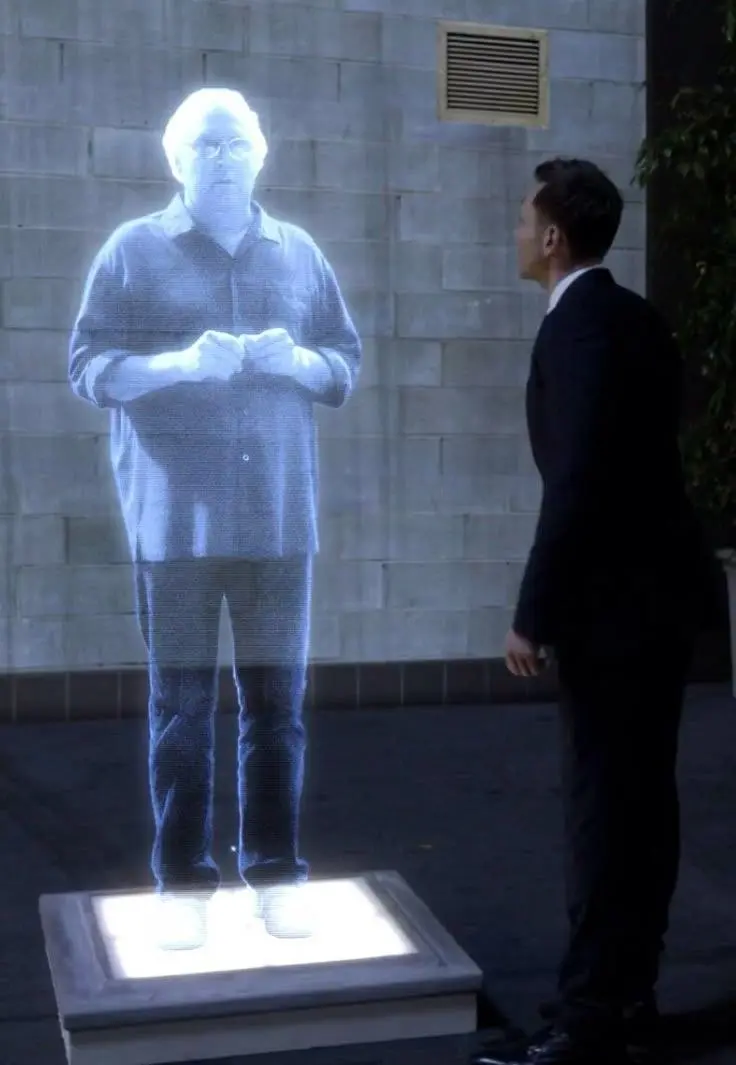
Wearing specialized VR headsets inside the laboratory, detectives and forensic pathologists step inside that virtual crime scene. They can freeze time and observe the murder unfolding from any angle or perspective. Without physically incising the body, they scan internal organs via holographic projections to uncover hidden fatal trauma. This methodology allows investigators to pinpoint where the killer stood during their manipulation and how the victim attempted self-defense in their final moments.
A virtual crime scene remains preserved in the archive indefinitely without degradation. Even 20 years later, as new analytical technologies emerge, detectives can reopen that digital archive and re-investigate the case as if it occurred today. In the future of forensics, there is no perfect crime—because time and space are permanently sealed within digital code.
Question: In your view, is there any remaining loophole to escape cyber-detectives who reconstruct past crimes using holograms and AI? Or is technology capable of extracting every concealed secret from the archive?