Who hasn't seen the game with the little bird flying between obstacles? If you haven't, you probably haven't had any contact with the digital world since 2014.
Released in 2013, Flappy Bird was developed by Vietnamese developer Nguyễn Hà Đông. In the game, the player has to control a bird flying between obstacles without hitting them.
In 2014, the game became a worldwide mobile gaming phenomenon, to the point that it was removed from Google Play and the App Store because the developer felt guilty about how addictive the game had become.

Despite the removal of the original game, several clone games appeared during the height of its popularity. The app stores also tried to remove them during the period when the original game was unavailable, but even today, it is still possible to find many games like these with a simple search for "Flappy Bird", even online via browser.
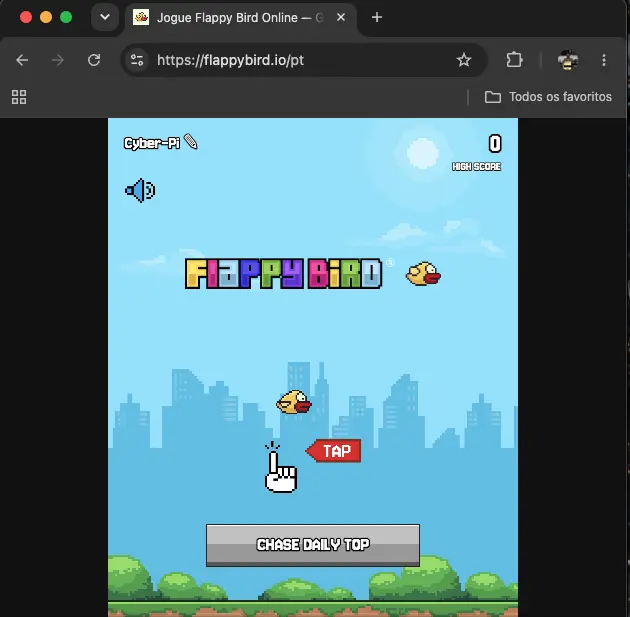
Despite all the commercial attention surrounding the game, Flappy Bird is also a very interesting game from a development point of view. Many programmers and students have made, and can still make, games with similar mechanics as a way to practice and learn programming logic. There are also courses and video tutorials that teach beginners how to build this type of game, using simple programming languages and libraries that make the whole process much easier, such as Pygame, for example.
Besides that, because of its simple and lightweight code and fun gameplay, the game is used as a mini-game on many different platforms. I decided to write an article about it as a small tribute to the affection I have for this game.
I say this because of my personal connection with it, and especially because of the connection between this blog, the crypto world, and the maker world.
Flappy is one of my favorite mini-games in RollerCoin. I also found a similar version in Limercoin, and I have seen several projects made with Arduino and other simple microcontrollers. I haven't had time to build my own yet, but I will soon.

For me, this is also a way to practice what I like most about the maker world: bringing hardware construction together with firmware development and building products or solutions that can make my life easier or at least a little more fun. And we don't need much hardware or money to do it.
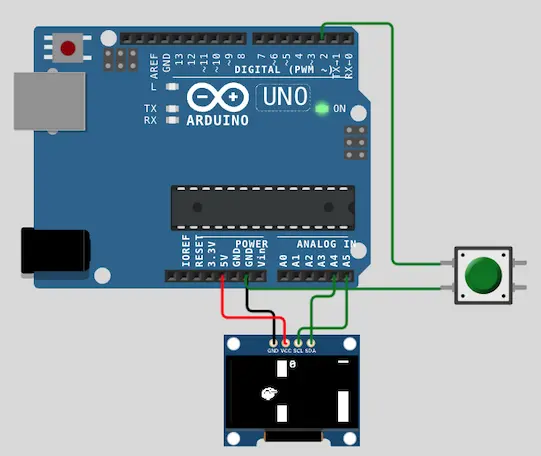
With just an Arduino Uno, an OLED display, and a button, we can already build a simple game like this. There are also many tutorials and ready-to-download code examples available, making it easy to learn, modify, and create our own version.