
XRP is my favourite cryptocurrency. XRP is a very controversial product and there is a lot of misinformation out there.
Use Case: XRP has a great real world use case. It is used for cross border money transfers - sending money in one country's fiat and collecting in another. For example, Moneygram transfers money from the USA to Mexico and use Ripple's software which enables them to transfer US dollars to Mexican Pesos in less than 4 seconds. Traditional money transfers use the SWIFT system which generally takes 3-5 working days and is quite expensive. Using Ripple's On Demand Liquidity (ODL) transfer mot only happen in seconds but at a fraction of the cost.
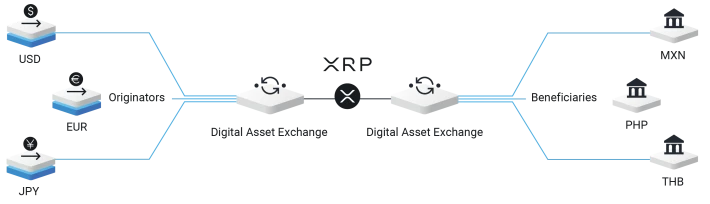
Ripple - Ripple is the company that holds the majority of XRP tokens. Ripple is currently valued at $10B USD and recently received an additional $200 million in Type C equity funding to finance acquisitions, growth and /or possibly an IPO. The key players in ripple have either a long history in money transfer, technology and/or developing the XRP cryptocurrency. Ripple was founded in 2012 and has an impressive track record in the financial markets. Ripple has over 300 customers using it's Ripplenet suite of financial products. At the moment, only a few are using ODL but as different countries formalize their cryptocurrency regulations, this number is set to balloon.
Ripple is also active in the blockchain market with their Xpring (pronounced Spring) initiative, which assists and promotes developers in the XRP blockchain community.
They are also active in the Academic community with their UBRI initiative - University Blockchain Research Initiative - 29 Universities collaborate with Ripple to identify research, technical projects and other academic activities in the blockchain and cryptocurrency sphere.
XRP - XRP is a cryptocurrency that can be used by Ripple's software, but it is not mandatory. An example of this is Moneygram. Moneygram has 22,000 currency channels. Of these, only 5 currently use XRP. Moneygram has stated publicly that they want to use it in more channels and they are waiting on Ripple. Ripple's response is that they are being hamstrung by countries not having their legislation for crypto currency legislation in place.
Criticisms
Many people complain that XRP is centralised. Technically, XRP is a decentralised technology. Where the centralisation complaint comes about is that Ripple was gifted 80 billion (of a Total 100 billion pre-mined) by the creators of XRP (Chris Larsen, Jed McCaleb, and Arthur Britto) for Ripple to develop and promote XRP. In 2017 Ripple placed 55 Billion XRP in escrow, to be released 1 billion at a time on the first of each month, ensuring a predictable supply for the next 55 months. People also claim this is flooding the market and keeping the price suppressed. However, in reality, any unsold XRP is placed back into new escrow accounts to be released on the first available month. In the last 3 months, of the 3,000,000,000 tokens released, approximately 2,900,000,000 were returned to escrow.
Others are claiming that when CBDC's (Central Bank Digital Currency) are released, XRP will not be required. This logic is flawed. All currencies today are digitised. Whether or not you want to transfer fiat or CBDC you will still need a bridging currency to convert from one fiat/CBDC to another Fiat/CBDC.
Another claim is that Ripple's low price shows it is not a viable product. Ripple's current price is in the low 20c range from it's all time high of around $3.90.
Based on the technical analysis of 2 analysts I follow both predict a price of around $28. (Blockchain Backer and D.I.Y Investing) (There are many other projections some as high as $100) If you bought XRP for $0.20 and it went to $28.00, that is a 14,000% ROI.
Speed is another area of criticism. There are other coins out there capable of much higher speed. Currently, XRP can process 50,000 transactions per second, over twice as many as Visa. Yes, other coins are reporting speeds up to 100,000 transactions per second, but XRP achieves settlement in 3 seconds. Doubling the speed would result in 1.5 seconds - negligible in terms of real world usage. The thing people don't consider here is that Ripple has spent 7 years developing their infrastructìre and are negotiating at the highest levels of finance and Government. For a new player to enter the market now, they would be so far behind and unlikely to have the contacts that a minor technical improvement is unlikely to sway any serious financial organisation.
XRP is a banker's coin. This criticism primarily comes from Bitcoin advocates as Bitcoin was introduced, at least in part, to move power out of the hands of the "1%" into the hands of the people and I personally can empathise with that position. However, if you take the emotion out of it and look at it purely from an investment perspective, XRP obviously has the goods.
SUMMARY:
In my opinion, XRP is a very capable product deployed to address a real world problem. Ripple has shown themselves to be very responsible custodians of XRP and extremely professional. In my view, XRP has the best potential for ROI, especially if you take a longer term view for your investment.
I'm not a financial adviser, so please use this as information to assist you to make your own financial decisions.






