
Introduction
In the evolving landscape of blockchain technology, the Optimism Collective is strategically positioned to enhance Ethereum's scalability through its innovative Superchain network. This initiative underscores a commitment to an open-source technology stack and a collaborative ecosystem, fostering a new generation of blockchain applications and services.
The OP Stack and Superchain Development
At the heart of Optimism's scalability endeavors is the OP Stack, a versatile codebase designed to empower developers across various blockchain layers. Originally serving L2 chains, this open standard has now been extended to include L3 deployers and application builders, broadening the developmental scope within the Superchain.
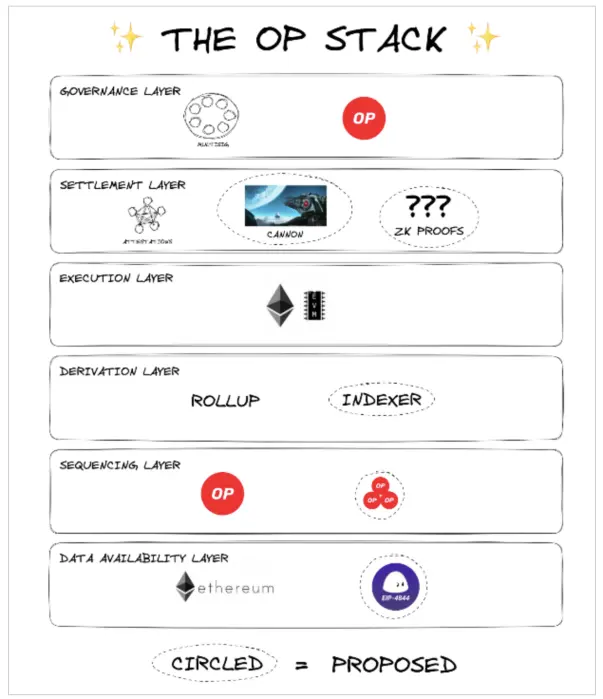
L3 chains are increasingly becoming integral to the Superchain by utilizing the OP Stack to develop and contribute a portion of their revenue to the Optimism Collective. This integration allows them to benefit from a host of advantages such as eligibility for Retro Funding, Airdrops, and grant programs specifically designed for Superchain developers. However, the unique configurations of these L3 chains pose challenges in implementing features like interoperability, which are essential for seamless functionality across the network.
As demand grows within the Optimism ecosystem, there is a notable shift towards more flexible and customizable technology solutions. L3 chains offer developers and blockchain deployers a cost-effective avenue for innovation within the Superchain, evidenced by platforms like Base, which has significantly expanded support for L3 development.
Innovations in Gas Token Utilization
A key development in supporting the L3 ecosystem is the introduction of custom gas tokens. These tokens enable developers to utilize L2 tokens as the native gas token for L3s, facilitating easier and less expensive onboarding processes for new users. By allowing the use of an established L2 native token as a gas medium, these tokens help in evolving a community's ecosystem from L2 to L3 seamlessly.
Plasma Mode: Reducing Costs and Enhancing Security
Another significant innovation is the introduction of Plasma Mode, which offers developers the flexibility to choose their preferred Data Availability (DA) layer, potentially reducing operational costs. This mode was recently implemented by Lattice on the Redstone, the first OP Stack Chain, demonstrating its viability as a cost-effective and secure alternative for transaction processing.
Future Directions and Implications
Looking ahead, the Superchain is poised to play a crucial role in shaping the future of blockchain scalability. By facilitating the participation of L3 developers in this expansive network, Optimism is not only advancing its technological framework but also contributing to a collaborative and resource-rich ecosystem.
The integration of various blockchain layers through the OP Stack and the strategic deployment of features like custom gas tokens and Plasma Mode are pivotal in enhancing the accessibility and efficiency of blockchain technology. These developments are expected to drive further innovation and adoption across the Superchain ecosystem.





