
Back in the day, before the 1960s, most families didn't live spread out across the country. They more often lived within 50 miles of each other if not closer, an easy drive to get back and forth. It wasn't until commercial travel because relatively easy with jet plane travel that relatives became farflung across the US as well as in other countries. Convenience gave the illusion of closeness with distance travel.
Non-Issue or a Social Change Issue?
Now, we're facing a situation where the current cost of travel is becoming prohibitive for many, becoming most personal and vivid during the holidays when families want to get together again. Many will argue the current inflation hits and price spikes are temporary, but what if they are not? What if, the cost of far travel becomes very expensive again, something only the well-to-do can enjoy? Forget the impact to the travel industry; what does that do to the longterm makeup of communities?
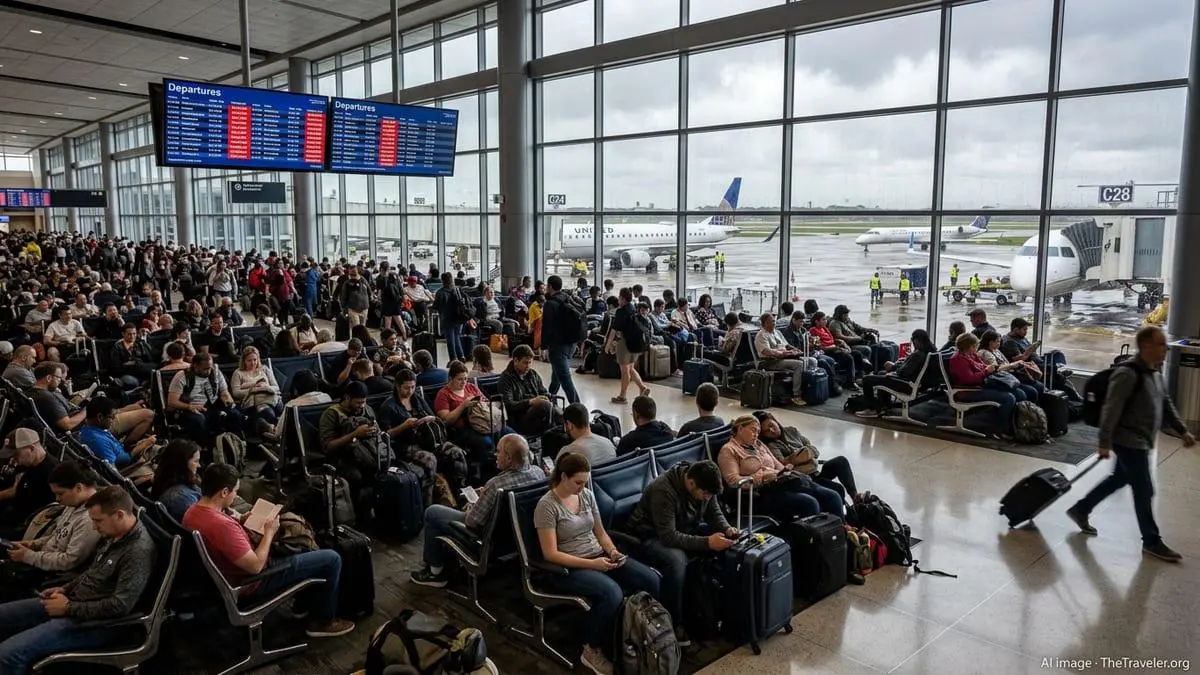
For a catalyst to develop driving families closer again, the price pressure would probably need to be constant and ongoing for close to a generation, enough time to force a large number of folks able to move to decide to root down instead. In our world today that effect would be two-fold: young people ready to move out of their parents' home deciding to stay close and mid-to-later age adults not yet retiring but needing to be close to elder parents as caretakers. This isn't farfetched as a societal trend, but it's not as simple as avoiding travel costs either.
Money Makes People Change
Locality choices often depend more on personal economic viability, i.e. where can one find a job that pays for their living and provides the means to get ahead. That last part is essential. People can find a "job" in most places, but it doesn't mean that work is viable for everything they need or want. So, they are quite willing to jump to an unknown location if it provides the desired return. However, as one has choices to move again, the cost of travel if required starts to become more and more of an issue along with the cost of living. For example, living in New York City or San Francisco in terms of daily cost is astronomical versus living in Toledo, OH or Tucson, AZ. When one's income locally is already eaten up by the cost of living, long-term travel to get back to family becomes a greater and greater challenge. So does it drive choices in living locality then?
Again, the price pressure has to be long-term to create enough challenge for people to think twice about how far they move from other family and a support network already established. But if it does continue, it could be a game-changer in what has been a trend of long-distance living since the 1970s in the US. I know this is already a thought in the back of both my kids' heads. They will likely live close to us after college because there is already a support network and easy residential opportunities with us or their grandparents' home. What would pull them away, and they already said as much, would be the ability to live somewhere where they think they actually have a chance to make a decent living and afford the cost of living, but then they know it means they are probably locked out of easy travel if costs remain high with commercial transport. When young, the idea of living far can be strong and attractive, so that makes sense, but when you need a support network, it changes your thinking again about what really works for you.
Momentary or Long Term Impact?
To some, this essay is meaningless. They are fine living far away and have no need to worry about the cost of travel. I was one of those for many years, and I was also a loner type, needing little from social contact or networking. However, the majority of people are communal, social and want nearby connection. So, ergo this essay's question, can the cost of travel becoming prohibitive eventually drive people to live closer to each other and known communities? We will probably know that answer over the next two decades as it plays out.






