Wall Street and crypto have been logging weeks of steep declines. Weighing most heavily on the markets was Nvidia, caught between probes over chips ending up in China in circumvention of U.S. bans and, on Friday, reports of an SEC investigation into its accounting, which deepened the stock’s losses as it closed down 14%. The situation dragged down stocks across the entire artificial intelligence sector. Bitcoin and Ethereum extended the downtrend that began in October and are deep in the red since the start of November. Today, stock index futures are attempting a recovery, trading higher ahead of the afternoon opening of U.S. markets.
Crypto and Wall Street After a Week in the Red
The week just ended marked the seventh consecutive red weekly candle for both Bitcoin and Ethereum. The losing streak extends to eight weekly candles for Solana, while BNB ($555.80, ▲ +2.78%) showed greater resilience, stopping at four consecutive weekly declines. The weekend brought a rebound, though Bitcoin and Ethereum are currently posting muted moves alongside much of the broader crypto market. Among the top 10 by market cap, only Tron remains in the green since the beginning of November, up 0.76%.
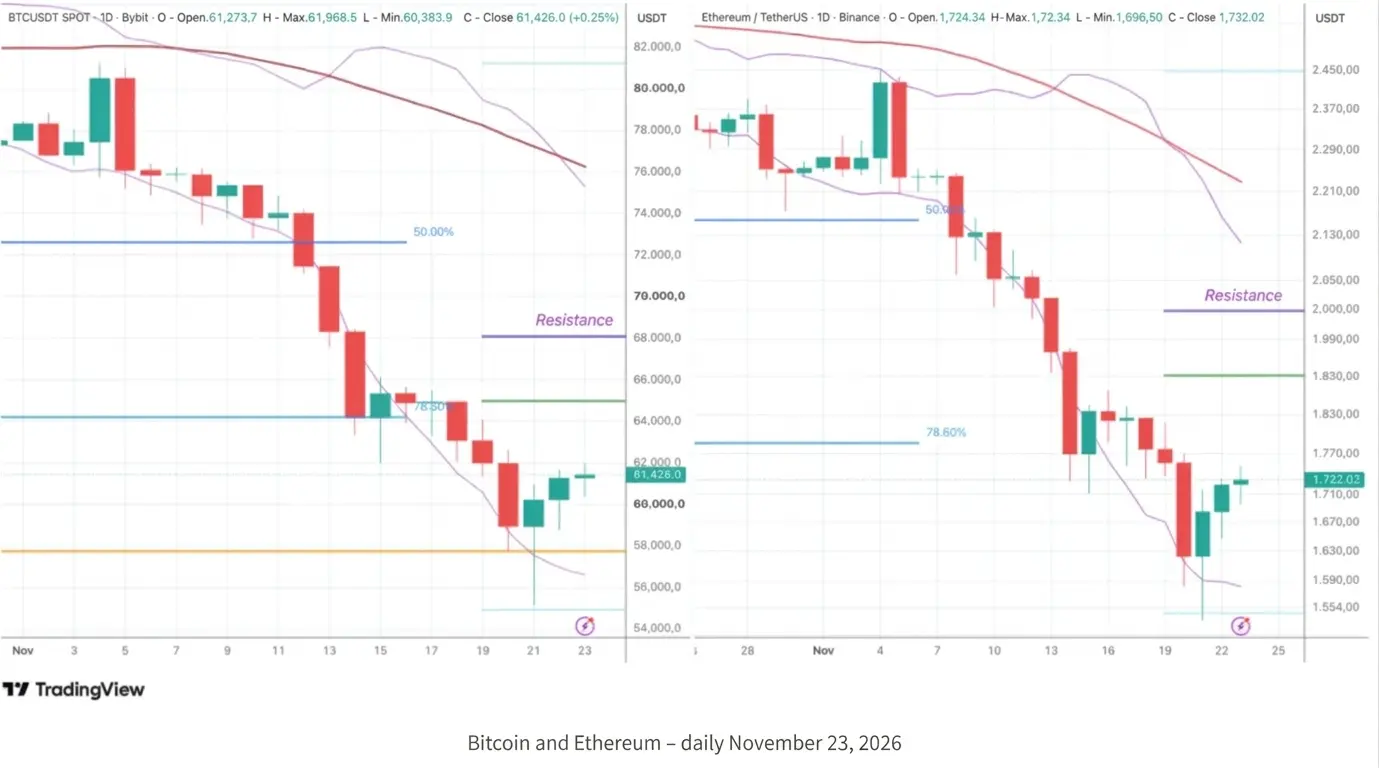
The monthly downturn is weighing most heavily on Ethereum, which has dropped 23.5% since the start of November compared to Bitcoin's 21.06% decline. The daily chart shows the slide in both tokens alongside the rebound attempt that began over the weekend. For Bitcoin, the first upside resistance target sits at 65,000 USDT. At the time of writing, Ethereum is trading at 1,728 USDT after closing up 2.3% yesterday, with initial resistance around the 1,890 USDT level.
Nasdaq 100 Turns Negative Year-to-Date as VIX Surges
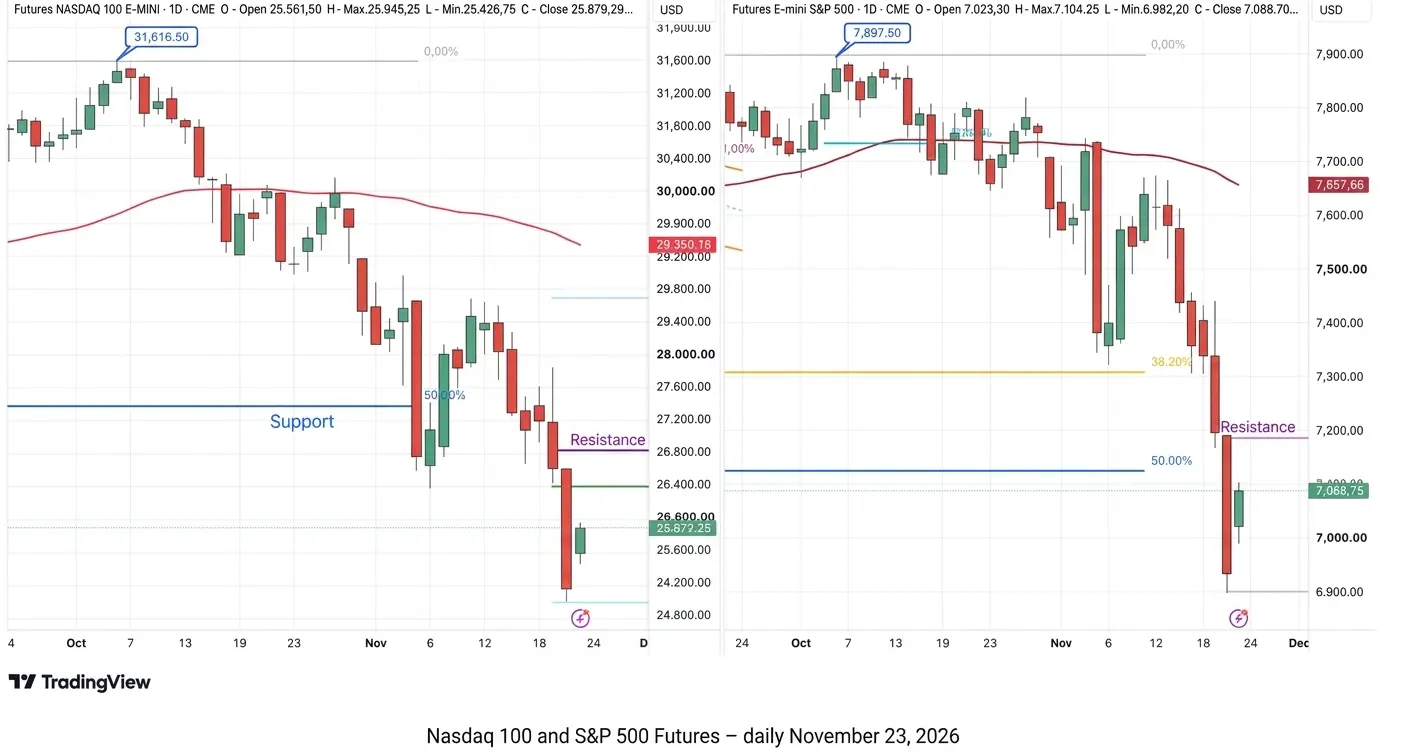
On Wall Street, the steepest monthly drop belongs to the Nasdaq 100, down 11.82% since early November. The sell-off in tech stocks has also pushed the index back into negative territory for 2026, now down 0.87% year-to-date. The Dow Jones has held up better than the other major benchmarks, limiting its November losses to 7%. On Friday, the VIX—the index measuring expected volatility on the S&P 500—jumped 26.28% to close at 35.90, surpassing its March peak. U.S. stock futures are attempting a recovery following Friday's sell-off, as shown in the chart.
Macro Data in a Shortened Week for Wall Street
Wall Street faces a shortened trading week, as U.S. markets will remain closed on Thursday for Thanksgiving. Today's economic calendar features the flash manufacturing and services PMIs, key gauges of U.S. business activity. This evening, remarks are expected from FOMC member John Williams, who sits on the Fed's rate-setting committee. On Wednesday, the second estimate of third-quarter GDP, Core PCE, and Initial Jobless Claims will be released—pushed forward ahead of Thursday's holiday. Core PCE, the personal consumption expenditures price index excluding food and energy, is the Fed's preferred gauge of underlying inflation.
Oil Falls Despite Tensions in Hormuz
Crude oil is moving in the opposite direction of the military tensions in the Strait of Hormuz. According to CNN, there have been at least 22 Iranian attacks in the strait in November—a level surpassed only by October's record high since the conflict began. British maritime authorities also report that additional oil tankers were struck in recent days. On Saturday, the government of Bahrain, the small Gulf kingdom that hosts the U.S. Fifth Fleet, reported an Iranian attack on an industrial facility in Sitra.
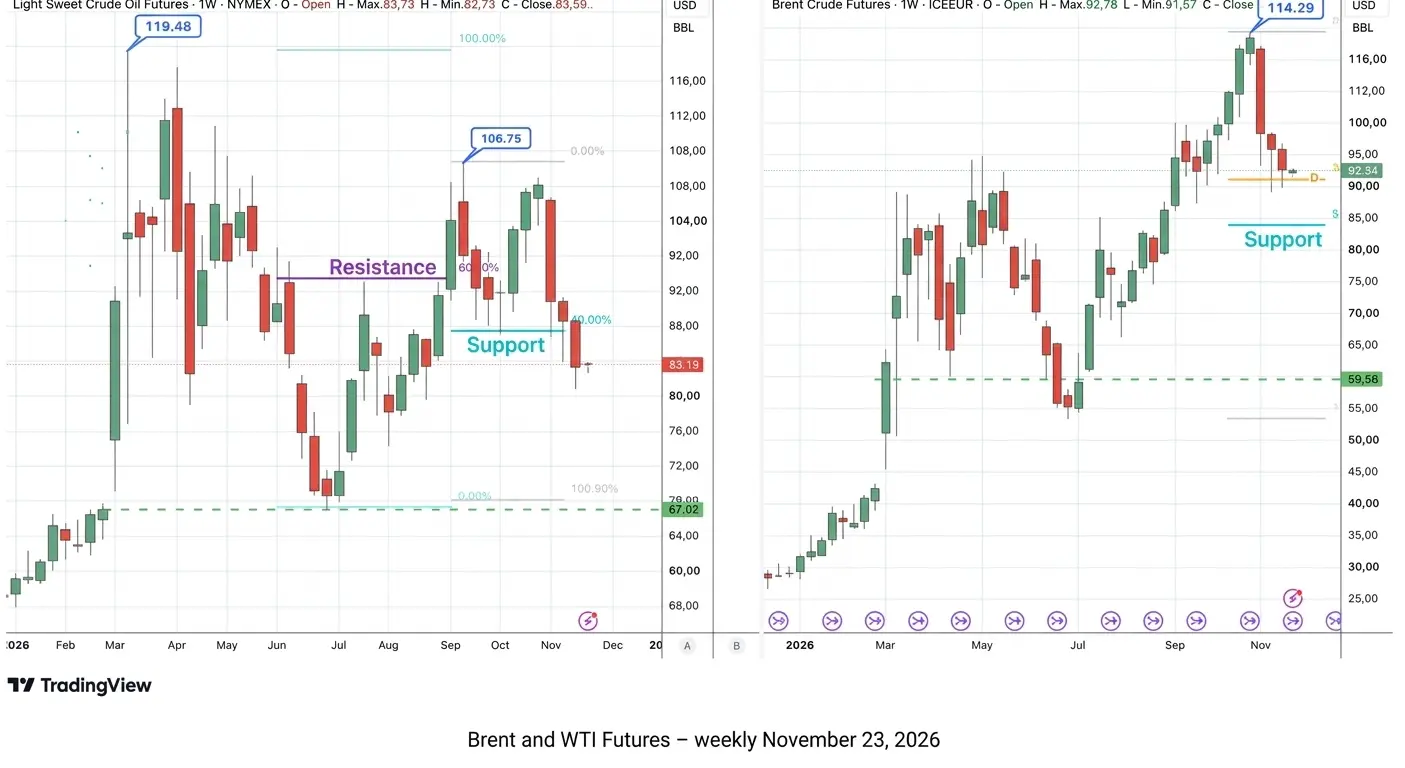
WTI, the U.S. crude benchmark, is trading at $83.56 after three consecutive red weekly candles, as shown in the chart. Brent, the European benchmark, stands at $92.58 and displays the same three-week losing streak. Crude prices are also being weighed down by equity market declines, which have driven investors out of risk assets.