
Tron network’s Decentralized USD (USDD) stablecoin, designed to maintain a 1:1 peg with the US dollar, has seen a significant change in its backing.
Tron Reserve DAO, the entity in charge of managing the funds that back this stablecoin, withdrew 12,000 BTC valued at $730 million.
USDD, launched in 2022, initially relied on a reserve of 14,000 bitcoin as an essential part of its backing. However, after this recent move, the stablecoin only has TRX (Tron’s native cryptocurrency) and USDT as collateral. Specifically, he holds 10 billion TRX, equivalent to $1.7 billion at the current price, and 19 million USDT, as seen in the image below.
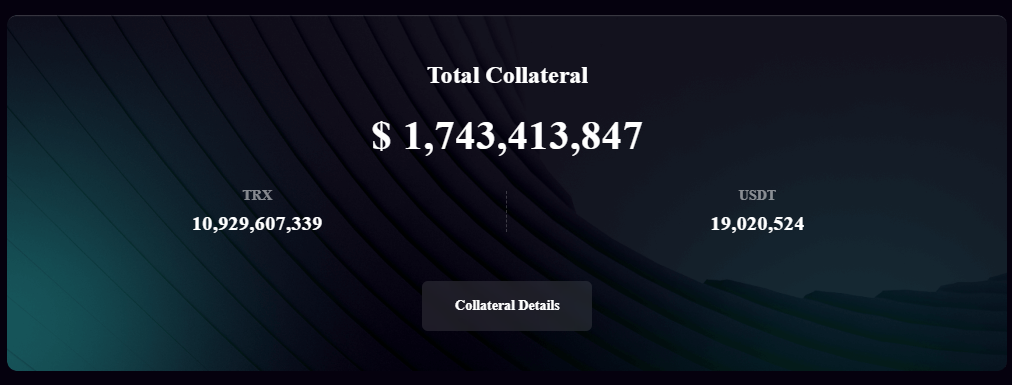 USDD stablecoin backed. Source: usdd.io.
According to the DAO website, the withdrawal of BTC was carried out without a prior vote or discussion by the organization's members, which contradicts the fundamental principle of decentralized autonomous organizations, where decisions must be made collectively.
Tron founder calls for calm
Justin Sun, founder of the Tron network, tried to calm users through a message on the X social network, assuring that the strategic change was made for efficiency reasons.
Sun explained that USDD has a collateralization mechanism similar to the DAI stablecoin on the Ethereum network . According to Sun, when the collateral exceeds 300%, collateral holders can withdraw it without requiring approval. However, if the collateral drops below 110%, it needs to be replenished to avoid liquidation.
Currently, USDD maintains a collateralization ratio of over 300%, which Sun says indicates low efficiency in capital utilization .
Despite this scenario, Sun noted that the Tron Reserve DAO plans to “improve USDD in the future to make it more competitive in the stablecoin market.”
How does the USDD stablecoin work?
USDD, like other decentralized stablecoins—for example, DAI—is backed by other tokens in an overcollateralized manner.
It can be read on the official USDD website:
“USDD is secured by the overcollateralization of multiple mainstream digital assets (e.g. TRX, USDT). The total value of collateralized assets is significantly higher than that of USDD in circulation, with the collateralization ratio set at 120%.”
USDD website.
If the value of USDD starts to decline below $1, users can exchange USDD for collateral (mostly TRX) at a price above market value. This incentivizes arbitrageurs to buy USDD on the open market at a low price, exchange it for collateral at a higher price, and then sell the collateral for a profit.
This arbitrage process increases the demand for USDD, which helps push its price back towards $1.
In case USDD starts to rise above $1, users can mint new USDD at a price lower than the market value. This prompts arbitrageurs to mint new USDD, sell it on the open market at a higher price, and then exchange it for the collateral to make a profit. This helps push its price back down towards $1.
Over the past year, the stablecoin has lost parity with the US dollar on two occasions. The first was between December and January 2023, the other was between April and May of this year.
Despite these challenges, USDD remains in the top 100 cryptocurrencies by market cap , ranking 82nd. It was recently overtaken by PayPal’s stablecoin PYUSD, which is ranked 70th, according to CoinMarketCap.





