Cosmos calls itself the “Internet of Blockchains” where it tries to be the biggest ecosystem of interconnected blockchains. With its powerful Tendermint software, Cosmos becomes a very ambitious project in the blockchain interoperability world. Its supporters see it as “blockchain 3.0” after the previous evolution of blockchain 1.0 (Bitcoin) and 2.0 (Ethereum).
Before we continue, I would like you to check my other published articles with partnerships and integrations of Kyber Network, Vechain, and Loopring.
Cosmos got its popularity after its technology was directly adopted by Binance Chain. Apart from them, Cosmos has also been used by other serious blockchain projects as well. This article helps us to explore all of these major Cosmos partnerships and integrations. Let’s begin right away!
Partnerships and Integrations List:
- Binance Chain (source)
- OKChain from OKEx (source)
- Akash Network (source)
- Band Protocol (source)
- e-Money (source)
- Persistence (source)
- Aragon (source)
- Sentinel (source)
- IRISnet (source)
- FOAM (source)
- Comdex (source)
- Loom (source)
- Hyperledger Burrow (source)
- Playlist (source)
- Terra Protocol (source)
- Regen Network (source)
Detailed List Of Partnerships And Integrations
1. Binance Chain
(source)
Binance Chain is perhaps the biggest testimonial to Cosmos' technology prowess so far. Everybody in the cryptocurrency trading space knows what Binance is. It is the largest and most active cryptocurrency exchange in the world where you can trade various different altcoins with deep liquidity. Awhile ago, Binance decided to create its own blockchain which is called the Binance Chain.
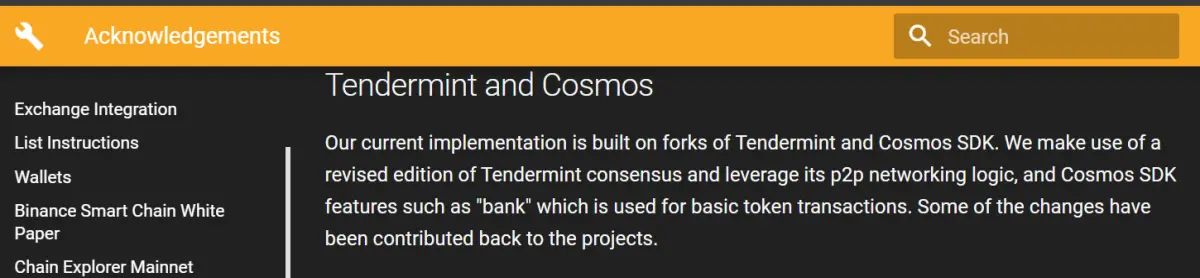
And as they have mentioned inside their own website, Binance Chain is built on forks of Tendermint and Cosmos SDK. While there are some changes that the Binance Chain developers made to the original codes, but overall, they share the same logics, features, and core technology. Both the Binance Chain and Binance DEX are built on top of Cosmos ecosystem, which is the proof that Cosmos Network has a working and effective platform.
2. OKChain from OKEx

(source)
OKEx is another very popular crypto exchange that also tries to build its own blockchain. OKEx's blockchain is called OKChain, and it is built on top of Cosmos SDK. Just like Binance Chain, OKChain also supports DApp creations and allows its community to create their own tokens. OKChain team claims that OKChain would differentiate data into three different layers, which are operations, block, and off-chain data. OKChain also uses the standard Delegated Proof of Stake (DPoS) consensus algorithm.
The fact that both OKEx and Binance chose Cosmos as the basis of their blockchain technology has tremendously helped Cosmos Network's reputation.
3. Akash Network
(source)
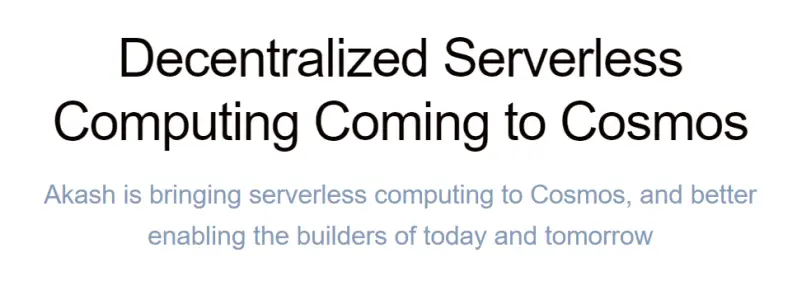
Akash has publicly stated its love interest to Cosmos technology. They claimed they have been supporting Cosmos SDK since 2018 and they proudly announced that they built Akash on top of Tendermint software. And for this reason, Akash is building distributed and serverless computing to Cosmos ecosystem. For your information, Akash is the P2P serverless cloud computing solution which offers open and permissionless marketplace for unused and idle compute cycles.
4. Band Protocol
(source)
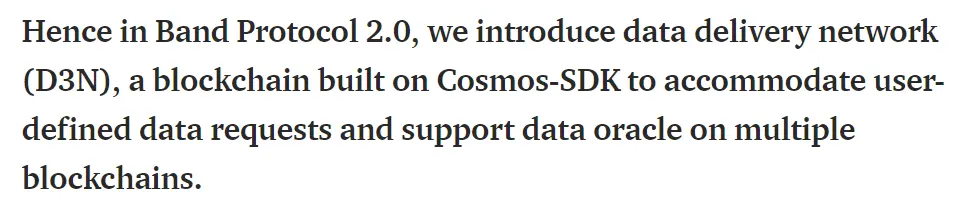
Band Protocol is a data governance framework built for future Web 3.0 apps. It acts as an open-source standard for decentralized data management. In January 2020, Band Protocol announced the creation of Band Protocol 2.0 where they would launch a data delivery network called D3N. This D3N is a dedicated blockchain that was launched using Cosmos-SDK to support data oracle on various different blockchains.
5. e-Money
(source)
e-Money is another startup that tries to leverage the blockchain technology to help global payment settlements. You might have heard similar startups that operate on top of other blockchain platforms but e-Money chose to utilize Cosmos Network's technology to issue their tokens. Tokens that are issued on Cosmos Network will be used to facilitate very fast settlements on a global scale.
6. Persistence
(source)
Persistence is a startup with focus on digital asset marketplaces and exchanges. They believe that commodities trading, letters of credit, and even solar credits will be able to help blockchain technology becomes much more mainstream in the future. And to help achieve such vision, Persistence utilizes Tendermint Core and Cosmos SDK. The difference is that their toolkit remove the need of the blockchain to use tokens and gas.
7. Aragon

(source)
Aragon is another Ethereum-based startup that sees the limitation of utilizing someone else's blockchain platform. They decided to create their own blockchain which is called Aragon Chain. Aragon Chain is a blockchain with native AragonOS optimized for DAO activity. And for the technology behind Aragon Chain, they utilize Cosmos SDK with EVM (Ethereum Virtual Machine) module.
8. Sentinel

(source)
Sentinel is a dVPN (decentralized VPN) that tries to compete with the likes of NordVPN, Private Internet Access, VyprVPN, and other popular VPN service providers. Sentinel secures its VPN networks by using validator network. Their source code is also fully open-source, to ensure transparency. As for security, they use military grade encryption to ensure the safety and privacy of their users.
Sentinel network itself is running on top of Cosmos SDK.
9. IRISnet
 (source)
IRISnet is a service infrastructure and protocol with a vision to help distributed business applications or business DApps through the utilization of Cosmos SDK/Tendermint. The whole technology of IRISnet is built on top of Cosmos network ecosystem.
10. FOAM
(source)
FOAM is a blockchain-based protocol that tries to revolutionize the "location finding" industry and tries to free the world from external centralized sources such as GPS and similar services. They use what they call Proof of Location as their main protocol.
And to achieve its goal, FOAM uses three different technology and mix them together. One of the technology they utilize is Semi Synchronous Shared State Machine that comes from Tendermint software (which empowers the Cosmos Network).
11. Comdex

(source)
Comdex is a commodity trading platform with over $10 million trading volume. The Comdex app itself is operating on the Commit Network, which is an enterprise blockchain built on the Tendermint engine. And because of this reason, you can say that Comdex uses similar technology and features like Cosmos Network.
12. Loom Network

(source)
Loom Network is another blockchain interoperability startup that tries to connect Ethereum, Bitcoin, Binance Chain, Tron, and other popular public blockchain ecosystems. And to achieve its vision, they forked the Tendermint engine, which also empowers the Cosmos Network. Loom Network also acknowledges the importance of Tendermint and Cosmos in their own technology.
13. Hyperledger Burrow

(source)
You might be familiar already with the name "Hyperledger" which is pretty popular in the enterprise blockchain industry. It is used by many big corporations, such as IBM. And yes, Hyperledger Burrow is another blockchain project which is also hosted by the Linux Foundation. It is claimed that Intel is also co-sponsored Hyperledger Burrow.
The idea of Hyperledger Burrow is that it serves as a permissioned smart contract application engine to execute smart contract applications in a secure and decentralized way. And yes, some of its core features are built/adopted from Tendermint consensus engine.
14. Playlist
(source)
Playlist is a new social music streaming app which tries to leverage the DApp technology to get ahead of the centralized music streaming solutions. It is claimed that Playlist has over 400,000 downloads already on iOS and has successfully raised $5 million worth of funding. And the good news is that Playlist utilizes Cosmos Network across its music platform.
15. Terra Protocol
(source)
Terra Protocol is another stablecoin project that tries to compete with the likes of USDT, USDC, PAX, and DAI. The biggest difference is that Terra Protocol is not built on top of Ethereum like these other ERC-20 stablecoins. Instead, Terra Protocol utilizes its own Proof-of-Stake blockchain that's built on Tendermint engine. They believe Ethereum has too much limitations and Cosmos technology provides much more flexible options for their project. What to like from this project is that the stablecoin uses algorithm to ensure price-stability, which makes them a "decentralized stablecoin" project, just like DAI.
16. Regen Network
(source)
Regen Network describes itself as a community of entities engaging with ecological regeneration, monitoring, verification, and technology development, which is all centered around the Regen Ledger. The participants in the Regen Network can track specific changes of land or oceans among other environmental stuff. And to track, verify, and reward ecological performance, Regen Network utilizes the Cosmos framework.






