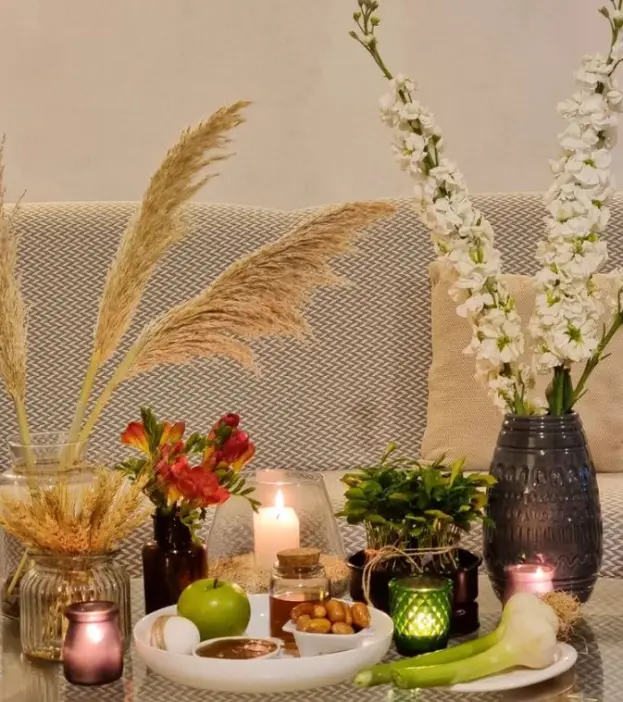
In the new year (called Nowruz) people in Iran celebrate the first 13 days of spring. But the most important tradition of Nowruz is the table (Haftsin).
All over Iran, at the start of New Year, fireworks are lit. The sound of bonfire could be heard all over our city and people were happy and excited.
It is as if something new has happened. Everyone was waiting for this moment to shout for joy and happiness.
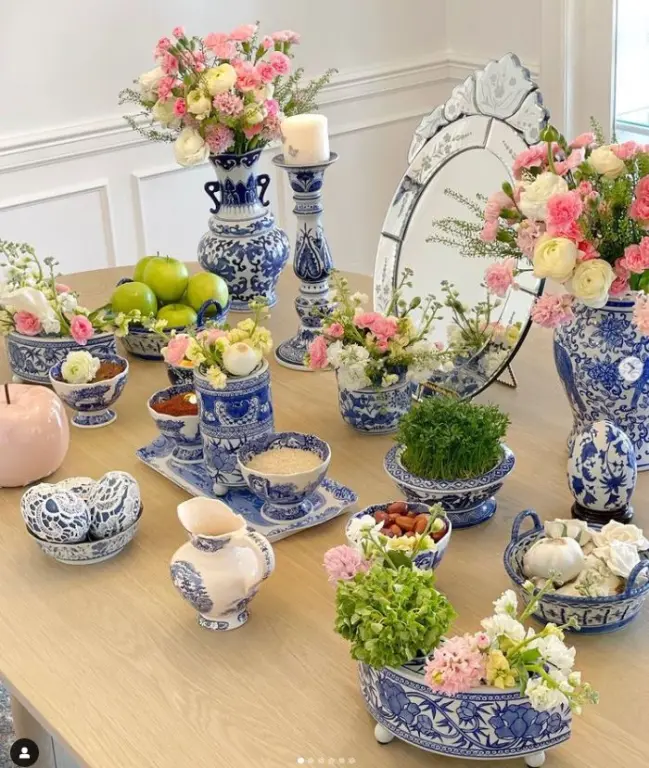
In the new year (called Nowruz) people in Iran celebrate the first 13 days of spring. But the most important tradition of Nowruz is the table (Haft-sin).
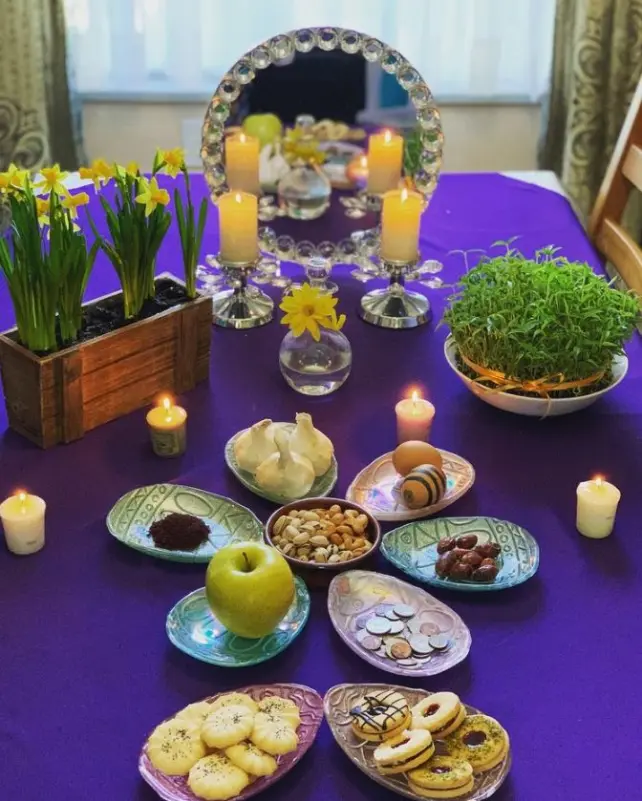
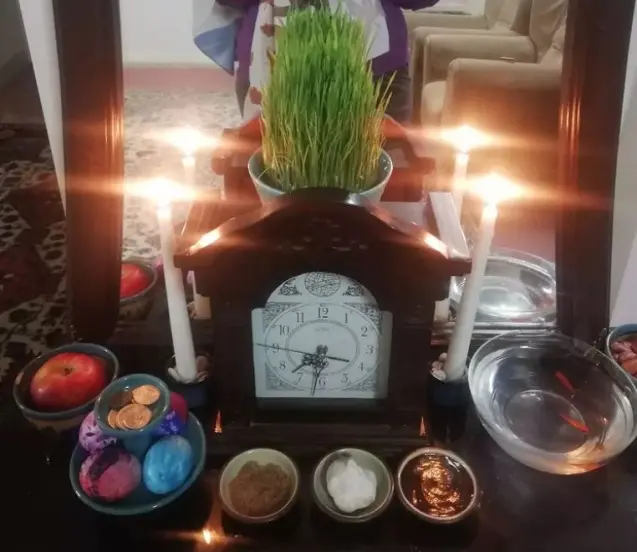
Haft-sin table (means 7- S) which consists of seven S (seven things whose names begin with S and each is a symbol of something that mostly includes nature, freshness, and newness.)
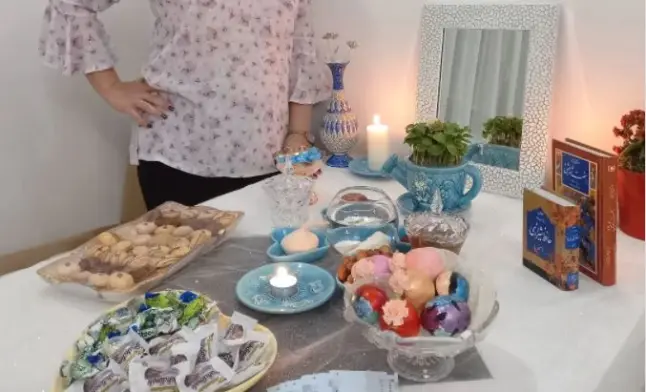
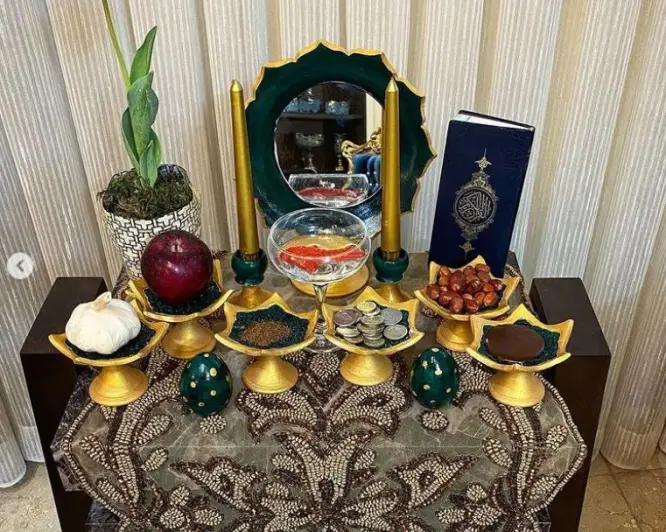
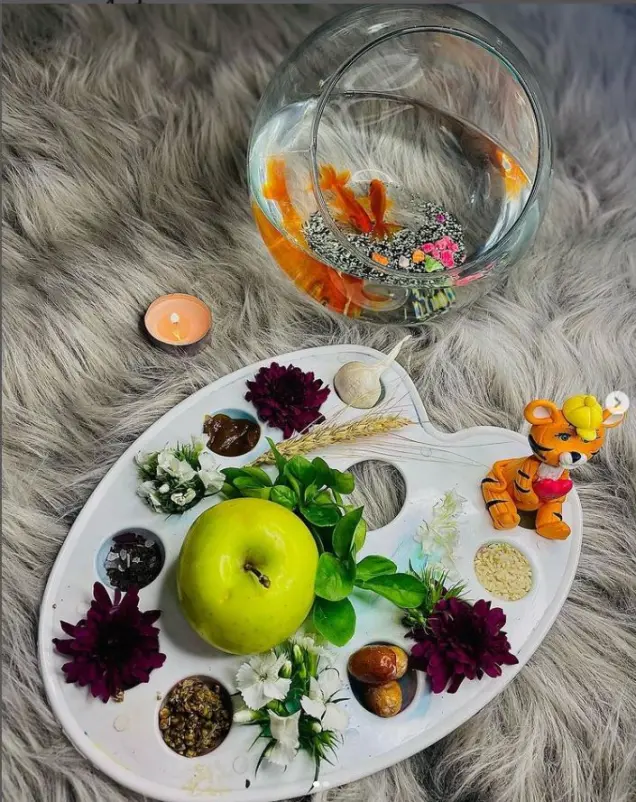
Haft-sin table includes elm (Senjed), apple (Sib), grass (Sabze), Semno (a traditional sweet), garlic (Sir), vinegar (Serke), and sumac or Hyacinth flower (Sonbol). They also put goldfish, books (whatever is sacred to you), mirrors, and candlesticks along with nuts and sweets on this table. Colored egg-shells are also popular.
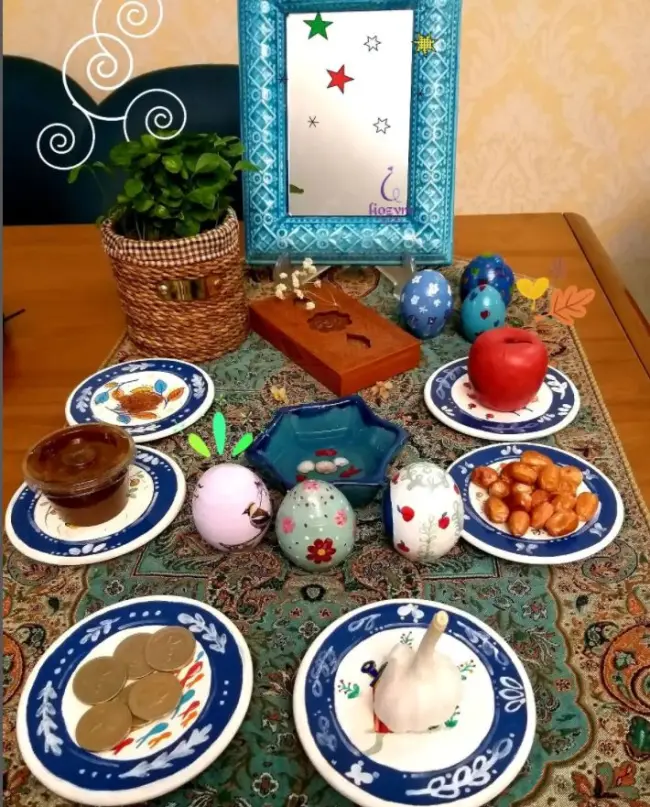
Iranian women show off their taste in setting the Haft-sin table. And this beautiful tradition remains in its time. Even artists use it to show rebellious thoughts and fight..
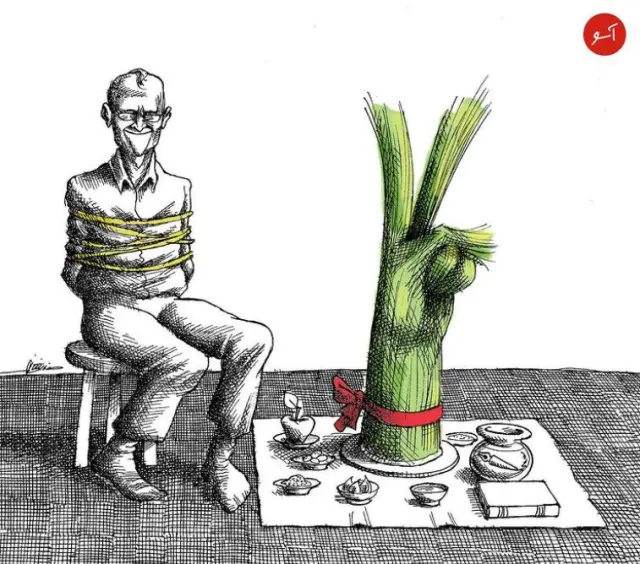
The grass is the most important part of this table, which is a sign of greenery and nature. From the first day of Eid, the Iranians put a pot of grass on their table, and on the thirteenth day of spring (April), they throw back the grass into nature (return it).
Keeping grass as a symbol of nature inside the house is somewhat looks like the Christmas tree tradition and seems to have similar roots.
For more information about Persian Eid, you can refer to this link