
We are almost there, and soon the year 1400 and the days of "Nowruz" or the celebration of the solar "New Year" will come.
Planting grass
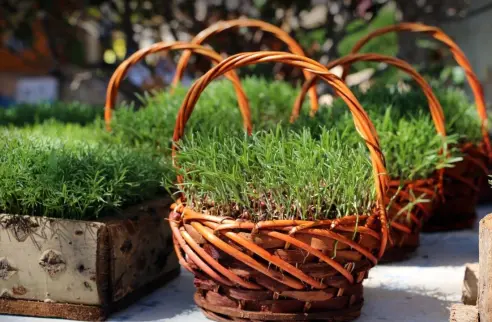
About two weeks before Eid Nowruz, Iranians plant grains such as wheat, mung bean, lentils, corn, etc. in beautiful containers or jars as a sign of spring in their New year decorations. The Avesta speaks of planting grass and mentions it as a symbol of truth and virtue.
Planting greenery is actually bringing spring into the house. They keep the grass indoors for 13 days and throw it to nature on the 13th day.
Haft-sin (7 S)
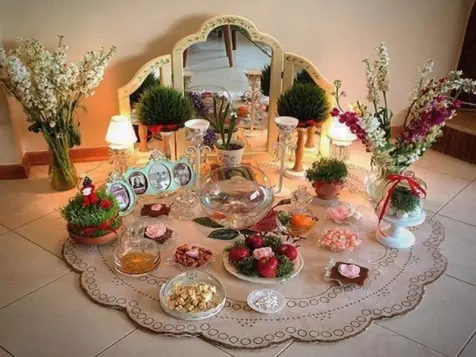
The Haft-e-Sin table (7 things that their names begin with the letter S in Farsi language) includes foods and vegetables such as elm (Senjed), apple (Sib), grass (Sabze), Semno, garlic (Sir), vinegar (Serke), sumac, and next to them the holy book, mirror, and candlestick , goldfish, candles, bread, and so on.
Visiting the Graves of Lost Loved Ones
On the last Thursday of the year, Iranians go to the graves of their lost loved ones with bouquets and sweets.
Housecleaning
As the name implies, they clean the whole house and sometimes they wash all the carpets, floors, yards, and appliances.

Haji Firooz
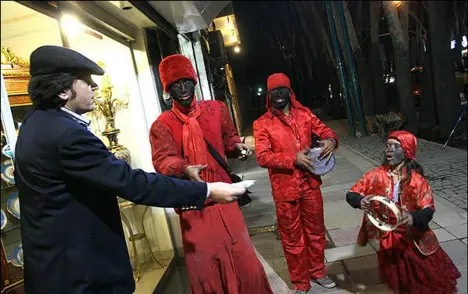
He is one of the symbols of Nowruz who comes to the streets in the last days of March amidst the hustle and bustle of the city with a ring of bells, red clothes, and black face, and announces the arrival of Nowruz to the people. Haji Firooz recites poems to this celebration, people are happy to see him and give him money.
Amu Nowruz
This person, also known as Baba Nowruz, is a symbol of time in ancient Iran and also Zal in Shahnameh. Iranians believe that Amu Nowruz, with a long white beard and hair, comes home on Eid night to see his cold lover who is “the winter lady”. A meeting that will never happen!

The 13th
Iranians believe that the 13th of Farvardin is bad luck and they should not stay at home, so they go to the plains and mountains early in the morning. Each family takes the leftovers from celebrations to nature, and some make soup on firewood.
Visit family and friends
Usually, the first days of Nowruz are reserved for the younger ones to visit the older ones to congratulate them on the New Year.
New Clothes
Iranians believe they have to look their best on the new year and care a lot to buy new clothes for the new year.
The Moment Of The New Year
Everything has been prepared for hours, a few minutes before the New Year, the family gathers around the Haft-e-Sin table and prays for the New Year.
After the New Year, they all happily hug each other, kiss each other, and congratulate each other on Eid. Usually, the elders give money to youngsters.
There is a belief, that whatever you are doing at the moment of the start of the new year, that is what you will do for the last of the year, so they stay on alert!






