
FFT (Food For Thought) and Potential Solutions
I am making the case that if Hot Wallets chill out, they could Lead the charge towards mass adoption. In Part 1 of this article I set the stage, now let’s dive deeper.
Welcoming my second bull market, I have been in this space long enough to have paid my dues, enjoyed the best and endured worst of times. I have fallen victim to my share of scams and rug-pulls, as well as dodged multiple other pitfalls. We must remember that it is not only n00bs who are preyed upon and fall victim to the ever-evolving threats posed by shadowy, unscrupulous miscreants that lurk in the ether. The sheer speed of crypto development is such that the industry can't keep up and with the advent of AI... things are about to get much more perilous.
We have all read stories about seasoned crypto-natives losing millions in NFTs and currency from their hot wallets, getting royally REKT. Why? Because the products that are meant to free us and shield us from harm, are overly complicated and unpredictably porous. Spurred on by TradFi henchmen like the SEC, we have chased after the unicorn of decentralisation, cutting corners on security, often resulting in dismal and even tragic user experiences.
Getting into crypto is a daunting gauntlet—a dive into a piranha infested river and trying to keep up with the motorboat of narratives, while learning to swim against the current, between its rusty, whirling blades. Mass adoption? By whom—maniacal masochists?! Until the industry can work out the jagged barbs that produce the most agonising pain points, there can be no mass adoption. Financial freedom? Only for daredevils and thrill seekers who are insane enough to run a deadly gauntlet blindfolded?
No friends, this is not the way.
Every so-called Web3 site prompts the user to connect their wallet. This is a highly irresponsible request that can carry with it insurmountable risk and devastating consequences. But when things go awry, the devs hide behind DeFi and blame the victim. No. Just as there is no such thing as a bad student, the user’s clumsiness does NOT absolve the wallet devs of responsibility. Blaming the user for getting drained while surfing is like expecting users to actually read and memorise every TOU/ULA that comes their way, remember SouthPark’s Human Centipad?

Imagine if every time users opened the Internet, they could accidentally sign over the deed to their home… How much ‘mass adoption’ do you suppose the Internet would have today?!
We need dependable security, not lame excuses!
On the one hand, crypto newbies are told never to leave coins on exchanges. "Not your keys, not your coins!" the gurus drone. But as soon as one ventures into DeFi and gets drained, the script is flipped and one is told that they should be more careful next time to DYOR... “Only ever connect to sites you know and trust...” What nonsense! This advice is as hollow as the tropes: "not financial advice" and "only invest what you're willing to lose". To the first I say: don't dispense advice at all if you're so skittish that you must qualify it with this ridiculous hackneyed, corny caveat... and to the second: No one is 'willing' to lose anything. Period. Alas! All investment is risk and as investors we know this. The only thing that makes sense is DYOR… to the best of one’s ability, of course.
However, having said that, if people get scammed, the worst thing one can do is ridicule them for being gullible/stupid and not recognising the scam ahead of time.
Wallet devs, do you want your products to only be used by top tier devs? Most people are not at all technically inclined. This does not make them inferior, just not technically savvy—just as most devs are not versed in marketing, writing, singing, design, agriculture or repairing engines. We all have our specialisations and crypto should be designed in such a way that it is suitable for and useable by everyone. This TRUST is what will create mass adoption.
Rubbing salt in the wound with these vacuous clichés avails us nothing productive. Ask yourself: HOW are people supposed to know which sites are safe/trustworthy and which ones are not? Sure, they have antivirus software, but other than that, it is the WALLETS that should be robust enough to resist being drained and protect users from malicious actors!
Crypto dApps like MetaMask cannot just shrug off responsibility when users of their products are getting robbed on an industrial scale. That is simply unethical.
The wallet is the user's only defence, so MetaMask ought to take steps to protect users and keep a database of blacklisted wallets. Furthermore, a suspicious list of wallets that are younger than 100 days (for example), that way even if scammers create a bot that can register a wallet every second, they can't cheat the blockchain and their hacking can be slowed down to a trickle. Once a wallet is created, the event should be recorded. Scammers would need to hack the entire network and as we know, this is prohibitively expensive, so...
DO SOMETHING!! MAKE SCAMS UNAFFORDABLE and FUD UNBELIEVABLE! That is how WAGMI.

I repeat: Security is NOT just a convenience or luxury—it’s an absolute necessity.
Could MetaMask, Phantom and others not build a CosmosHub or Polkadot-like system that treats all wallets as ‘parachains’ that can plug into its centralised security database that would guarantee close to zero scams and draining bots? This way, risk-averse users would interact only with the central MM contract and the contract would then execute payments on their behalf. All transactions would then make an extra jump and be slower, but the users would have an added layer of protection. A secure ecosystem of only clean wallets of a certain age, which get slashed and burned if scams are detected and confirmed? The plug-in would NOT be mandatory, i.e., new users would be able to choose the path of centralised safety and more advanced users could go deeper and explore without the ‘blockchain babysitter’. Just as in the case of the Internet, vs the Dark Web. This solution would not compromise the freedom of experienced crypto natives, while allowing the n00bs to operate in safety, rather than being endlessly harvested by predators.
I opened Part 1 of this article with the question: “Wen Mass Adoption?” As we can clearly see, the question should be not “Wen”, but “HOW”. If security is resolved and all but guaranteed, everything will soon fall into place. Security-focussed architecture would greatly accelerate mass adoption.
Another basic feature would be: allowing the user to pick their own 12 or 24-word seed-phrase. I have spoken on this to a number of security experts, some of whom have said that this would somehow compromise security, but none of them could explain how exactly. Why is a randomly generated word salad better than me picking up the Bible or Encyclopaedia Britannica and selecting the 9th word on every 13th page, starting from page 132? This is an impossible combo to guess. The words would be completely random.
If such overkill is required, why not generate 24 made-up words? Or generate combos of letters AND symbols? Surely that would be even safer?
Except that it would not.
Consider this: the greatest threat to our assets is us, i.e., human error. How many woefully lamenting stories of forgotten passwords and lost wallets have you heard in your time? If you implement my idea, users would be protected from this tragedy, as world-famous books can be accessed in any corner of the globe. They would just need to remember simple mathematical progressions, rather than create mnemonic phrases for each wallet. I can't remember my passphrases, but I COULD remember a simple mathematical pattern, e.g. mentally bind MetaMask to one book, Phantom to another, Leap to another and go from page 132 for the first wallet, 137 for the second wallet, 142 for the thirds, and so on... I would NEVER lose a passphrase again.
If these solutions somehow compromise Web 3, perhaps let’s get Web 2.75 right first?
Trying to run before mastering walking is the height of folly. Perhaps less is more, so do less for now, but make an excellent job of it and give users the freedom to choose. Let people decide for themselves if they only wish to receive payments from trusted wallets (vetted by the Wallet Provider), whitelisted wallets (ones the user adds themselves) or the world at large. This way, instead of just cold and hot wallets, we could have cool wallets, which would be virtually impregnable and barred from sending AND/OR receiving funds and NFTs to/from non-whitelisted wallets. At the moment, most older wallets have a hopeless mess of unwanted (and as we’ve seen in Part 1 of this article—potentially dangerous) NFTs, strange tokens, etc. Which we're told not to touch, as they could contain malicious code and drain the account. How do you expect to see mass adoption with these kinds of ridiculous risks lurking about??
Here's a spin-off idea: the Wallet Provider could earn a revenue stream by vetting benign NFT projects that wish to be dropped to wallets. E.g., a project could pay MetaMask 100 USDT to distribute 10,000 genuine, clean NFTs among 10,000 random holders. Of the fee, 80% could go to MM for the assistance and 20% be distributed in MM tokens to the addresses that OPT IN to receive free NFTs and tokens.
This way everyone would win!
✅ Those who don't want free NFTs would not be spammed.
✅ The Wallet Provider would receive an additional revenue stream and activity.
✅ Serious artists would be able to build a community and showcase their work.
✅ Wallet Owners who DO opt in, could enjoy SAFE NFTs plus earn a few MM tokens on the side, as a bonus.

BUIDL-BUIDL-BUIDL, LFG!
Power is worthless without control. Decentralisation is useless without security.
Decentralisation does NOT mean a lack of control and giving scammers free reign. Just as free speech does not mean that everyone must be forced to hear what everyone else has to say. Sure, people have the right to say whatever they want, but we have the right to walk away and block/mute them if we so wish.
Decentralisation must be achieved in a responsible manner: FIRST empower users with the tools and features they need to protect themselves, only THEN send them out into the wild. The current set up is a turkey-shoot for scammers, they have all the power and dApp providers bear no responsibility. This is NOT how you achieve mass adoption. User protection and provider accountability is a must…
More concrete improvement ideas to make DeFi viable:
Allow users to set a daily transaction limit. For example: 1 transaction per day under 10 dollars or 1000 transactions below a certain amount. After that, the key must be entered to increase/decrease the limit, with an additional password to reveal the key/key-phrase.
Furthermore, create an emergency STOP button, so that if the 1 daily transaction tripwire has been activated by a scammer, it is possible for the user to immediately take action and disconnect from all sites and cancel all pending transactions.
Even dApps that have been manually added to the whitelist, ought to have limitations that can be imposed by the user, for instance: on a gaming site I might set the parameters of auto-approving up to 100 micro-transactions during a session, but prompting me if required to spend over a dollar. Simple and elegant. That way the user can enjoy interacting with the dApp with complete peace of mind. Sites not on the whitelist could, perhaps, be limited to as few as one or 10 auto-approvals. Or even a hard daily limit—this would be useful for parents whose kids play Web 3 games.
Ultimately, we need gasless transactions, of course, to make gaming and DAOs viable. I believe that the InvArch project is one of those working to address this issue.
MetaMask, Ethereum Foundation… would you PLEASE come together and allow users gasless transactions between their OWN wallets? I can even make commission-free transfers between my accounts in the same bank! Work with Polygon and other L2s, catch up and surpass the greedy TradFi’s UX and efficiency already. I know they’ve got a centralised advantage, but it’s high time to prove that being decentralised is NOT a disadvantage.

Let’s go even farther and faster and burn brighter: I urge you to give ALL wallets that have been active (min. 1 transaction/month) for over a year, a daily limit of, say, 3 gasless transactions on sums below 100 USDT. Now THAT would significantly boost UX, build confidence and loyalty. You DON’T always need airdrops to build loyalty… and you CAN’T buy it in fact. That’s why airdrops can’t secure it. All they do is feed the insatiable swarms of liquidity locusts. Take the $PYTH airdrop as a random example—stakers (loyal project supporters who bought and staked the coin… who follow, support and vote on proposals) get… nothing. No APR at all, just airdrops from random projects (if that), while people ‘farming’ other tokens got airdrops of thousands of $PYTH, which most of them instantly dumped/liquidated and moved on to farm the next lucrative thing.
Real loyalty comes through gamification, hooking the user with amazing USPs and great UX on participation and achievement.
Wallet Providers, if you take steps to keep funds SAFU and make wallet levels: by seniority, trade volume, staking, proprietary NFTs held, etc. you will unleash mass adoption beyond your wildest dreams!
I have written extensively on Torum about gamification and participation-based levels and how to achieve loyalty through such programmes. Reward the Community, the BUIDLers, not just the ‘farmers’! They’re not really farmers, if you think of it… farmers are hardy, hardworking folk who maintain a homestead and toil, producing vital sustenance for the common good of the Community at large. The liquidity locusts generate no net value, they are just there to strip a project bare and move on ASAP.
Reward the people who PARTICIPATE AND STAY. People who BUIDL value. It’s really not that hard.
Moving on… Allow users to network their wallets into multi-sig structures/clusters. Users could create personal multi-signature wallets to sign transactions that fall outside the scope of their set parameters, with other wallets. This might require allowing users to log into two or more different accounts on the same device. Now that would be a step beyond TradFi!

When transactions exceed the daily limit, users could opt to approve them with one or even several of their wallets, directly on the blockchain explorer perhaps? This way, an individual might set a daily spend limit of 0.1ETH, while an exchange might set 1,000 ETH, however, if there is an unauthorised spike in activity or volume, a hard stop would be implemented until the wallet owner intervenes manually and acts as deemed necessary. The idea of a user logging on anywhere or clicking on a malicious link and getting all funds and/or NFTs drained is a slap in the face for the entire industry!

Sure, it is self-custody, so the user could disable such safeguards, but the safeguards MUST be built and readily available, so that the users can choose their preferred level of security. So what if the user clicked a malicious link? Did the user manually initiate and sign the transaction? If not—STOP IT before irretrievable losses are incurred! If you can’t tell… do better! Train AI to determine when to throttle suspicious transactions.
As a side-note, do you seriously expect users to know what they’re signing when approval notices are encrypted gibberish? If this is your best… it’s time to DO BETTER.
We need Smart Wallets that are able to detect tampering, clamp down and clam up, keeping funds SAFU!
There is a whole lot wrong with TradFi, that’s true, however, it does have convenience and security worked out, so Web 3.0 projects would do well to adopt at least some of the tried and tested UI/UX standards, which the on-boarding public knows, trusts and expects. Not everything needs to be overly complicated. Why reinvent the wheel? Introduce 2FA and allow people to access any number of wallets, from the same device, without importing via godawful seed phrases. This clunky UX really slows down adoption. The process must be simple and streamlined, while increasing security in order as to compete with TradFi and Web 2.0. The best platforms and operating systems are unintrusive, almost invisible—they keep the user safe without constantly whining for passwords. This is an area where intuitive AI and Smart/Trainable Wallets would be most welcome.
IF you, the dApp builders form a Crypto Security Counsel and address the scams collectively, you CAN render the scams unprofitable, whereupon they will naturally evaporate and fade away. dApp devs, all you need to do is get your priorities right. You wish to see mass adoption? Then turn the current shark tank into a safe, user-friendly environment.
The user should also be able to set an auto-pause before transaction execution begins, if they so choose.
The user should have the possibility to set email and mobile alerts for when their wallet has been accessed. Coinbase wallet does this well, this is how my friend learned that she was being hacked. But… Alas! Could do absolutely nothing to stop and reverse the process!
Users should be able to limit transactions to only go to approved/whitelisted wallets.
We should be able to report malicious transactions and MetaMask devs should be able to blacklist that wallet, alerting every wallet in the network to ignore requests from it.
Allow the user to protect their wallet with any number of passwords. This is their wallet. If they wish to have several passwords to approve each transaction or cycle the password every five transactions, that is their prerogative.
In the real world, if I choose to carry my wallet in a box, that sits inside of another box, which lives in a bag, which in turn is wheeled around on a suitcase... in the trunk of a car that's driven around in a trailer... that's my prerogative. It's my wallet and I can do what I want. So, provide multiple tools and allow the users to tweak their security to match their needs. No one should EVER be wallet-drained! The problem with crypto is that the users are fighting whilst blindfolded and bound by the limitations and inadequacies of the dApps they use. Everyone has different rules, there is so much jargon flying around… The industry needs to cut the fat and streamlined standardisation. You know what I mean… genuine interoperability.
During registration, you could require a purpose of the wallet, e.g. Personal, Exchange, Company, Charity, Philanthropy, etc. and add an immutable suffix to the address (e.g., if there are 9 categories, this could simply be a one-digit number). This would limit the scammers to pick a purpose and stick with it, as the people they contact would be able to recognise that a serious project would not ask for funds to be sent to a personal wallet, etc. It also gives the Wallet Provider some oversight, as if a scammer registers and Exchange wallet, the address can quickly be weeded out and blacklisted. This suggestion could contribute to the overall transparency of the industry.
Mobile phone users would love signing transactions via biometrics…
Human-readable wallet addresses would be a nice idea too, this is not a new idea, so I hope that this UX boost will be mass adopted by the industry very soon. Back in the day we managed to create email, why not this?!
If crypto is to see mass adoption and DeFi become viable, we NEED a 2FA or YubiKey level solution. Hot wallets often handle large sums and we can’t risk not knowing whether there’s a hibernating/dormant drainer bot that has access to the wallet, ‘listening’ for big amounts. Please consider introducing a safety feature like a wallet scan… a virus scan for wallets, if you will, to see which sites are still connected and whether any third party has access to the wallet (wallets should have a right-to-be-forgotten, to sever unwanted histories/contacts, like clearing cookies from a browser. If I make a one-time donation, I might not wish for the wallet to be remembered. This could be misused, of course… but if you only allow ‘donation transactions’ to go to established charity wallets, registered, as above, that would reduce the risk of abuse).
Either way, the user must be assured that the wallet is free from slumbering malicious agents.
Users also need serious guidance on safety practices and what the various security features do.
Alerts when suspicious activity is detected and safety auto-pauses when the wallet is accessed from a strange operating system/IP, binding wallets to IP or device, etc. It would be great if users could receive a message with the wallet locked for 10 min, whenever their account is opened by an unknown IP. This would give them time to act. This should, of course, be an optional shield.
Ultimately, why not have decentralised security?! Have Smart Wallets that communicate among themselves, forming random clusters and protecting one another from attack. Not co-signing transactions, but alerting and reporting/adding offenders to a centralised ledger, which would make scamming inefficient and unprofitable.
If we think that things are bad now, imagine what will happen 5-10 years down the road, when quantum computers hold sway. A stitch in time saves nine! Look ahead and future-proof the industry. Maybe you could make them quantum-proof by allowing Smart Wallets to come together and combine encryption keys, if a hack is detected… Surely, a string of 7 keys in a random combo is an impossible task?
The security rails of the current infrastructure are simply not fit for purpose. Wallet Providers can’t hide behind DYOR and non-custodial excuses, however, this problem is not theirs alone—it permeates and distorts the perception of the entire industry. The Everyman cares little about the TradFi money laundering FUD, but losing his hard-earned income hits too close to home for comfort…

Wallet Providers, by implementing serious user protections, you can increase mass adoption of your tech and give Trezor, Ledger and others a serious run for their money, as hot wallets would cool down considerably.
Alternatively, perhaps it is Trezor, Ellipal and/or Ledger that could consider creating a truly SAFE ‘warm wallet’ online? Or, an as yet unknown 3rd party will step up and create a safe protection layer environment, that does not require KYC, for MetaMask users? E.g., users would connect their wallet to the safety App, which would, prior to executing any transaction, first compare the receiving address against a database and only allow the transaction to go forward if the wallet has not been flagged repeatedly and is more than a month old. If not, the user would be required to manually override the block. This would give them time to think and review.
Perhaps Chainlink, PYTH and other oracles could quickly confirm wallet age gradation (the younger, the riskier), as well as incorporate a technology such as Chainlink’s tamper-proof VRF that would allow the wallets to form validation clusters and, eventually, police the space as Smart Wallets? No doubt, the expertise of AI-centric projects, such as NEAR, FetchAi, PAAL, The Graph and others will also, no doubt, prove to be invaluable here.
What’s needed is a counsel comprising the brightest minds of the industry to come together for this common good initiative! What say you? Will you help protect and advance the industry?
In the end, decentralisation, scalability, etc. are, virtually, worthless without serious, robust security!
At the moment, from the non-tech savvy users’ perspective, interacting with DeFi is like unprotected sex with random strangers. The grave risks are literally unimaginable, there are no clear safety guidelines and the threats are ever-evolving. In cases like the Badger DAO incident, one could get hacked moths after interacting with the dApp. In sum, like the Dark Web, for the vast majority of humanity, DeFi is simply too complex and dangerous to trifle with.
Translation: no mass adoption... adoption no mas!
If crypto is seen as a trap, TradFi wins and people will fear getting in. You know the saying about a bird in the cage... The wretched masses do not wish to risk and lose what little they've managed to scrape together.
If you can't properly protect your users, at least slow the scammers down: limit all new wallets to 50-100 transactions/day for the first week and allow users to report scamming wallets, which you then put on ice/suspend/disable and delete for repeated offenses. I know, I know. Decentralisation and all that... As I've said, rather than let people get scammed while we tread water reaching for Web3 (as mass adoption simply won’t happen without security), how about we get Web 2.75 right—protect users and achieve mass adoption, while the technology develops to allow complete decentralisation. Users value safety FAR above and beyond ideological concepts, just as we value our personal economy and immediate circumstances above nebulous, philosophical concepts of democracy and freedom, which are imperfect in every nation on Earth.
All wallets could have their own token and mandate that users lock up a symbolic amount, e.g., 0.1 USDC's worth (first transaction) so that they can be dated. As I’ve shown, the tokens will also become invaluable tools in community-building, loyalty programmes and SocialFi.
Conclusion
Hackers are the legions of anarchy and disorder, for it is in the shadows of chaos that they thrive. We can’t beat chaos with chaos. Chaos fears order, not its own reflection. We need organised, decentralised unity of resolve to eradicate scammers and predators. To survive and prosper, we must be adaptable. When resisting the organised, incestuous monolith of bankster-lead elites and the marionettes in the uniparty, we must be ungovernable and fluid, like water, as Bruce Lee put it and Guy Fawkes did it. But when facing down the craven spectre of disorganised crime, we must be able to come together in a mailed fist with a singular purpose: to hunt down and stomp out the parasitic infestation.
We must make crypto a safe haven for the masses, the double-taxed, the working poor, the wage slaves who have been robbed of all hope and downtrodden by TradFi and Web 2.0 giants who control the mockery of democracy beneath the backbreaking yoke of which the hapless 99% subsist. Being embraced by the 99% (as opposed to the ‘success’ of attracting the 1% via ETFs)... now THAT’s true mass adoption!
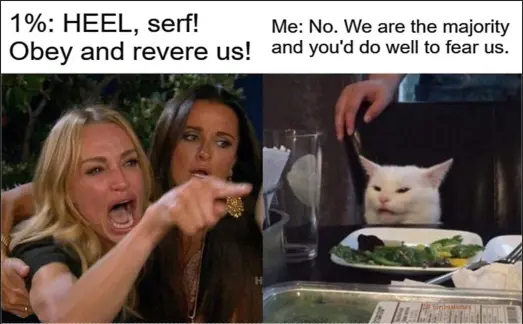
Everyone’s gushing about the institutional money coming in via the ETFs, but that has little value and close to zero trick down effect. For crypto to become a true beacon of change and move humanity forward, what we need is not a TradFi and/or governments takeover. What we need is cooperation and interoperability among the great minds who have created this space. I have no doubt that if we join forces on common priorities, such as protecting hot wallet users, we can rise above this tall task and see it through.
Together we BUIDL.
TOGETHER WAGMI!
Making this right
My friend’s MetaMask wallet was drained of 0.16 ETH, 0.04BNB and 87 MATIC. Perhaps not a crippling loss from your perspective, but for a struggling artist, this horrible UX represents dozens of wasted work hours.
Moreover, there is an emotional damage aspect that few might consider. As investors, our most valuable asset is not money—it’s time. We are ALL born investors and decide how to allocate the precious time we have been given on this plane. Our future has unlimited potential until we make a decision, whereupon life snaps into focus, collapsing into our present reality. Anything and everything is possible until that moment. Thus, naturally, we tend to choose paths that, from our limited vantage point pose the least resistance, with the highest probability of success (a.k.a., the least risk of failure), and set off towards the horizon of our dreams and ultimate freedom.
If you were forced to live in a state of perpetual anxiety and irrational fear of losing your entire progress in a heartbeat and there was an overwhelming risk of wasting your most precious resources building and investing only to fail, would you feel motivated to even start construction? Would you break ground somewhere else and begin again, having been whipped out by a tidal wave? Or… surmise that when building for the distant future, there’s no point of building sand castles on a tidal beach?
Confidence in Web 3.0 is imperative for adoption. FUD… Fear, Uncertainty and Doubt really screw up creativity! And an apt definition of insanity is doing the same thing over and over, under the same circumstances and expecting different results. Having been burnt by the hot wallets, bright people will leave and not return for years. No one would knowingly trade places with Sisyphus.
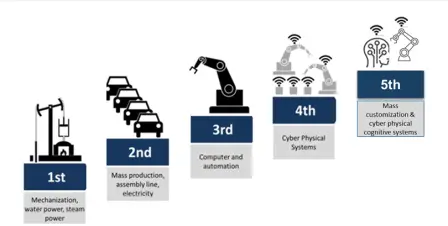
Friends, the bottom line is that we need BUIDLers in this space. Believers. Investors. Creators. The Cryptoverse is NOT a space built by devs for devs or by VCs as yet another ‘financial instrument’ for whales to stuff their bags cornering the market, while governments and banksters launder taxpayers’ money via ETFs and ICOs. The blockchain is not a get-rich-quick racket—it’s the future. It is the miracle of our lifetime, ushering in the 5th Industrial Revolution of our Civilisation! This is why I say that TRUST must be its cornerstone. Before a vibrant ecosystem can spring up, built by artists, writers and community builders, this talent needs to rest assured that the devs have built an immutably secure, solid foundation. No one wishes to build a high-rise upon earthquake-prone quicksand.
The lasting emotional damage caused by helplessly watching one’s wallet hacked in real time shatters trust in the space and while the benefits of the blockchain and the magnificent potential of the sector are obvious to most, talent will, nonetheless, drain away.
People might surmise: “Yes… we’re early. Perhaps far too early!”
Many of us would not mind returning to the past a decade or two, when the world was a saner place, maybe even a couple of centuries back, but few, if any of us, wish to go live in the Primordial goo or Cambrian period, when the first cells were formed or the first fish crawled onto the land. Sure, one could ‘own’ all the wealth in the world, but… what would be the point?!
The only way we can create a true paradigm shift and wrest control away from the corrupt governments and banksters is by creating a safe space for all and retaining talent. We need builders and believers working for common prosperity, not a rinse-and-repeat cesspit of scammers and degens fleecing newcomers and playing a perpetual game of musical chairs.
In truth, we are ALL BUIDLers and time is our most precious asset and a vital investment in this space. If we choose to persist with the everyone-for-themselves wrongheaded attitude and the misguided, myopic I-am-an-island thinking, we will not get far and ultimately, AI will make human coders obsolete and take the world in an different direction entirely. What we need is to close ranks and eradicate security loopholes with a stalwart, indomitable One-For-All-And-All-For-One resolve.
No, it is not just my friend who got robbed—WE ALL DID! For every such incident pushes our victory farther out of reach. The tide of FUD rises just a little higher and we will have to wait just a little longer for success. Bit by stolen bit it all adds up...
If we do nothing while talented people are ravaged by hackers and are abandoned to languish in perpetual fear of getting robbed, our utopian dream of financial freedom and meaningful life for all will never be realised.
Opensea, MetaMask, Coinbase, if you care to investigate the case in full, I would be happy to put you in touch/provide full details via your official website’s contact form.
My friend mostly interacted with OpenSea and I would love to see her made whole.
Let’s make this right and repair that emotional damage, lest it fester and turn into emotional baggage. If this article provides you with valuable feedback, insights and food for thought, any donations would be most appreciated. For it is her nerve-racking ordeal, that inspired me to rack my own brain for potential solutions and spark this conversation to illuminate this fundamental problem. If we can make her whole, I will ask her to create a commemorative NFT to thank everyone who helped.
For context, my friend is not an AI-dependent ‘artist’, she’s the genuine article. A talented, creative person, who has dedicated over a decade of her life to honing her drawing and musical crafts at a renowned art academy, which has been contributing to European culture since the year 1812. AI has already taken a terrible toll the livelihoods of real creatives, writers and visual artists alike… don’t let scammers get away with stealing another pound of flesh… Let’s close ranks and STAND TOGETHER to quell this menace and eradicate this scourge from the industry.
Thank you in advance for your kind support!
ERC20: 0x54496f9937D30132C90C01d26C021FCb6Db72393
SOL: GyBdwRtYMvpPvh2BDy2i8bqMSGdzbRkfqwYVzTV4z5xK
BTC: bc1qgkkp6v8yh6t5nmwjsk6vc3erx8w8f3fqtnrp0c
Cardano: addr1qxmh3avfuqhyyeru06uzn3ckhz9wat0u2u7tzyfafkp83weay3fxf8ygrrqd9g3qyfms9ym78x9whg0dzjudrnd4a28qrl2cut
Polkadot: 1DRwzRUoz8GnWEkCdZ9YKG5j1Lmudx3fiNB6MstHNsKDWRK
NEAR: 0x54496f9937D30132C90C01d26C021FCb6Db72393
COSMOS: cosmos1qpkguw3j9y7phxu4z92r99szdt4q30y9r3ey6q
Alright friends… this is my little contribution to our common bright future… oh, it’s teatime somewhere and I could really use a cuppa! I remain deeply grateful for the attention you have afforded me, and hope that by illuminating the issue, I have kindled creative crucibles in minds far more technically savvy than my own, who will at long last bridge the chasm of trust and ignorance between mass adoption and our Blockchain utopian dream. If you have constructive ideas searing and churning in your mind, do drop them in the comments, like they’re hotter than the wallets we desperately need to cool down!
It has been my great honour to address you, O, limitless Cryptoverse. If you have a writing gig for me, just holler at me and let’s chat.
Have a creative day, all!
About me
I am a copywriter and marketing specialist seeking exciting work in the blockchain industry. I am a serial idea-generator, skilled at problem solving, crafting product reviews/feedback (perhaps this article is a testament to that)), planning campaigns and online events, envisaging and overseeing loyalty programmes, as well as building up and maintaining stable, sustainable communities.
I also have experience in storytelling, writing fiction/fantasy and would be delighted to work on a storyline, lore or marketing in crypto-related entertainment such as film or video game development.
I live in the Northern EU. You can always find me hanging out and having fun on the Torum #SocialFi platform (callsign: @Tigerius).






