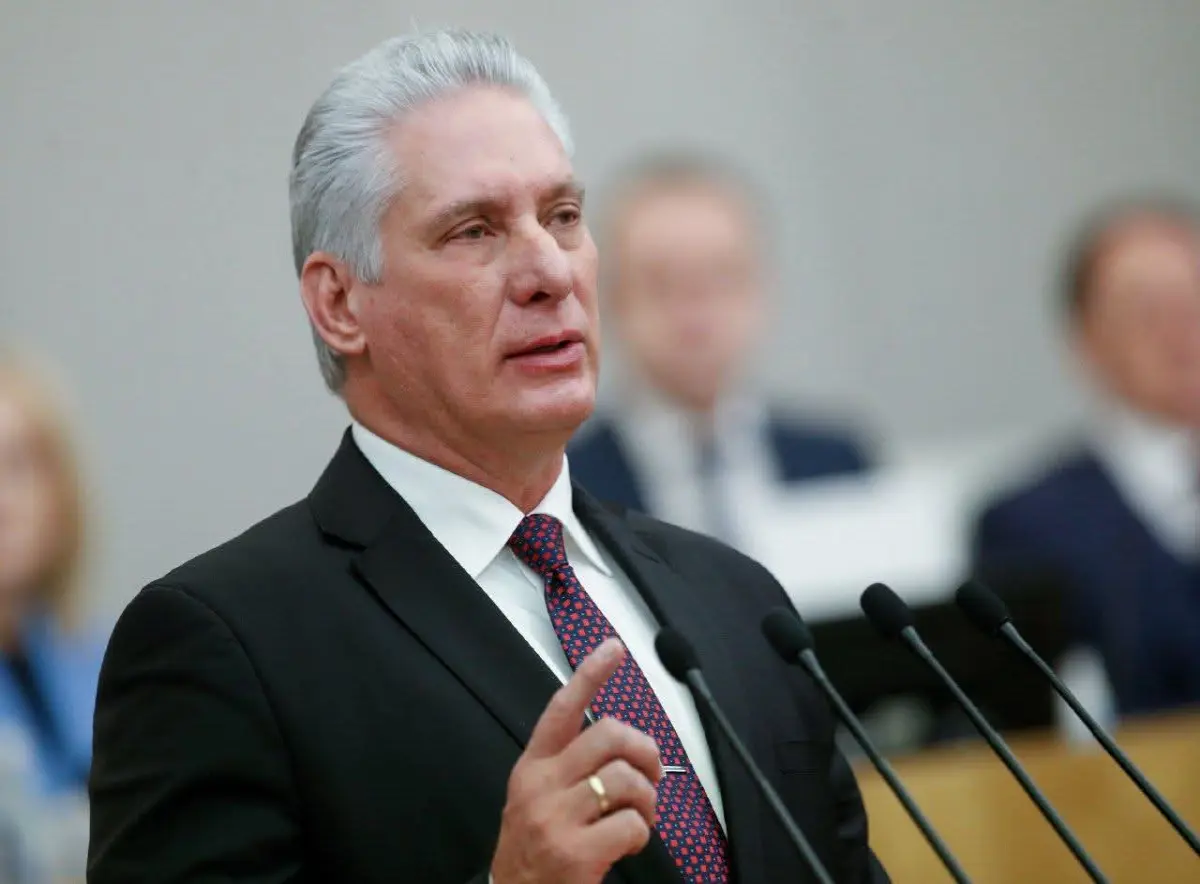
“Under Siege”: Cuba’s Call to the Global South Against U.S. Imperialism
Cuba is once again at the center of a geopolitical storm, as President Miguel Díaz-Canel declared his nation to be “under siege,” rejecting narratives that the Caribbean state is collapsing due to internal failures. Instead, he points squarely at prolonged U.S. economic coercion and increasing pressure from Washington as the root of the country’s deepening crisis. (CubaHeadlines)
At a critical moment for the island, Díaz-Canel held a press conference amid severe economic hardships, exacerbated over the past five years. The Cuban leader insists that the narrative of Cuba as a failed state serves as a strategic pretext for heightened U.S. pressure, rather than reflecting the complex realities on the ground. (CubaHeadlines)
A Crisis Deepened by External Pressure
The current tensions unfold against a backdrop of worsening shortages — from electricity to fuel — and significant disruptions in daily life. Power outages, food scarcity, and record inflation are engulfing the nation, and Cuban officials widely attribute these conditions not solely to internal shortcomings but to decades of U.S. blockade and sanctions. (CiberCuba)
In recent months, U.S. policy has intensified:
-
The U.S. has moved to cut off oil supplies, notably pressuring neighboring countries not to ship fuel to Cuba. (Reuters)
-
The Trump administration’s rhetoric against Havana grew sharper after the capture of Venezuelan President Nicolás Maduro — a longstanding Cuban ally — suggesting Cuba might be next on a list of regime-change targets. (Reddit)
-
Cuban authorities report that millions in economic losses stem directly from above-board and secondary sanctions. (CubaHeadlines)
Despite humanitarian aid from Washington, Cuban officials view these gestures as too little, too late — insufficient to offset policies they label as coercive and destructive. (Reuters)
Cuba’s Line on Sovereignty and Dialogue
President Díaz-Canel has made it clear that Cuba does not reject diplomatic engagement outright — but he insists any talks with the U.S. must be between equals, free from political coercion or unilateral demands. (ANSA.it)
His government is using this narrative to rally both domestic unity and international solidarity, presenting Cuba’s struggle as part of a broader anti-hegemonic resistance. He has called on the Global South — nations of Africa, Asia, and Latin America — to join in opposing what he calls economic imperialism and to support movements that reject domination by powerful nations. (ANSA.it)
Appeal to the Global South
In his address, Díaz-Canel invoked the longstanding principle of resistance that has defined Cuban revolutionary history. He appealed to the Cuban people themselves to respond to external pressures with creativity, resilience, and collective effort — qualities that have long been romanticized in Cuban culture and politics. (CiberCuba)
But he also extended that appeal internationally:
Cuba is not alone.
Díaz-Canel referenced support from countries such as Mexico, China, and Russia, as well as public backing from the Non-Aligned Movement, suggesting a network of allies willing to push back against U.S. dominance. (ANSA.it)
His message is strategic: Cuba seeks not only survival, but a new form of multipolar cooperation where smaller and medium-sized states assert themselves against the dictates of superpowers.
What This Means for the Future
The Cuban crisis today blends economics, geopolitics, and narratives of sovereignty. For many observers, the island’s current hardship is a historic culmination of policy choices, domestic challenges, and international blockade effects. But for the Cuban leadership, it is first and foremost an imperialist siege aimed at undermining Cuban autonomy and solidarity with allies in the Global South. (ANSA.it)
Whether one agrees with this characterization or not, the discourse emerging from Havana resonates with a wider global debate about power, influence, and how nations navigate an increasingly multipolar world. What Cuba is calling for — solidarity, mutual respect, and resistance against unilateral pressure — is a theme that extends well beyond the Caribbean.
Article by Marekiaro
Digital Artist & Content Creator
Exploring culture, politics, and freedom in the digital age.