
The after-meal conversation
The meal had been finished for a while, but nobody seemed to be in too much of a hurry to get up.
On the table lay a few empty plates, a couple of half-finished glasses, and a coffeepot that still held enough coffee to prolong the conversation for a few more minutes. Outside, the afternoon dragged on, and the light streamed through the window with the tranquility of those hours when there’s still time before the next obligation begins.
Someone asked a question that wasn’t really related to what they’d been talking about. It was one of those questions that pops up after lunch, when the conversation starts to wander off-topic. No one was really expecting a specific answer, but everyone listened.
— Do you know where the custom of having something to drink after eating comes from?
There was a brief silence.
The question seemed simple, almost absurd. After a meal, every family has its own customs. A coffee. An herbal tea. Something sweet. A piece of fruit. Perhaps nothing at all. Some get up immediately, while others could spend another two hours sitting and talking about anything.
But someone remembered that, at their grandparents’ house, after meals there was a plant that appeared quite frequently.
It wasn’t particularly beautiful. Nor did it smell like the flowers one would expect to find in a garden. And it certainly didn’t taste like something that would make you want to repeat the experience.
The era of the surname.
That word hung in the air above the table for a few seconds.
And then someone asked:
— And why did they drink it, if it was so bad?
No one knew how to answer immediately.
Perhaps it’s because some customs outlast the explanations that gave rise to them. We continue doing things we learned from our parents, who learned them from theirs, and which probably began long before anyone thought of writing them down in a book. Sometimes we know perfectly well what to do, but we’ve forgotten who taught us how to do it and, above all, why.
The conversation could have ended there.
They could have picked up the cups, taken the plates to the kitchen and continued with the afternoon.
But that question had something awkward about it.
Why had a bitter plant managed to stay around a table for generations?
The answer wasn’t in that house.
I wasn’t even in that country.
To find it, one had to go back much further, cross an ocean, and reach a place where a discreet tree had been growing for a long time without knowing that, one day, its leaves would end up being part of very distant after-dinner conversations.
Because this is not just the story of a plant.
It’s the story of how some things find their place without us necessarily liking them very much.
And, to understand it, we first need to know the tree that for generations continued to offer its leaves under a fairly simple condition:
They weren’t going to taste sweet.
Press enter or click to view image in full size
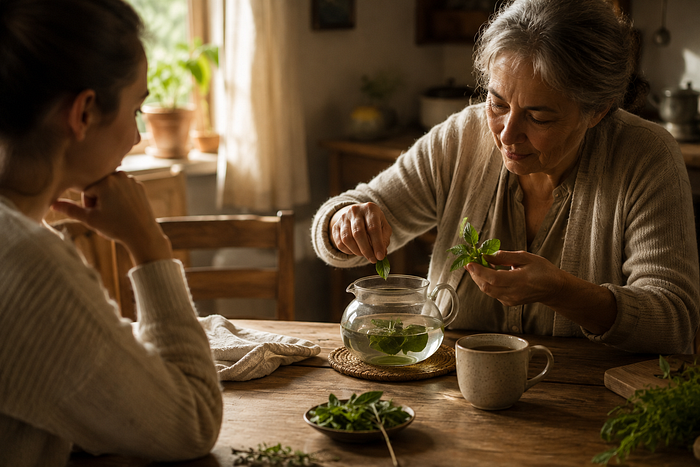
The leaf that crossed the ocean
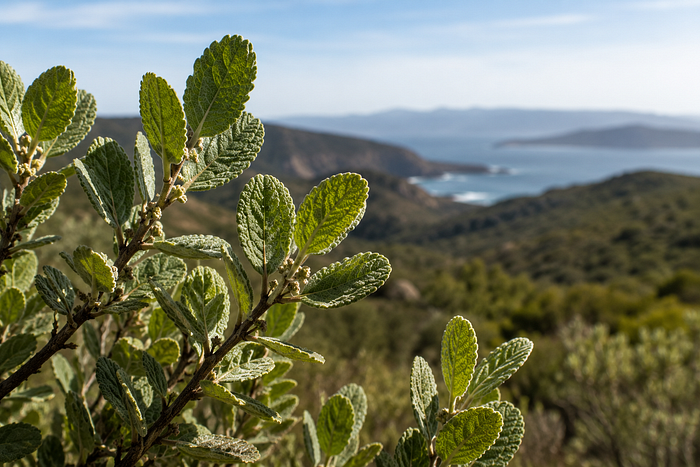
The tree is calledboldoIts scientific name isPeumus boldusAlthough it probably needed far fewer names to become what it has been for generations: a plant known, recognized and used long before anyone decided to classify it on a label.
It grows naturally in Chile, especially in the central region of the country, forming part of those landscapes where the vegetation doesn’t need to be conspicuous to be deeply connected to the place. It’s a rather unassuming tree, with thick, sturdy, and aromatic leaves. If you look at them closely, they don’t seem particularly delicate either. They have something of a plant that has learned to withstand its environment.
And perhaps that’s why it’s curious to think about the journey some of them made.
Because boldo wasn’t born to become an infusion. It didn’t grow to end up in a cardboard box or one day appear on a shelf alongside other medicinal plants. For a long time, it was simply a plant that was there, part of the landscape and the knowledge that the people around it accumulated over generations.
Some of this knowledge is transmitted in a way that is difficult to reconstruct precisely. There isn’t always a specific date, discoverer, or moment that someone can point to and say:This is where it all beganThere are observations that are repeated, experiences that are shared, and customs that remain because someone taught them and another person decided to continue doing them.
This is how a plant can end up becoming part of a culture.
And so began the long journey of the boldo tree.
Press enter or click to view image in full size
Over time, their leaves ceased to belong solely to the landscape where they grew. They dried, were stored, traveled, and ended up much farther from the trees that had produced them. The ocean that separated that landscape from our kitchens didn’t disappear, but the distance was no longer enough to prevent that small tradition from continuing to evolve.
A leaf that had grown in Chile could end up, years later, in a cup on the other side of the world.
And there was something that hadn’t changed the whole way.
Its flavor.
Boldo has a very characteristic bitterness, accompanied by an intense aroma that makes it difficult to mistake it for any other plant. It’s not one of those infusions you try expecting something like a sweet drink. Nor does it try to be.
Perhaps that’s why its story is so interesting. Because it didn’t need to transform itself to find a place in our customs. It didn’t have to lose what made it recognizable or become something more appealing to continue being used.
It simply arrived.
And when it arrived at our tables, it did so accompanying one of the oldest and most universal moments that exist:that moment when the meal is over, but we’re still in no hurry to get up.
The after-dinner conversation.
That’s where the story of the boldo tree meets us again.
Because for a long time its leaves have been traditionally associated with that post-meal period when the body begins to process everything we’ve just given it. And it is precisely at that point that the bitter leaf ceases to be merely a plant that traveled from afar and begins to acquire another meaning.
Not because I have special powers.
But because someone, a long time ago, decided that that plant had a specific place in everyday life.
After the table.
And perhaps that’s the most interesting part of this whole story:A plant can travel thousands of kilometers without leaving behind the reason why someone decided to preserve it.
What remains after the table
Perhaps that’s why that question after the meal made more sense than it initially seemed. It wasn’t simply about why someone had decided to put a bitter leaf in a cup. Behind that custom lay an old way of looking at what happens after a meal: that moment when the plates are empty, the conversation continues, and the body begins, discreetly, to process what we’ve just given it.
Press enter or click to view image in full size
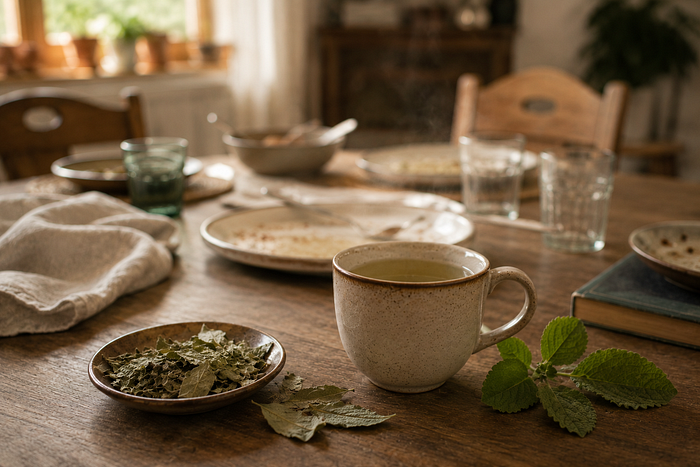
Boldo has traditionally held this place. Its leaves have been used in preparations intended to aid digestion and, in particular, for the symptomatic relief of mild digestive discomfort and mild gastrointestinal spasms. This is a traditional use, not a promise that a cup of boldo will solve everything that happens to us after a meal. And that distinction matters.
Because when we talk about medicinal plants, it’s very easy for the story to get distorted over time. One person uses a plant for a specific purpose, another hears that “it’s good for the stomach,” someone else adds that it can also be used for something else, and after enough repetitions, a tradition can end up becoming a seemingly endless list of properties. The problem is that a story repeated many times doesn’t automatically become scientific evidence.
Boldo has an interesting history precisely without needing to attribute more to it than what we already know. Its leaves contain different compounds, among them…boldinaIt is a characteristic alkaloid that has been scientifically studied. But the fact that a compound has been investigated, even if it shows certain effects in experimental studies, does not automatically mean that we can translate those results to a person and turn them into a therapeutic recommendation. There is a significant difference between researching a plant and promising that it works for something.
And perhaps caring also means respecting that distance.
There’s another, less pleasant, but perhaps even more important, part of the story. Just because a plant is traditional, natural, and available at a herbalist shop doesn’t mean it’s suitable for everyone or that we can use it without limit. In the case of boldo, there are situations where its use requires special caution, particularly related to certain liver and bile duct diseases. Nor is it a plant we should blithely make a daily beverage for extended periods without considering our individual circumstances.
It might seem strange to introduce these warnings into a story that began over coffee, but for me, they’re part of the same story. For a long time, we’ve talked about plants as if understanding them consisted solely of learning what they’re used for. Perhaps we should also learn…when not to use them.
That changes the way you look at a cup quite a bit.
We no longer see simply hot water and some leaves. We see a tradition, a specific plant, a story that has spanned generations, and also some limitations that are worth knowing before turning that tradition into a personal habit.
The conversation after that story would probably have continued in the same way. The coffee would have cooled a little more, someone would have told another anecdote, and at some point, someone would have started clearing the plates. The discussion about that bitter leaf might have ended without reaching any spectacular conclusion.
And that’s fine.
Because perhaps the boldo tree never needed to become something spectacular.
It found its place after the meal, in that brief moment when we’ve finished eating but aren’t in any hurry to get up. A space that for generations was filled with conversations, customs, and small gestures that weren’t meant to change the world.
Just accompany him.
And perhaps that’s the most interesting part of this story.
We’ve become accustomed to looking to plants for answers. We want to know what they do, how long it takes them, how much we need, and what other problems they can solve. We turn a leaf into a list of properties, and when we’re finished, we think we know it.
But getting to know a plant might be much simpler.
Press enter or click to view image in full size
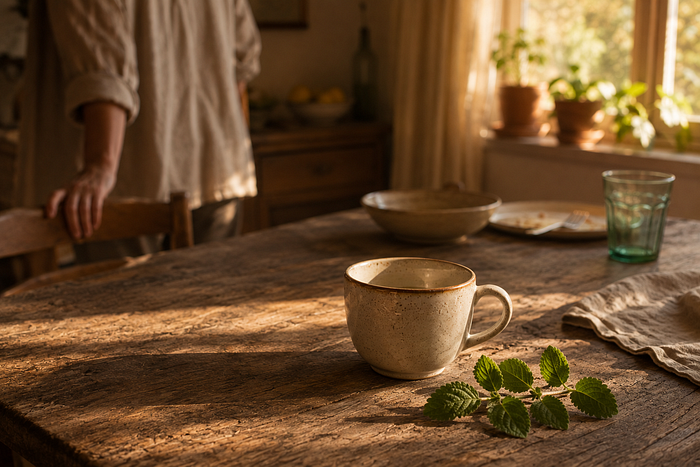
Knowing where it comes from. Listening to the story behind it. Understanding what it has traditionally been used for. Knowing what science actually says about it. And, above all, learning to recognize its limitations.
Boldo never needed to be sweet.
Nor did it need to be used for everything.
It was enough for him to keep his place.
And perhaps that is why, when the after-dinner conversation ends and the cup is empty, we can still find something to learn from that bitter leaf that one day began to travel much further from its tree.
Not everything that takes care of us has to be pleasant.
But it should help us toto listen a little better to what is happening inside us.
🌿 Keep discovering nature
If you enjoyed this story, you’ll find more articles at El Ente Cuida about medicinal plants, simple ways to care for yourself, and everyday habits for a healthier life.
Visit The El Ente Cuida Library
Would you like to join us?
We also share new content several times a week on Instagram, Facebook, Threads, and more.
Follow us at @elentecuida






