
The rapid growth of the economic block has positioned it to represent approximately half of the world's population and over 41% of global GDP (PPP).
The term "BRIC" was coined by economist Jim O'Neill in 2001 to describe the four rapidly growing economies of Brazil, Russia, India, and China. The group expanded to include South Africa in 2010, and since then, BRICS has evolved from an economic concept to a political and strategic partnership. The coalition aims to promote peace, security, and development while advocating for de-dollarization and reforming global governance structures.
As the world steps into 2025, the economic and geopolitical landscape is increasingly shaped by the rise of the BRICS nations—Brazil, Russia, India, China, and South Africa. Recent data and projections suggest that BRICS is not only solidifying its influence but also positioning itself as a formidable counterweight to the G7.
Historically, the G7 (Group of Seven) - comprising the United States, Canada, France, Germany, Italy, Japan, and the United Kingdom - has held a dominant position in global economic and political affairs. However, the BRICS' collective economic growth trajectory suggests a potential shift in this power dynamic.
Expanding Membership and Influence
Recent expansion depicts the BRICS group's current state and expansion efforts. It shows a world map (Figure 1) with different-colored countries representing their status within the BRICS framework. The image below showcases BRICS' ambition to expand its influence and membership. The large number of partner countries and pending invitations suggest a dynamic and growing bloc. The inclusion of diverse nations from different regions indicates BRICS' potential to become a major global player.
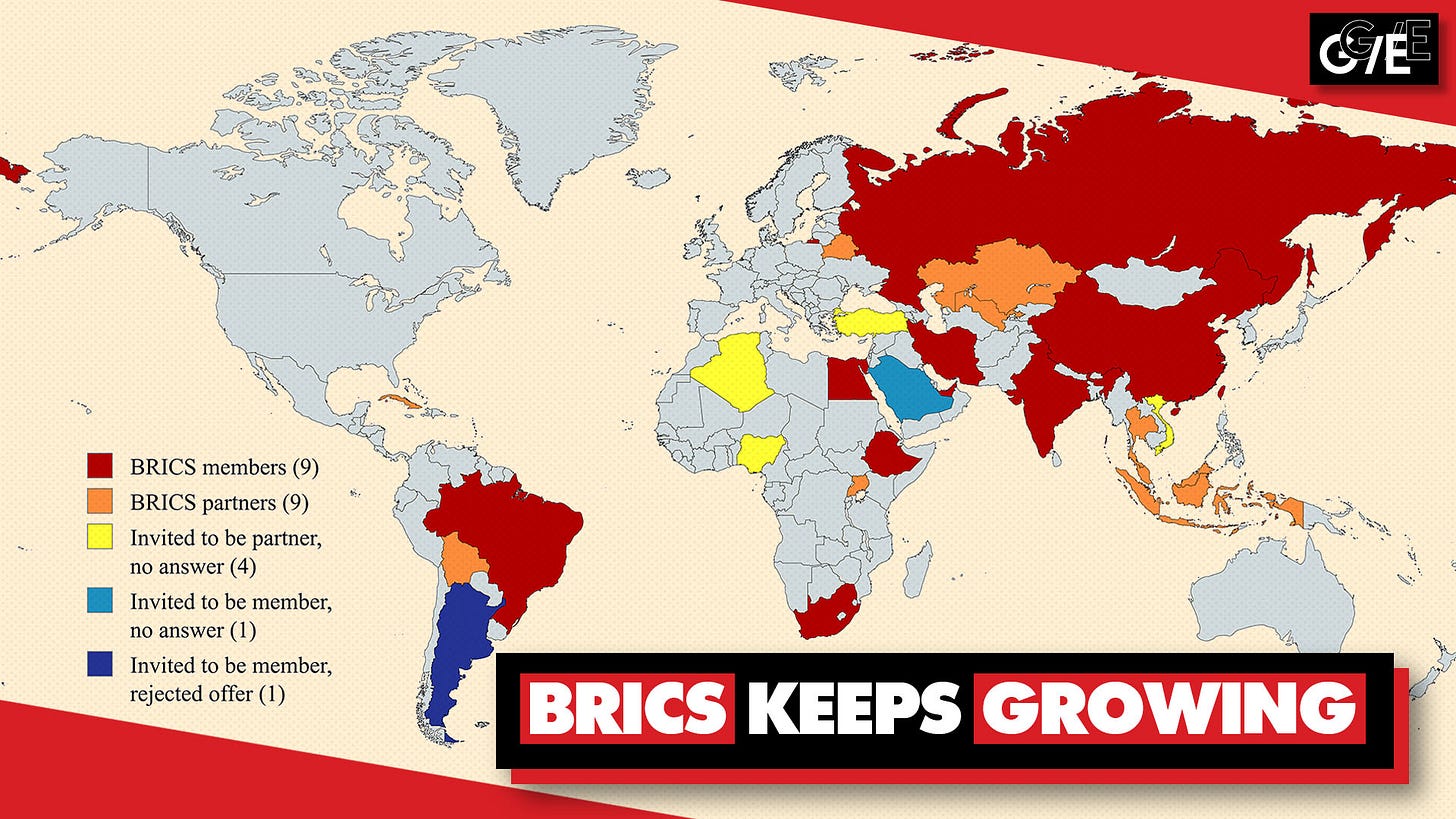
Figure 1
The Economic Trajectory of BRICS
G7, represented by the world’s wealthiest democracies has seen its share of global GDP steadily declining in recent decades, while BRICS continues to grow. The shift underscores a rebalancing of global economic power, driven by the rise of emerging markets. BRICS also differs from the G7 in its approach to global governance.
While the G7 emphasizes a rules-based international order often shaped by Western values, BRICS advocates for a multipolar world where no single bloc dominates. This narrative resonates strongly with developing nations seeking to diversify their economic and political partnerships. Another chart (Figure 2) highlights the steady rise of BRICS in terms of GDP measured by purchasing power parity (PPP), with projections showing that the bloc will match or surpass advanced economies by the late 2020s.
This growth is driven primarily by China, which contributes a significant portion of BRICS’ economic output, alongside consistent contributions from the other member nations. Meanwhile, the share of advanced economies in global GDP has been gradually declining, signaling a shift in global economic power toward emerging markets.
This shift highlights the potential for BRICS to redefine the global economic order and act as a counterbalance to advanced economies, such as the G7. With its growing collective strength, BRICS could exert greater influence in international institutions and governance structures, paving the way for a more multipolar and inclusive world economy. The data underscores the bloc’s transformative potential and its increasing role in reshaping the global economic landscape in the coming years.
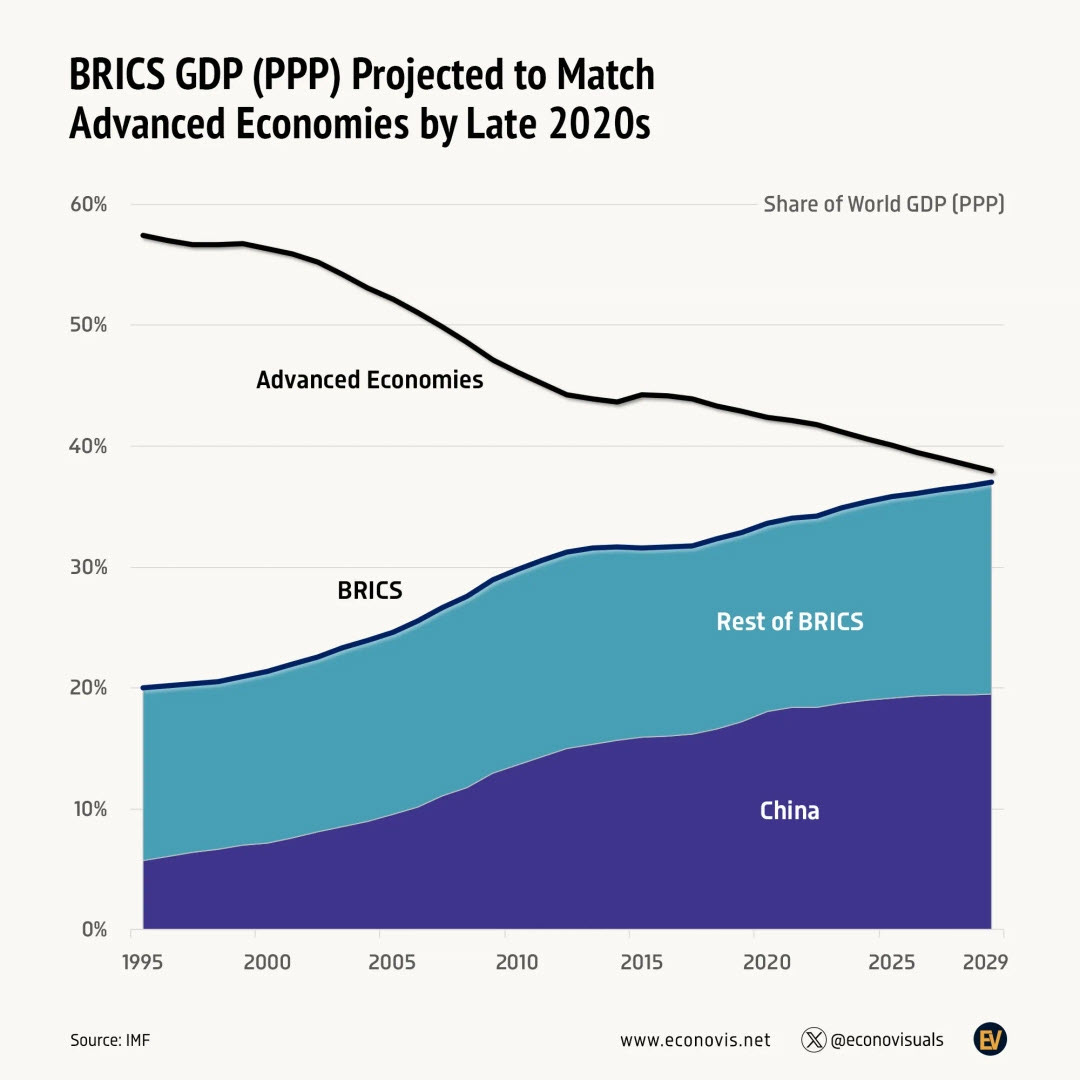
Figure 2
Challenges Ahead
Despite its growing influence, BRICS faces several challenges that could hinder its cohesion and effectiveness. Internal disparities among member nations present significant obstacles, as their economic and political priorities are not always aligned, making cohesive decision-making difficult. Geopolitical tensions further complicate matters, with conflicts involving member states—such as Russia’s strained relations with the West—impacting the bloc’s unity and its global perception.
Additionally, structural issues pose another hurdle; while the New Development Bank (NDB) is a promising initiative, BRICS' financial mechanisms remain underdeveloped compared to West-backed established institutions like the IMF and World Bank. These challenges highlight the complexities BRICS must navigate to fully realize its potential as a global economic powerhouse.
The Road Ahead
As BRICS continues to grow, its impact on global governance, trade, and diplomacy will become increasingly significant. The bloc’s ability to challenge G7 dominance will depend on its capacity to address internal disparities, strengthen its financial institutions, and expand its coalition of partners. In the coming years, the rise of BRICS could herald a new era of global cooperation—or competition. For now, one thing is clear - the balance of power is shifting, and the world is watching.
Originally published at Substack.






