
The clash between the two most influential crypto exchanges that has escalated throughout 2022 is shaking up the entire space
What a difference 24 hours can make in the Cryptoverse. That’s why I have mentioned in many of my previous pieces that crypto trading/investing is not for the faint of heart. The recurring theme of volatility has returned to the digital assets space in a big way — this time triggered by yet another contagion event. And unfortunately, it didn’t spell good news for the bulls. The losses within the last couple of days have been pretty staggering across the board — with the total crypto market cap dropping from over $1.0 trillion to $834 billion at the time of writing.
2022 has been a pretty challenging year for cryptocurrencies. For those of you who follow digital assets, you might remember a major contagion event that happened earlier in May — one which resulted in the multibillion-dollar collapse of the Terra/Luna stablecoin project. The crypto markets had barely come out of the shock that a new liquidity crunch hit one of the major crypto exchanges FTX. The event is similar to what we saw happen to Terra/Luna stablecoin — bankrupting a raft of crypto firms exposed to Terra.
Herein lies the problem. The crypto space is still largely controlled by a few outsized centralized entities — surprising and ironical for a space that boasts of introducing decentralization in the broader ecosystem. And if problems erupt in these entities, they have the potential to take down the whole space or do some major damage as we are seeing currently happen. While the legacy financial markets were waiting for U.S inflation numbers this week, escalating tensions between the two most influential crypto exchanges Binance and FTX woke the cryptos early from their slumber.
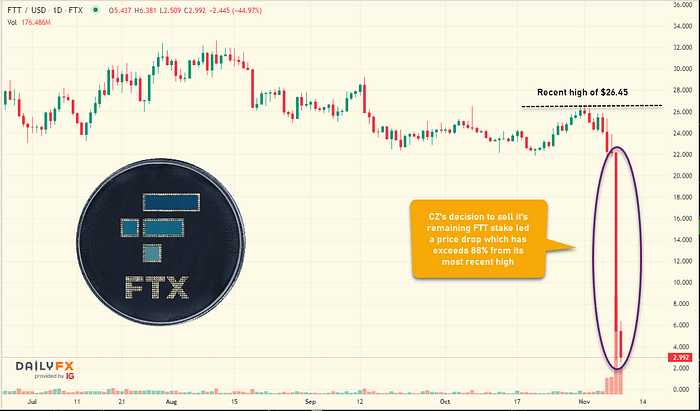
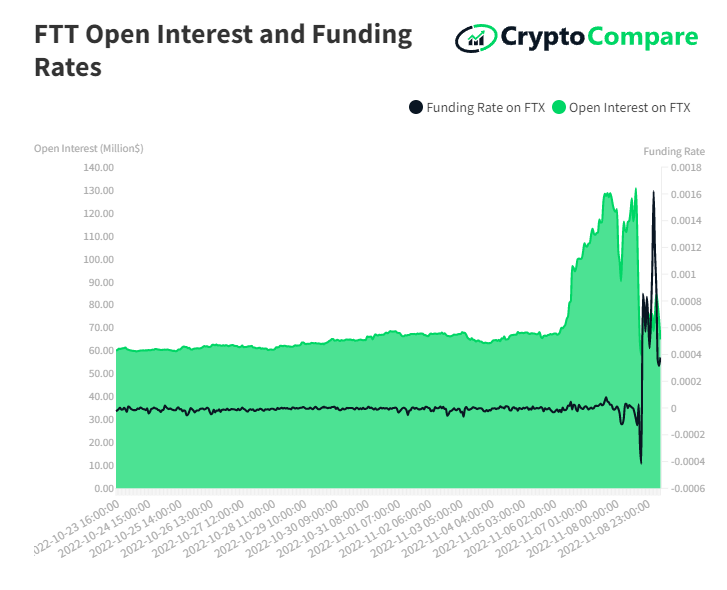
The tension between both these exchanges had escalated for months now. You can read all the details and backdrop of the saga covered in a paper by Arcane research. But I will highlight some of the recent developments which set the stage for the storm. The key takeaway from the entire ordeal is that FTX is facing an ongoing bank run caused by Binance and its CEO, Changpeng Zhao (CZ), actively selling FTT (FTX’s native token) and racing concerns related to the financial health of FTX. As a result, the FTT token has fallen from a recent high of over $26.45 to $3.05, at the time of writing.
Rocky relationship between the two exchanges started in 2019 when Binance invested in FTX. In 2021, Binance exited its FTX investment and was compensated with $2.1 billion in BUSD and FTT — antagonism towards each other followed. Adding to the problem was the crypto derivatives short squeeze which happened in late October — magnifying the liquidity crunch issue with BTC open interest falling the most (over 35%) on the FTX exchange. On top of that, CZ publicly announced Binance’s intention to sell its FTT stake.
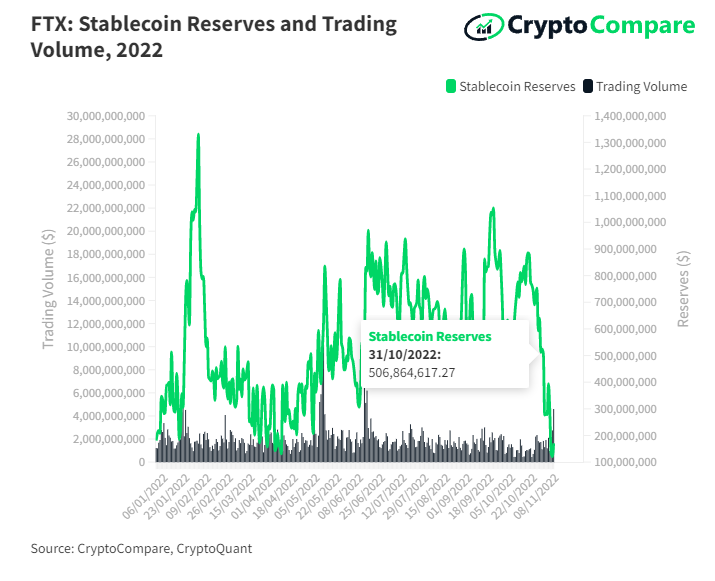
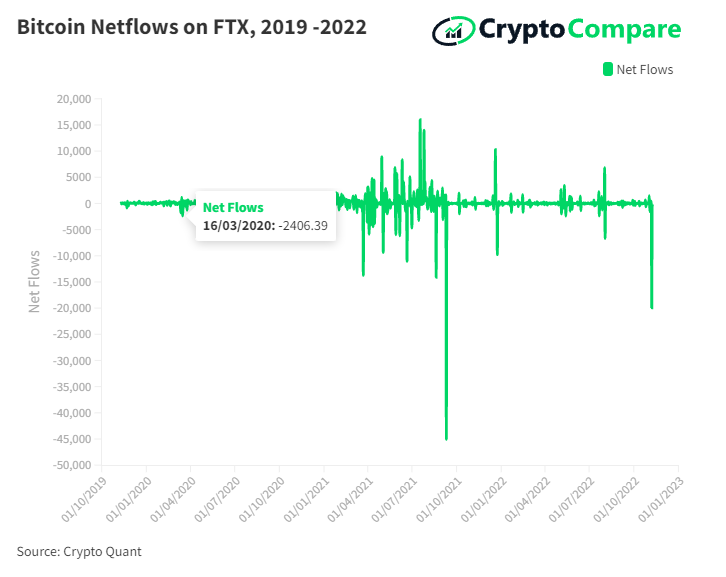
And if this wasn’t problematic enough, Coindesk’s report stirred up a perfect storm. It basically highlighted that Alameda Research’s (FTX subsidiary) balance sheet as of June 30 was heavily concentrated in FTT and illiquid altcoins. All these series of events stoked massive volatility in cryptocurrencies across the board. After whiplashing in either direction, pessimism set in across the board as prices plummeted. Even Bitcoin and Ethereum have been hit hard taking out the price support levels which have held since June, even in the face of weakening equities.
Although CZ has announced signing a letter of intent (LOI) to buy out its competitor in the larger interest of the Cryptoverse, the bleeding hasn’t really stopped. The offer is conditional and dependent on due diligence to be conducted by Binance. And since the crypto space is by and large not regulated, this hasn’t really calmed the nerves of the investors. A collapse of a major crypto exchange like FTX could wreak havoc on digital assets, which were just beginning to come out of crypto winter.
Nobody is going to come out of this saga unscathed. Investors/Traders have already taken a huge hit. There will be renewed calls for tighter scrutiny and regulations for the space — something that has been under discussion for years now without any progress. While Binance’s tentative decision to acquire FTX might have saved the space from a bigger disaster, there’s a big question mark over how it will play out in the long term. On the face of it, the proposed acquisition by Binance seems to have saved the users from losing their investment completely, it has created another problem.
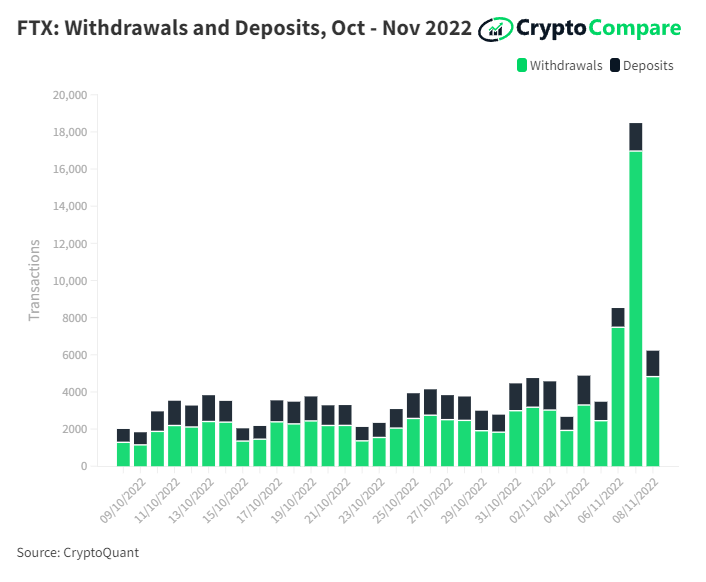
Binance, the largest exchange by trading volume, has now increased its market share and dominance even further with the acquisition of FTX — in turn creating an even bigger centralized behemoth. This also begs the question if this could have been avoided by CZ taking a less belligerent approach towards its competitor. In the traditional finance space, the move is reminiscent of a hostile takeover in the absence of anti-monopoly laws — worse yet, it could spell a complete disaster for cryptos if CZ eventually fails to follow up on his LOI.
To sum it all up, we are perhaps witnessing a pivotal moment in the history of digital assets, where user funds are not safe even in arguably the second most popular exchange in the industry. Perhaps the situation could have been avoided by some form of clarity on the regulatory front or do the decision-makers want this space to implode? For now, the situation remains extremely fluid as this saga unfolds. Watching with our fingers crossed.
UPDATE: Soon after I posted this article, Bloomberg reported that Changpeng Zhao has walked away from his bailout for Sam Bankman-Fried’s FTX.com, saying “… the issues are beyond our control or ability to help.”






