
There’s a great divide between plants and animals, that seems to only exist within the minds of ignorant humans. Perhaps because humans are themselves animals, they tend to see animals as more like themselves, and therefore give them privileges that aren’t given to other forms of life.
Plant Communication and Response to Stimulus
Perhaps it’s because we can physically see when an animal reacts to a stimulus, but we’re generally unaware of the reactions that plants have. Indeed, it’s only been recently that we’ve learned that at least certain plants do respond to threats in fairly active ways.
While it’s not necessarily appropriate to apply human qualities to non-humans, we do it all the time with animals. So why would it be wrong to consider the above discovery an example of plants crying out for help, or warning other plants to be careful? Of course, this kind of idea requires that plants be sentient.
Plant Cognition
The question of whether plants are sentient is really interesting. When I first started doing research for this article, I know that plants released chemical signals in response to stress, but I didn’t know that there were action potentials running through plants, in a similar way to action potentials transmit electrical information through nerves in animals.
It’s actually a rather shocking find. We usually think of plants as being these incredibly simple things, which are far less sophisticated than animals, but we can see the evolution of a nervous system that may one day lead to a plant brain. Hell, if we combine the communication methods available to plants that allow them to interact with each other, and the phyto-nervous system that biologists have discovered, it’s possible that there is a much more sophisticated shared cognitive system in plant communities. But such cognition would be so alien to humans, how could we evaluate it?
Learning is usually something considered to be a process limited to animals, but plants seem to be able to learn. Well, at least one species of plant can learn, and if one can do it, odds are many can. I’m not saying that a plant is going to learn calculus or read any of the books made out of its distant cousins, but plants do exhibit at least some degree of habituation.
In the above cited study, researchers looked at the sensitive plant, M. pudica, which displays its ability to interact with the outside world in a visually obvious way. The leaves fold when they’re touched, allowing the plant to better protect itself. But the folding behavior is modulated by the environment in which it grows, and the modulation persists, even after the plant moves to a different environment. In other words, the tree learns.
Plant-Animal Divide
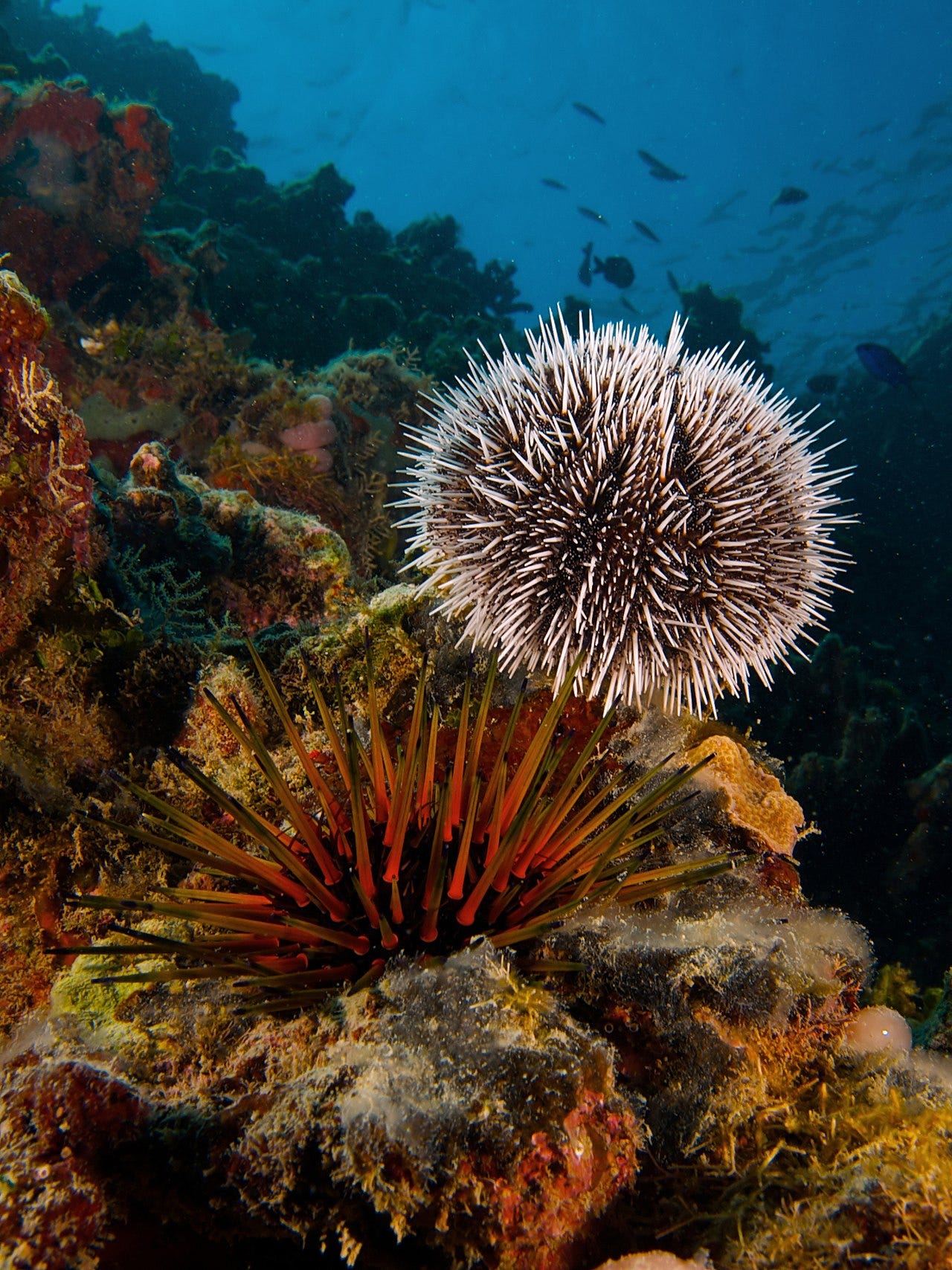
It seems odd that the divide is between animals and non-animals. The divide should instead be personhood. While the full idea of what constitutes a person is well beyond the scope of this article, we treat people differently from the way we treat non-people. Even if we have some kind of moral responsibility to treat our livestock well, and I think that we do, that doesn’t mean that they’re people.
Simple animals like the sea urchin depicted above do not have brains. They have very simple nervous systems which allow it to respond to the environment. This kind of nervous system is probably much closer to the type of system that plants have than the ones that we have. And the response to the environment is very limited. It’s hard to argue that these creatures should be considered sentient, as their complexity isn’t all that much different from a plant.
Even fish, which have brains, have very simple ones. So why is it wrong to eat fish and sea urchins, and other very “simple” forms of animal life? Why is it okay to eat plants that seem to have complex systems of identifying threats and communicating those threats to others in the nearby population?
The Cutoff
It doesn’t seem to be enough that an organism responds to a threat, because pretty much every organism that lives has some mechanism of doing so. An organism should have to have actual self awareness, at the very least. Even “feeling pain” may not be enough of a requirement, because we have to have a scientific meaning to the term. Is feeling pain just a negative response to a harmful stimulus? Again, lots of organisms, even one celled organisms, will respond negatively to injurious stimuli.
Humans seem to just equate animals with something more important because they’re more human-like. We see the same thing with primates. Even primates that seem to have no more cognitive or emotional capacity than say a rat, a cat, or a dog, are given higher priority. It’s often illegal to own any primate, no matter how distantly related to us, simply because we view them as more human-like and so more important.
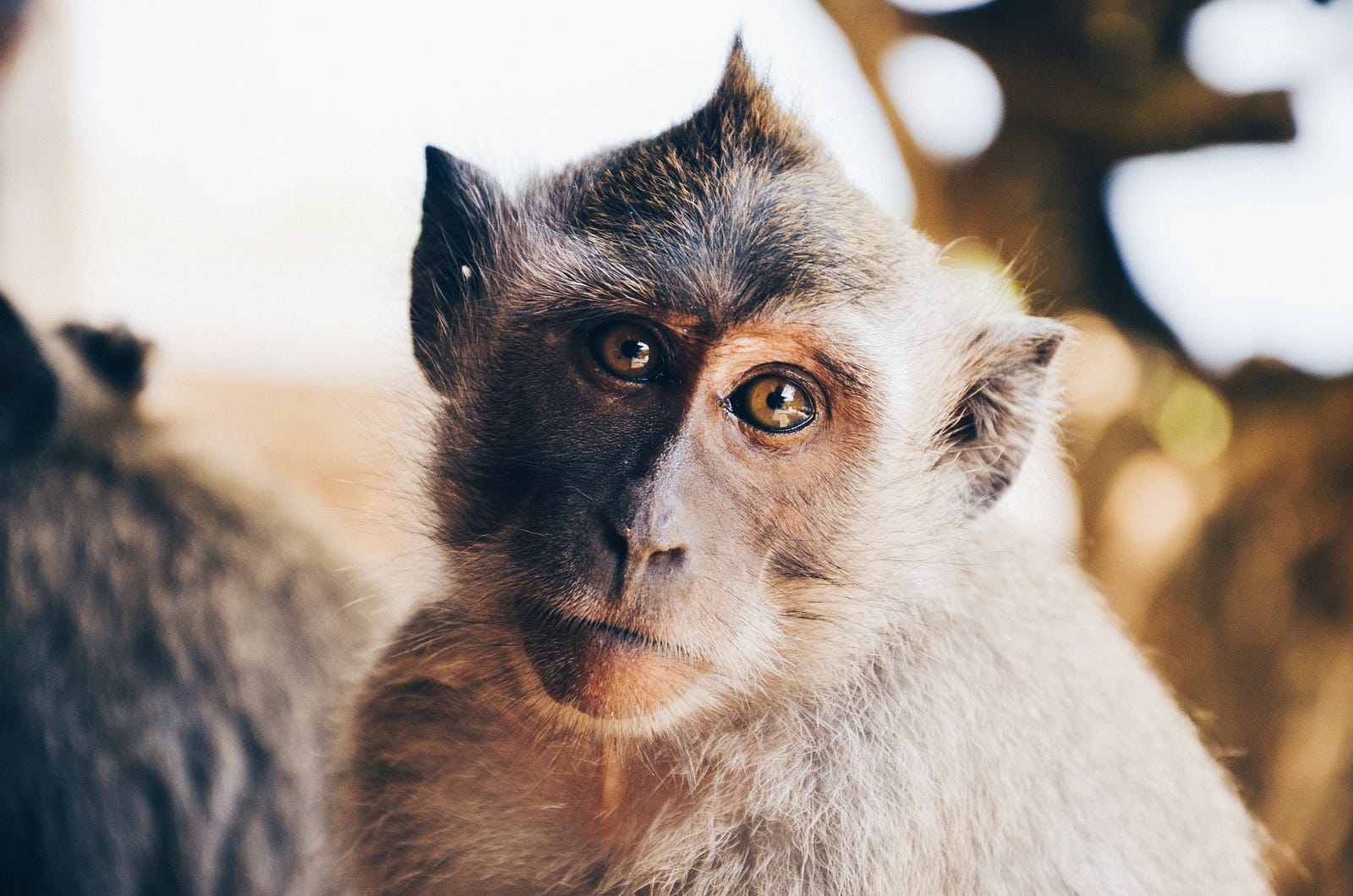
I still think that the divide must be between person and non-person, and that we must focus on sustainability. If we try to focus on producing food in a sustainable way, and we try to do the least amount of harm, then we should be good. We should not abuse animals. We also shouldn’t abuse forests. If we follow these general guidelines, we should be fine.
Future Research and Final Thoughts
So far I’ve explained what we seem to understand about plants, what we’ve learned about their ability to respond to the environment and even communicate, but there’s so much that we do not know. One of the concepts that I’d really like to see researched more heavily is the concept of consensus making.
Consensus making is a requirement for social organisms. Since we work as a group, we need to be able to take our local information and goals and combine them with the social level information and goals, in order to make decisions. Do any species of plant do the same thing? Plants communicate. Plants have a level of nervous system activity. And plants learn.
Those three requirements are everything that’s needed for consensus making. So do any colonies of plants share information across the entire colony, and make decisions about things like the direction in which to grow? If so, that result would be evidence of a highly sophisticated level of organization that we generally only see in the animal kingdom.
Ireally hope that this article has gotten some people thinking about our own self perceptions and perceptions of reality. We view things from a very human-centric point of view, and therefore we see things that appear more human-like to be of greater importance. Primates are generally given a higher priority than non-primates. Animals are given a higher priority than plants. But maybe it’s time to rethink things.






