
APART from the sanitation, the medicine, education, wine, public order, irrigation, roads, a fresh water system, and public health... what have the Romans ever done for us?
For me, the two empires / states in world history that stand out as the most successful, and indeed powerful for their times, are the Roman and British Empires.
Which do I think was more successful? Well I am a MASSIVE Romaboo (Roman fanboy, if you will) but it's hard to say - they're both so very different.
Anyway, I watched that scene from Monty Python's Life of Brian recently, which I quoted above in case anyone here lives in a cave and has never seen that GEM of a film.
And it instantly made me think of the British Empire.
And not only how little thanks it gets, but also how much undeserved scorn it gets.

Nowadays, the British Empire seen is by many as almost the blueprint for evil, oppressive states that has everything to apologise about.
And it certainly played its part in slavery, over-taxation (hello, Yanks) and conquest, amongst other things.
But firstly, well name a state in history that hasn't done any one of those things - it's impossible.
Britain is not some stand out exception of an empire that conquered and killed everything in sight solely because it was power-hungry.
Rather, the contrary: the British Empire was a symphony of progressive achievements that the world has quite a lot to be thankful of, and impressed by. So let's go through a few of them:
- THE INDUSTRIAL REVOLUTION, 1760 - The worldwide implementation of mass production, the reduced need of manual labour and the eventual bringing of mass goods and food production to the world's stage can be traced back to the late 18th century Industrial Revolution, the mass implementation of factories, steam engines, iron production and mechanical textile production. George Stephenson invented the railway, and Isambard Kingdom Brunel pioneered dockyards, railways, steamships, tunnels and bridges. And this all started in Britain. So, if you like centralised heating, being able to buy warm fluffy clothes basically whenever you like, clean running water, electricity powering your Netflix and Uber-Eats subscriptions and the mass production of metals found in your phones, glasses, cars and, well, everything... actually Horrible Histories laid it out pretty nicely:
- Molten Steel
- Modern concrete
- Tarmac
- Lightbulbs
- Typewriters
- Radios
- The Telephone
- Flushing toilets
- Aspirin
- Anaesthetics
- Sewing machines
- X-rays
- Rockets
- Disinfectant
- Conveyor bands
- Dynamite
- Bikes
- Cinema films
- Cameras
- Vacuum cleaners
- Toilet paper
- Post boxes and stamps
- Comic books
- Ice cream
- Stuffed toys

- ERADICATED SMALLPOX, 1796 - English physician Edward Jenner utilised cowpox to protect people from smallpox back in 1796. Soon the vaccine made its way to Russia, the Spanish New World, the US and Dutch-ruled Indonesia. Smallpox today stands as the only human disease to have been successfully wiped out, a stand-out achievement in human history.

- DEFEATED NAPOLEON, 1815 - One opponent of Britain set on invading Europe, reducing women's rights and bringing slavery back to France was Napoleon. Of course, it took several states and nations to defeat him, but certainly one of his most challenging opponents was the United Kingdom - Britannia really did rule the waves I guess. Without men like Horatio Nelson and Arthur Wellesley (the Duke of Wellington) the world could indeed look very different.

- THE PAX BRITANNICA, 1815 to 1914 - The modern world has rarely seen a long period of unprecedented peace and prosperity, save for one 99 year period in British history (damn-well near worldwide at that point), and that was the British Peace: the Pax Britannica. Getting its phase from the early Roman Empire's golden age known as the Pax Romana, the period between the Napoleonic and World wars saw arguably Britain's most peaceful, progressive and strongest phase yet. While smaller wars still occurred, as human history always has been, the Pax Britannica is argued by many to be one of humanity's greatest eras.

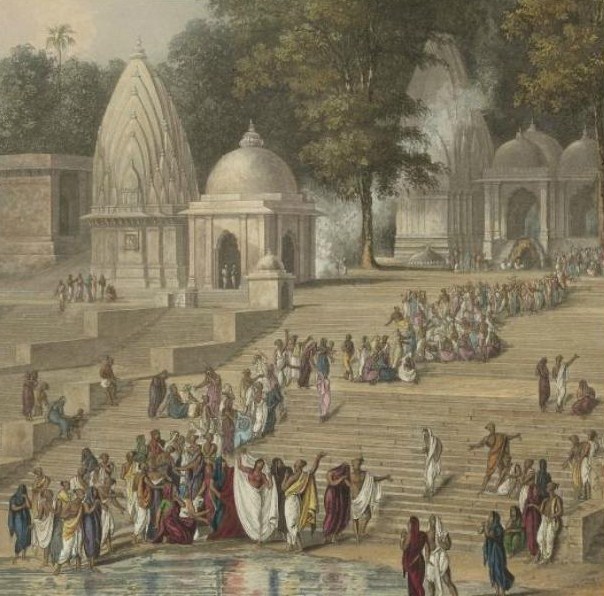
- ENDED WIDOW-BURNING IN INDIA, 1829 - "Sati" was the ages-old practice of burning widows in India. Bereaving women would be made to throw themselves onto a burning pyre upon their husband's death. In December 1829, Lord William Bentinck, governor of Bengal, banned this practice, saving the lives of millions of women across India every year. As he said, the time had come to
wash out a foul stain upon British rule!
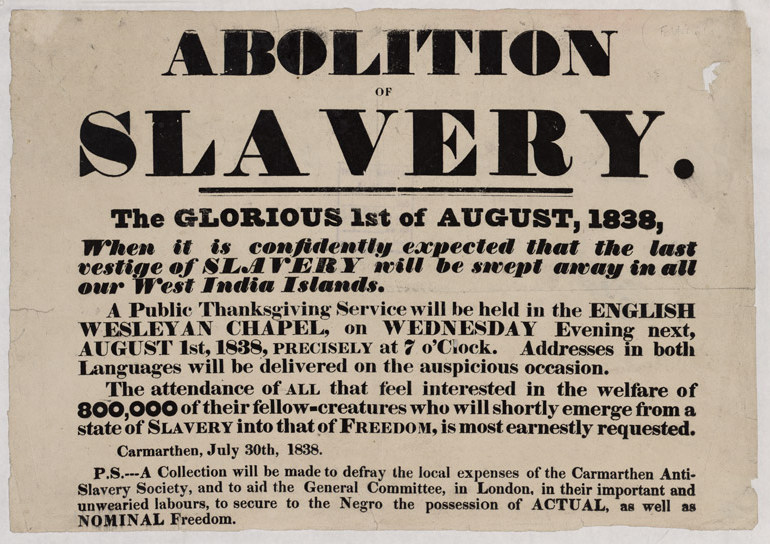
- ENDED SLAVERY, 1838 - Yes: the British Empire led the world in the global movement to end slavery. The nation that seems to be beaten near to death over their participation in slavery the most is actually the one that ended it. (Isolated areas like Vermont ended it first, I believe, but Britain's abolition movement had a more global effect, and should not be overlooked). Men like William Wilberforce (the coolest sounding name ever, by the way) and Thomas Clarkson changed the world by ending a practice older than civilisation itself, and yet Britain and much of the west is still seemingly scorned the most for it, so much so that many often are ashamed to be British or wave a St. George's Cross or a Union Flag.
- EXPLORATION AND DISCOVERY - William Baffin made the first attempt to cross the Northwest passage from the Atlantic to the Pacific, finding Baffin Bay in Canada and naming it after himself, whilst James Cook found the Cook Islands, as well as Newfoundland, Hawaii, New Zealand and the entire continent of Australia, and in the following century David Livingstone set about the exploration of Africa's River Nile as a means to pursue the ending of the Swahili slave trades. And let's not forget Howard Carter's discovery of Tutankhamun's tomb in 1920. Legends.

- WON RORKE'S DRIFT, 1879 - OK, this one's a bit of a military thing, but it's still pretty impressive. A Zulu army of 3-4,000 soldiers funnelled a British army of around 140 soldiers into a mountain pass-based military hospital. Under equipped and low on ammunition, the British 140 managed to hold off the Zulu army all by themselves, for over 24 hours, forcing a retreat after over 850 Zulu were killed or wounded. The war itself was a poor affair for over-stretched Britain, but this battle itself showcased the potential of the British army performing at their best... this was also just a way for me to plug Michael Caine's 1964 film "Zulu". Go watch it. Great film.

- THEORY OF EVOLUTION, 1870's - Charles Darwin became famous for his expedition to the Galapagos in the late 19th century to examine shared characteristics of animals and humans, eventually formalising his theory of evolution. Despite receiving scorn from the church at the time, evolution - not a theory that disproves theology in itself - is now a universally accepted theory as to how humanity emerged.

- THE LARGEST EMPIRE EVER, 1920 - Look at a list of the world's largest ever empires; Britain isn't just number one, it's by far number one. Covering 35.5 million square kilometres at its peak in 1920 after the First World War, it had 412 million people - 23% of the world's population at the time - and covered one quarter of the world's landmass. So much territory was held that it was said that the sun never set on the British Empire.
![[OC] High-Res Map of the British Empire : r/MapPorn](https://external-content.duckduckgo.com/iu/?u=https%3A%2F%2Fpreview.redd.it%2F0mmj5ia5ude71.png%3Fauto%3Dwebp%26s%3D743c9d0d774c73bac7232c91ba73a4aec0388210&f=1&nofb=1&ipt=f7fe90b07830b0bf3f606ecbc931310032e4d7db3c7714922659d71cfe1af74f&ipo=images)
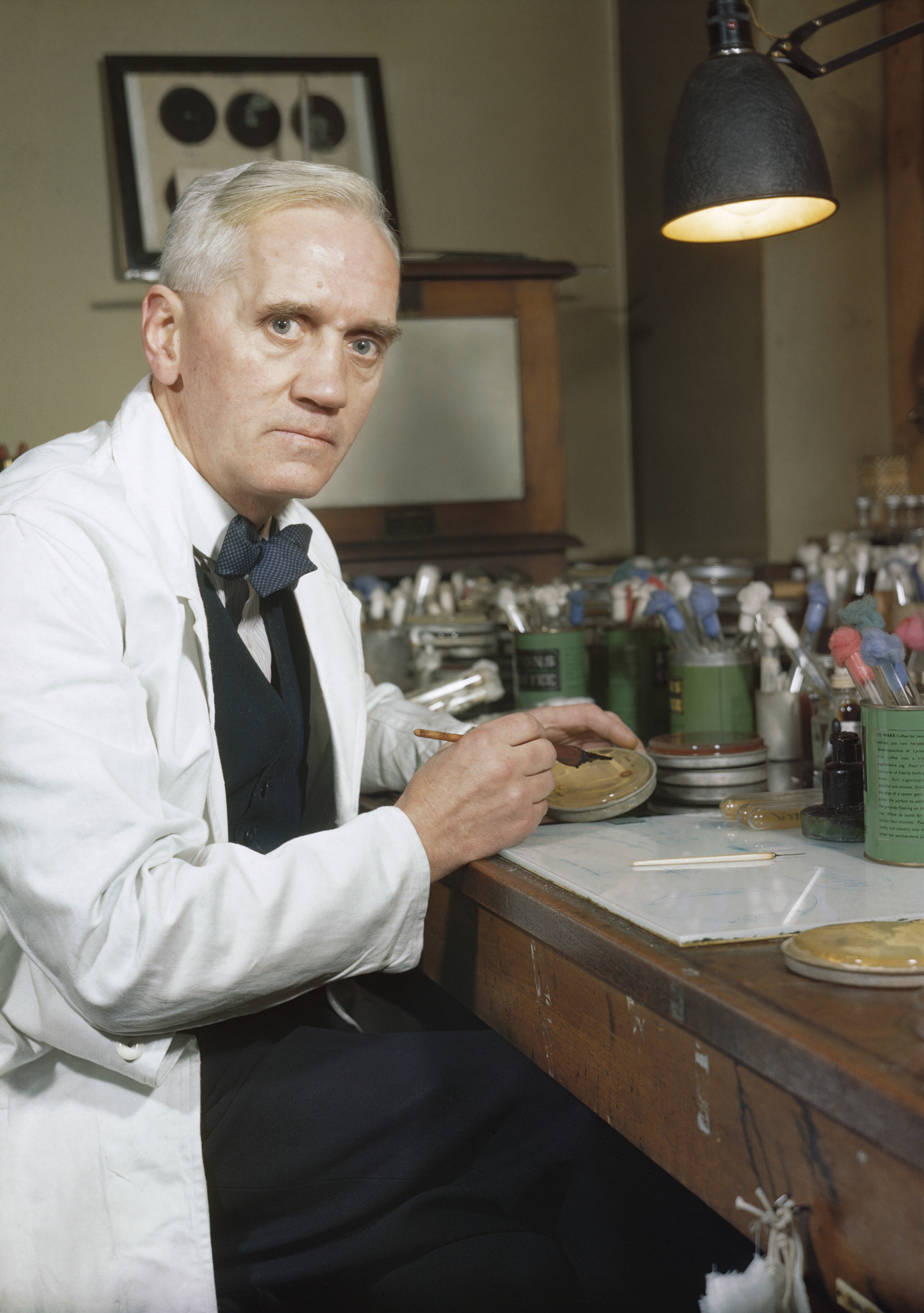
- DISCOVERED PENICILLIN, 1928 - In London in 1928, Scottish physician Alexander Fleming discovered Penicillium moulds secrete anitbodies, leading to a cure to several bacterial infections that have gone on to save, well, countless lives.
- WON TWO WORLD WARS, 1918 + 1945 - Yes, it took everything the Empire had to do this, but it did. Defending innocent powers and allies like Belgium caught in the European crossfire, and doing our part to defeat the Third Reich, and pulling off great feats along the way like the Battle of Britain and the Dunkirk operation, Britain helped save millions of lives, taking down fascist regimes along the way... and I mean proper fascists, not "I disagree with you therefore I will name-call you" fascists.

- IMPROVED QUALITY OF LIFE - Much like my Monty Python example, rule could often be harsh in British-ruled foreign territories, but the laying down of bedrock foundations to societies around the world that we take for granted like improved irrigation, the separation of church and state, women's rights, democratic procedures, street cleanliness, medicine, education, roads, railroads, fresh water... and when Britain left many parts of the world, some of these amenities fell into forms of disrepair and disuse. Famously, a Crimean War nurse named Florence Nightingale improved the standards of cleanliness in war hospitals and influenced the medical world for the centuries to come.

- LANGUAGE - Today, English stands as the most widely spoken language in the world: Earth's Lingua Franca... which is confusing since that means "French Language" but anyway: over 1.5 billion people speak English as a first or second language, 350 million more than Mandarin Chinese at second place if you want to compare.

- ART - Great music composers like Karl Jenkins, Gustav Holst, Edward Elgar, Ralph Vaughan Williams, George Handel, Ethel Smyth and the Beetles, the Who etc... and OK this one's more subjective and less serious, but come on: Faulty Towers, Monty Python, Blackadder, The Young Ones, Mr. Bean... British comedy has always been the greatest comedy!

So... WHY does Britain get the hate and self-hate that it gets?
I can only theorise, but my point is simply GOOD GOD MAN, SHOW BRITAIN A LITTLE RESPECT NOW AND THEN... especially if ya like a good cuppa tea. *clink* Cheers. ☕️
... enjoy yer evenings.
Ciao.
Go read my Other Random and Semi-Philosophical Thoughts if ya like.
I also write history articles. All well done and researched and stuff, with proper books and... yesh, go reed.
MY ANCIENT GREEK HISTORY BLOG PAGE
MY ANCIENT PERSIAN HISTORY BLOG PAGE
MY NEW ANCIENT ROMAN HISTORY BLOG PAGE
All feedback - positive and/or critical - is appreciated!
Don't forget to rate this post, share it and leave a tip if you enjoyed it
Follow my FACEBOOK
Follow my INSTAGRAM
Follow my REDDIT
Follow my TRUTH SOCIAL
Follow my TUMBLR
Thanks for reading :)






