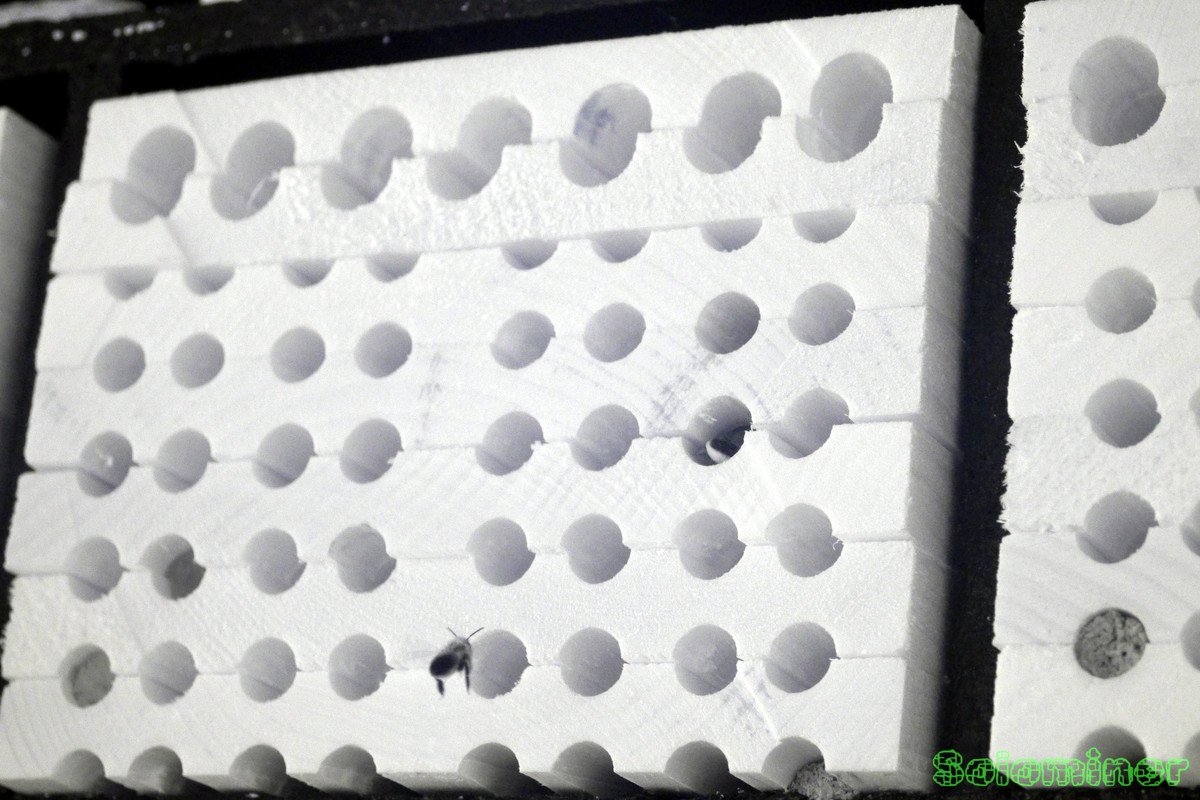
While the Bees were busy, I mostly used my visual light camera to take video and pictures. Though I figured I should also take a few pictures with my infrared camera.
I was expecting them to almost all be blurry, as using this infrared filter on my camera cuts down on light. But to my surprise the images came out alot better than expected. I did choose to set my camera to 1600 ISO and aperture set to about double what it normally is.
I hung around the bee cubbies, where my bee boards were placed and took some pictures as they were busy at work. They did not seem to mind me there, just kept working.
 Camera Model
Lumix GH3, modified by LifePixel for Full Spectrum
Camera Model
Lumix GH3, modified by LifePixel for Full Spectrum
 Lens
Olympus M.ZUIKO DIGITAL ED 12mm-50mm
Lens
Olympus M.ZUIKO DIGITAL ED 12mm-50mm
 Filter
720nm Infrared Passthrough filter
Filter
720nm Infrared Passthrough filter
 Aperture
f/6.3
Aperture
f/6.3
 Shutter Speed
1/200 sec
Shutter Speed
1/200 sec
 Film Speed
1600
Film Speed
1600
 Spectrum
Infrared (IR)
Spectrum
Infrared (IR)
 Wavelength
720 nanometers
Wavelength
720 nanometers
 Location
North Georgia USA.
Location
North Georgia USA.
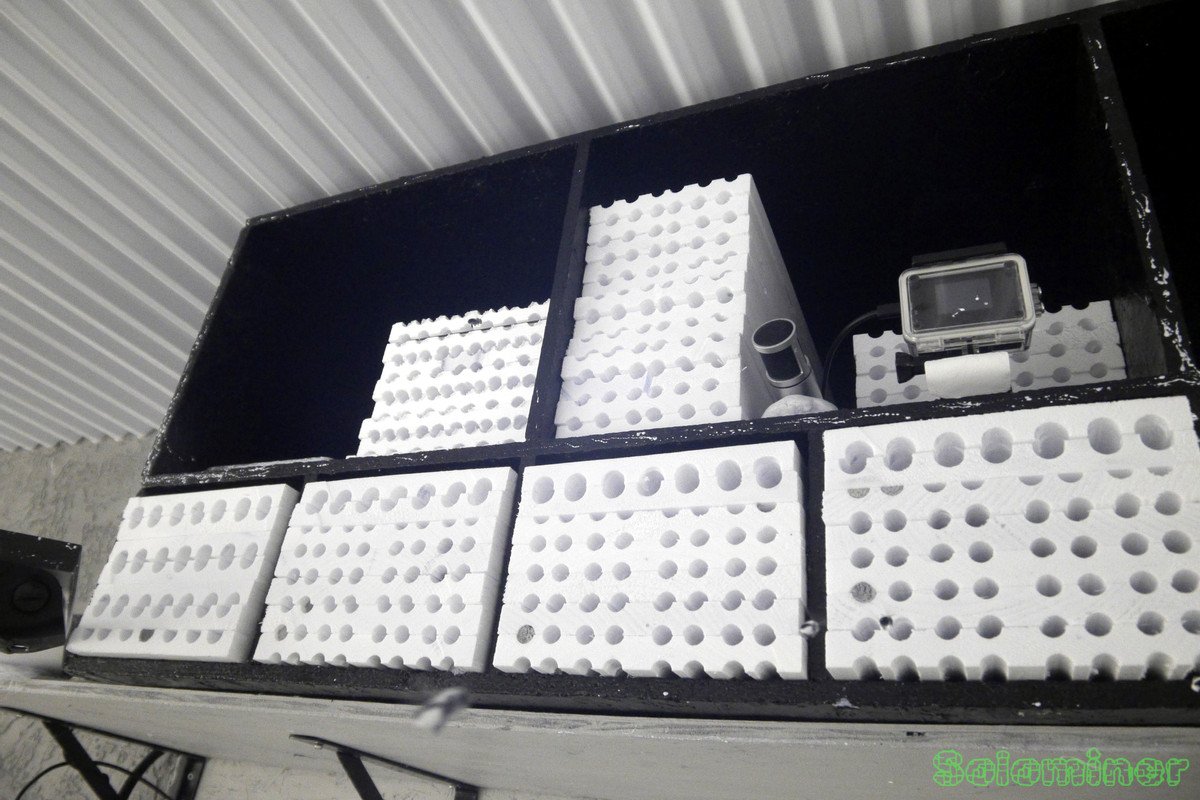
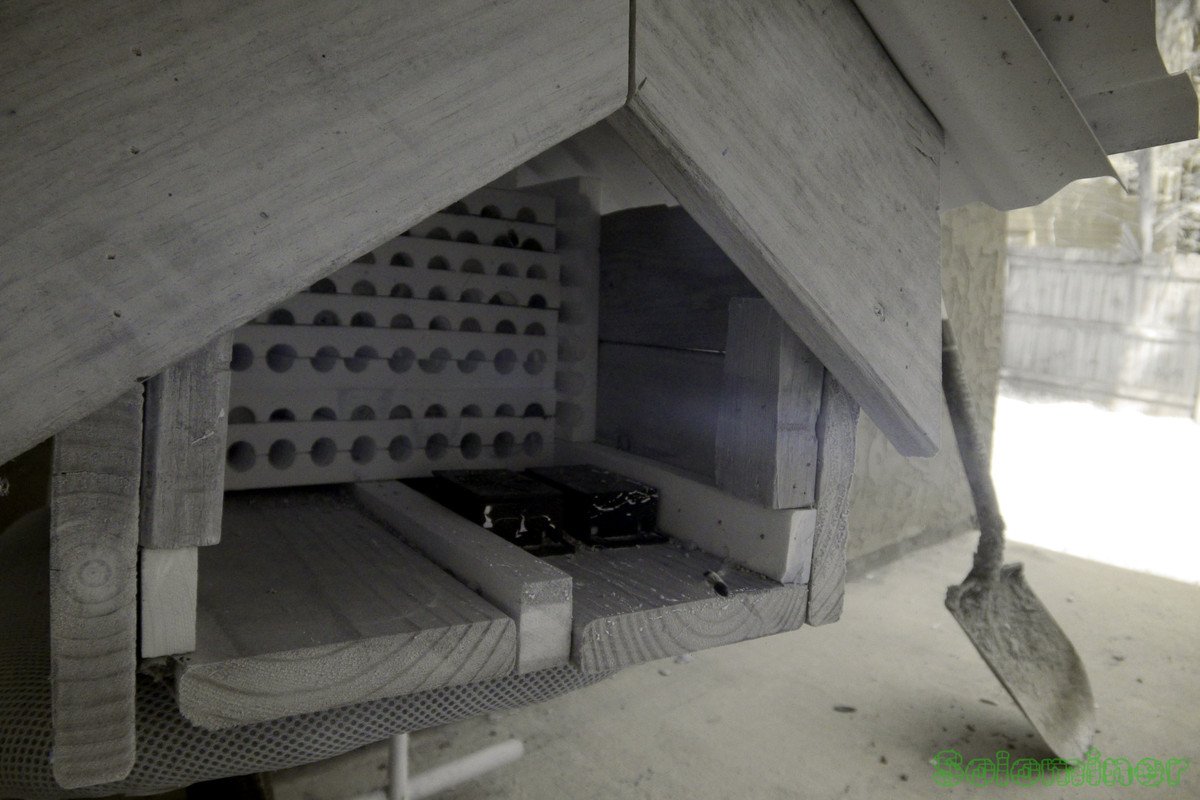
These homes are built in the shade, under the deck of the house. But alot of light still gets there as its not completely closed off. Enough light for my camera to capture the Bees.
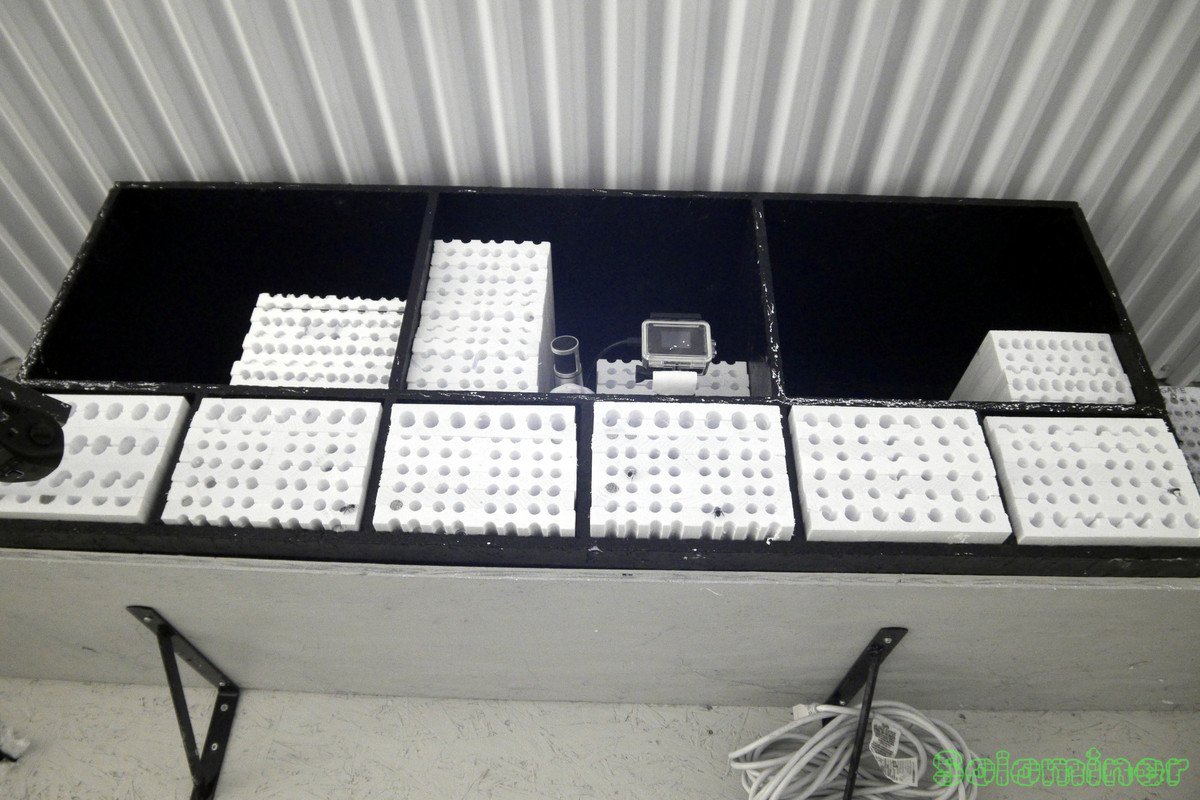
I took these images in late April, near the end of the life cycle of these Bees. They were still busy regardless of it being near the end for them.
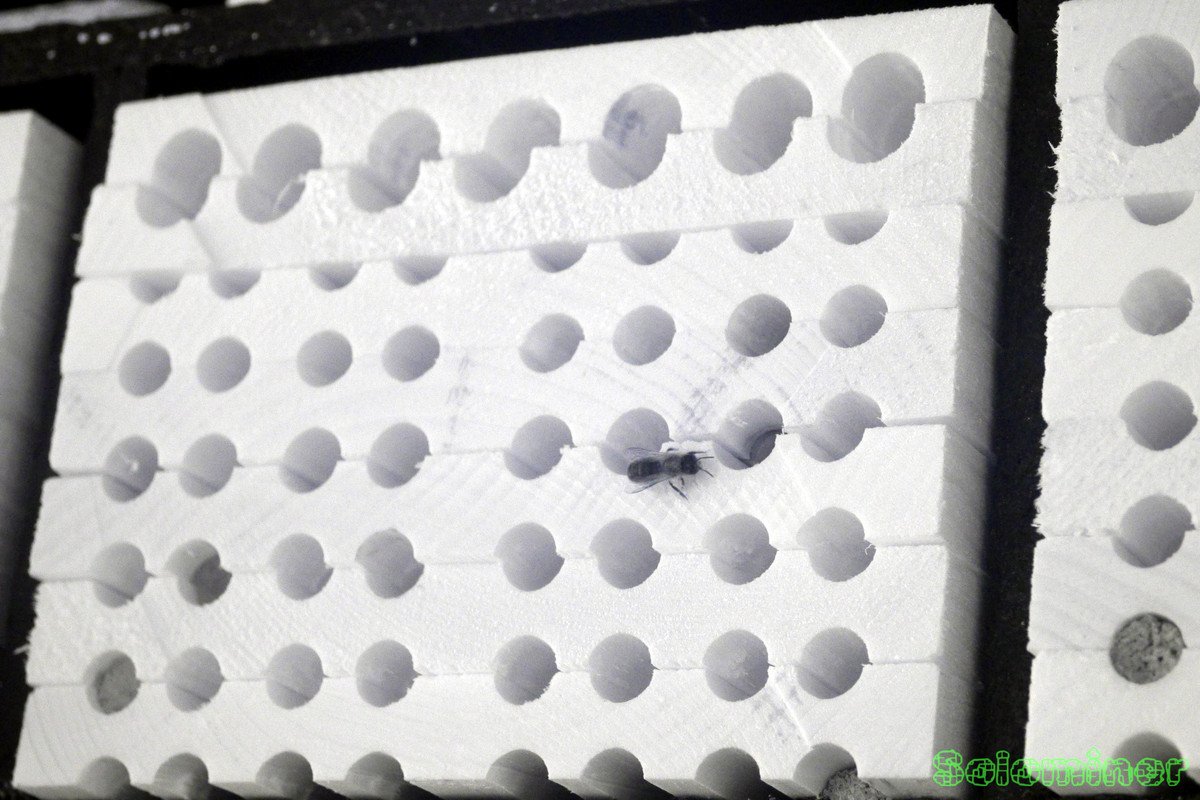
One of the Bees hanging around the outside of the home. Probably trying to locate which hole is hers. They will mark the exit of the hole with their pheromones so its more easily found when they return to add more mud or pollen.
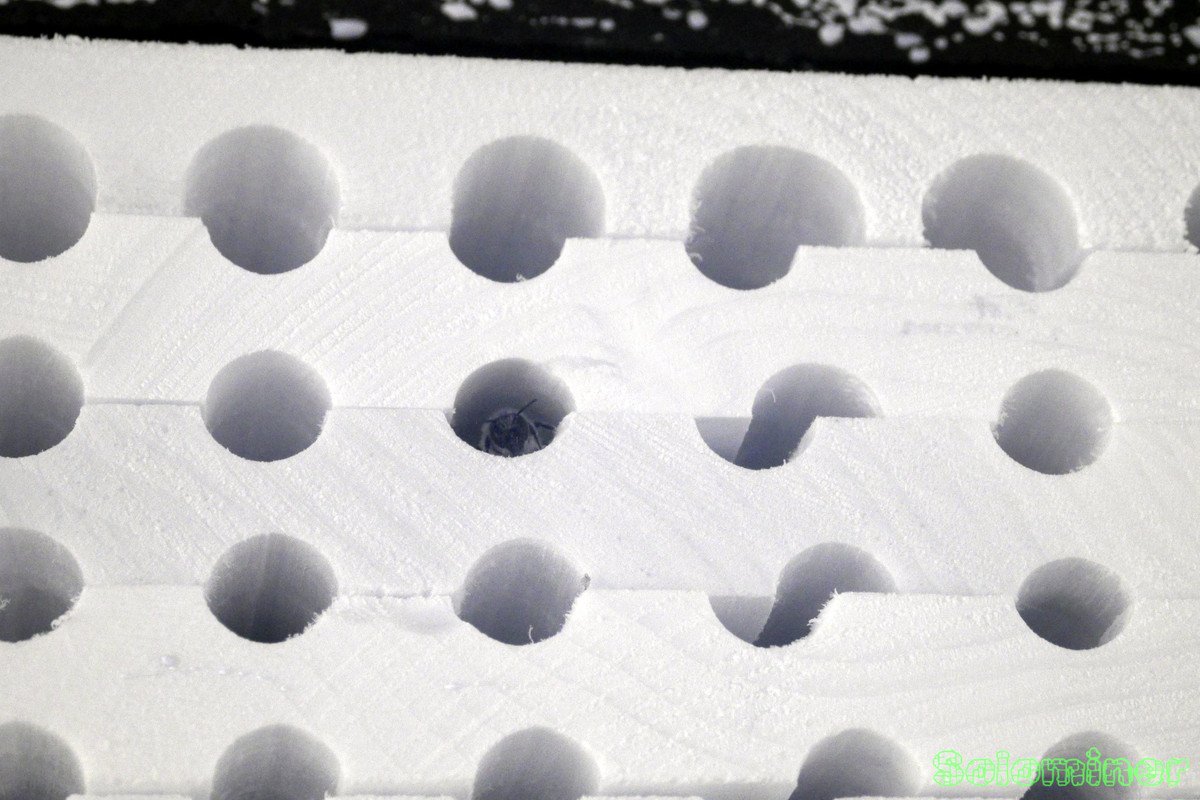
Hah one of the Bees checking me out, seeing what im doing with my big scary camera. Or maybe it was laying larva near the end of the hole. Each cell is separated by mud, so there can be dozens of Bee larva in each hole.
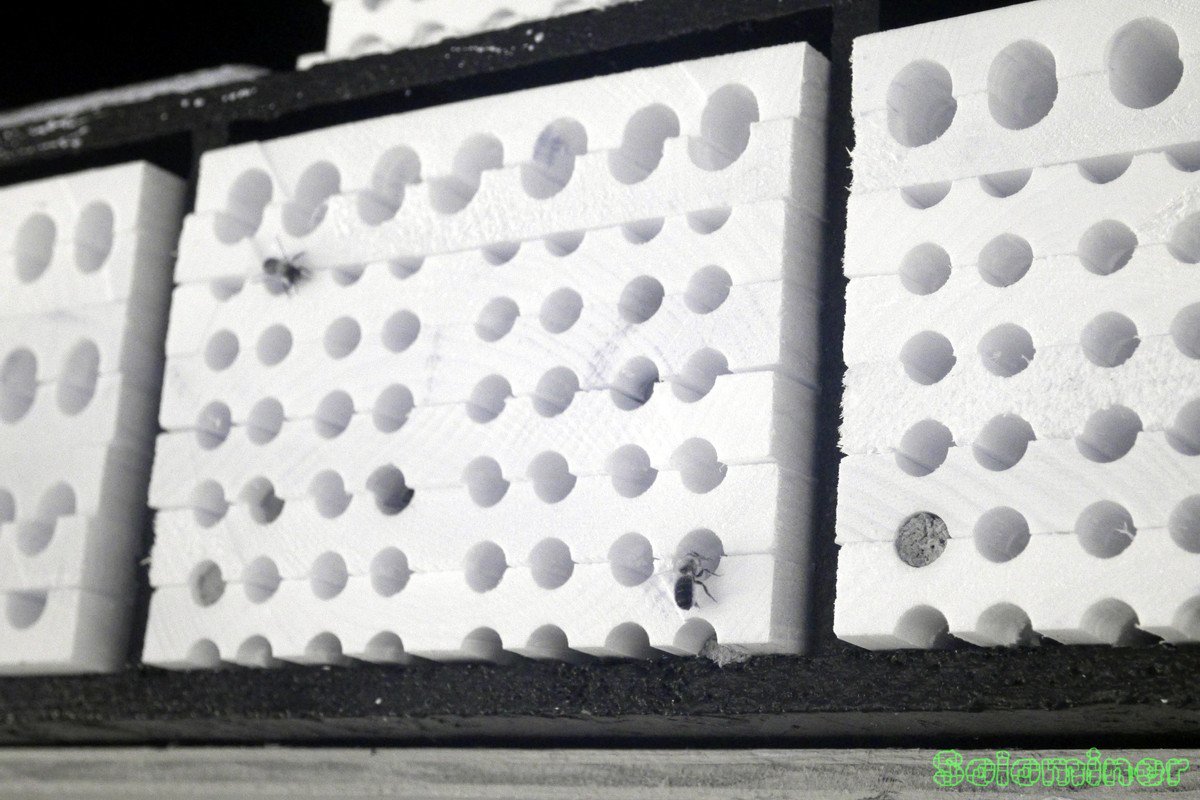
One of the mud walls can be seen in the above image, that is a finished Mason Bee home. It will stay mudded over until next spring where new Bees will emerge.
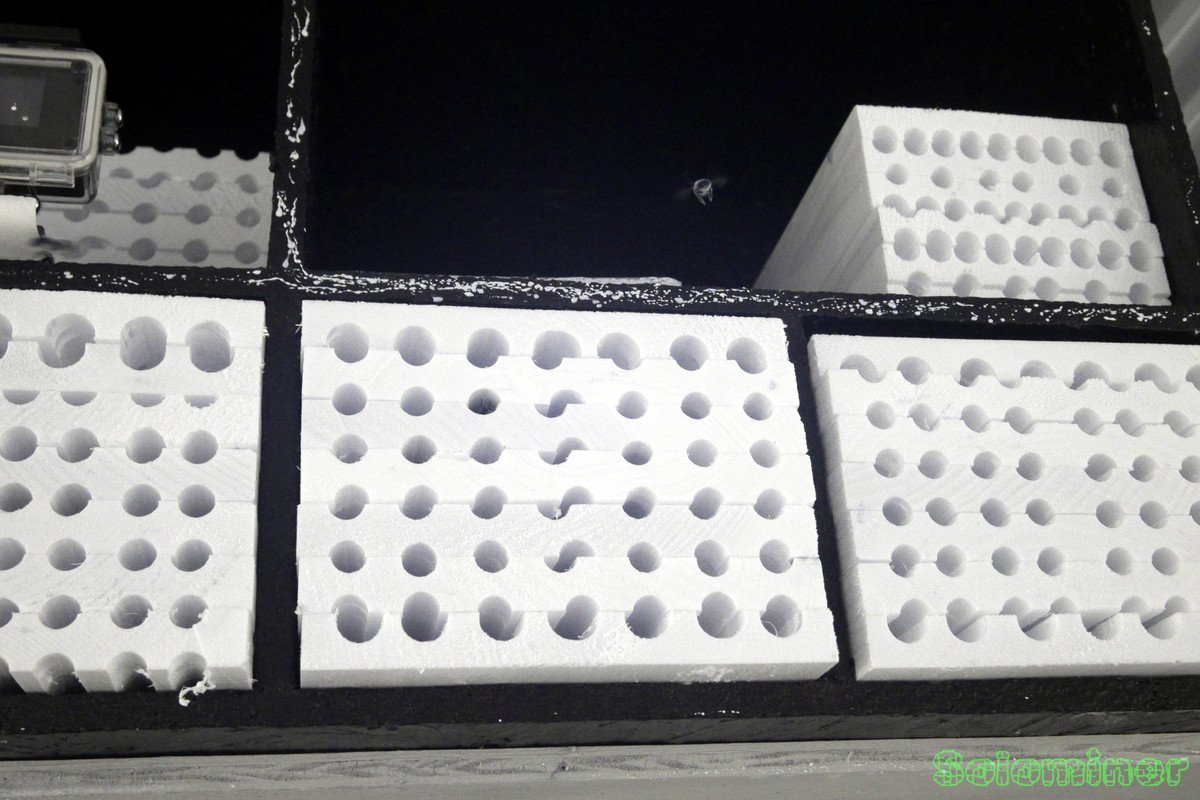
A Mason Bee captured in mid flight. The black coloring of the bee cubby makes the Bee more constrasting and easy to see.
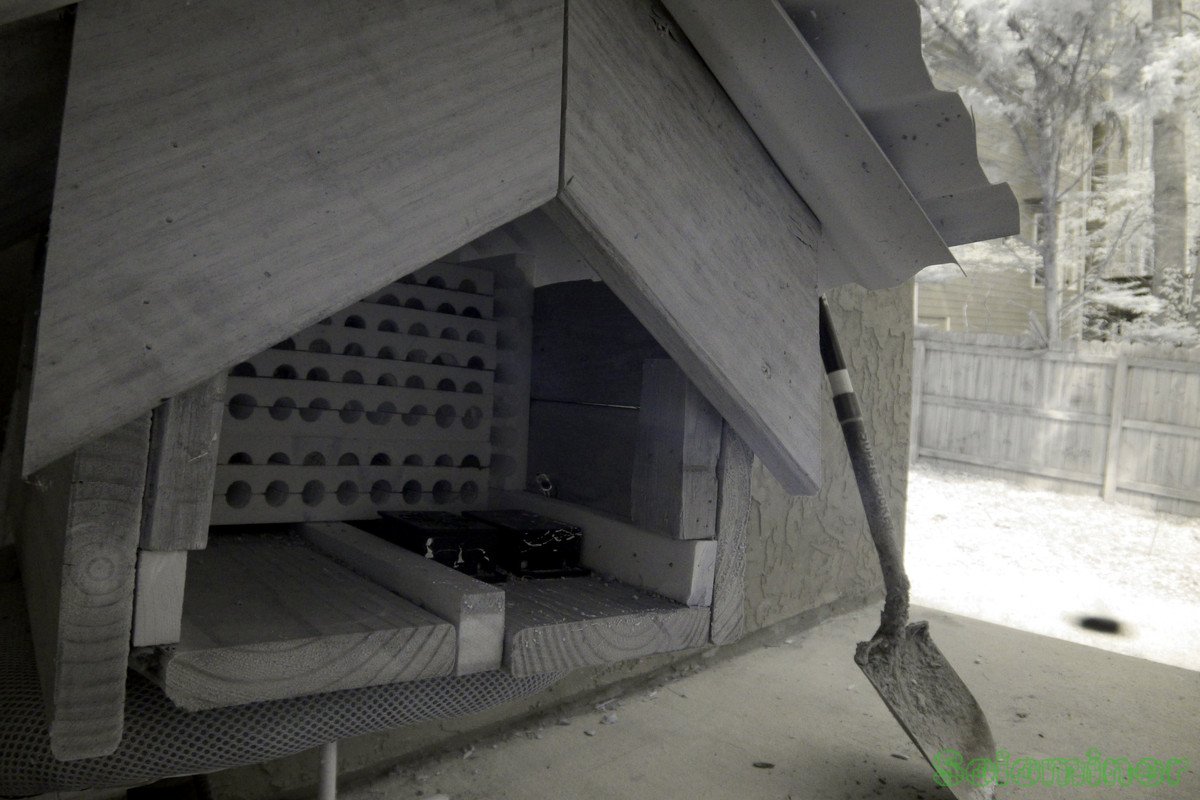
I walked over to the other bee house, it only holds about a dozen boards. But am able to move it around, helping to encourage the new Bees to build homes inside.
A Mason Bee on approach for landing, making its way into the bee house where I have placed many bee boards.
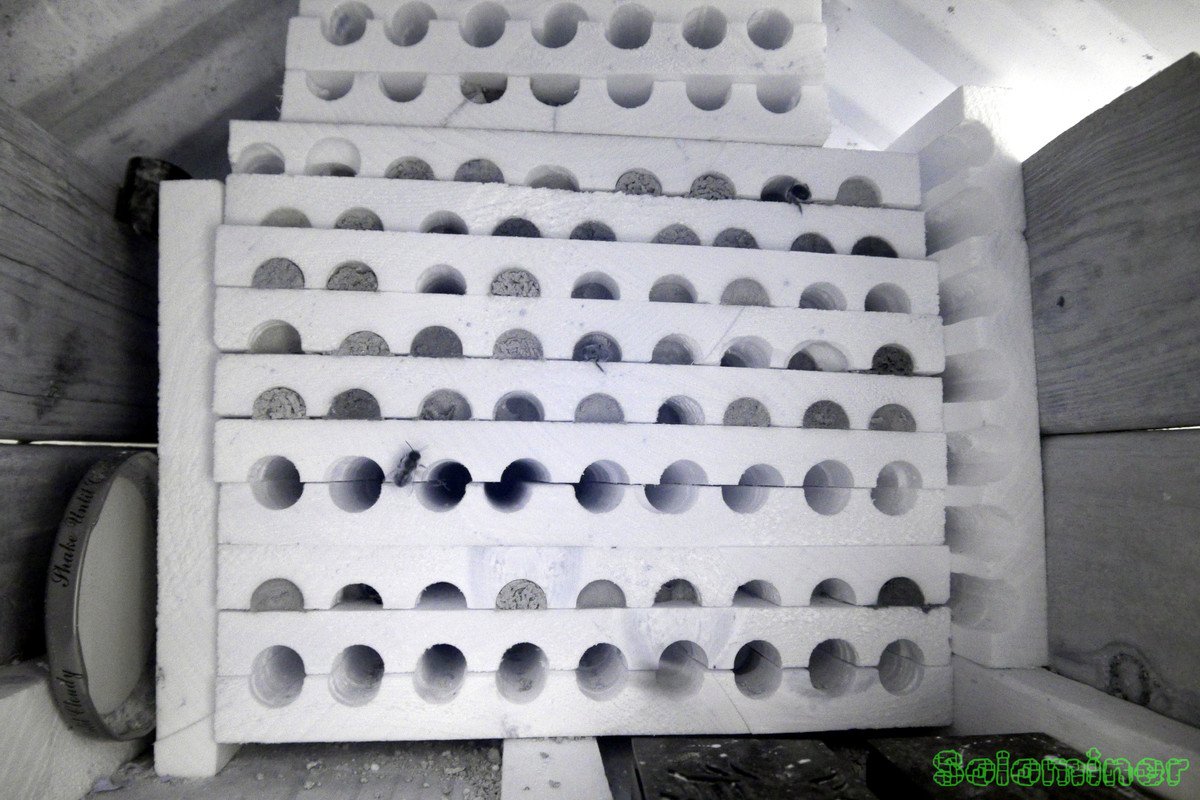
Three Bees, busy bulding homes, pollen dust and dirt can be seen on the floor of the bee house. They tend to drop a little as they move. Broadcasting pollen everywhere they go.
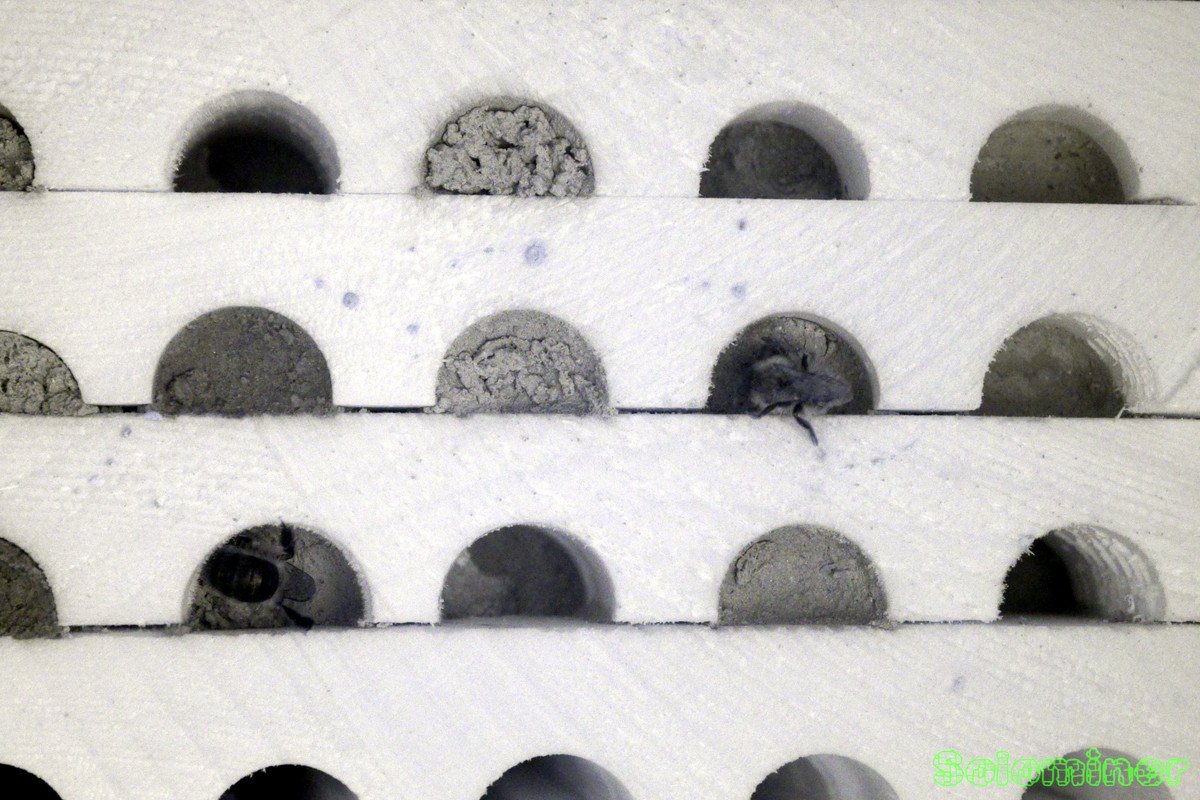
A few finished mud homes, along with a few that Bees are currently working on. The dots seen on the boards is Bee poop.. hah
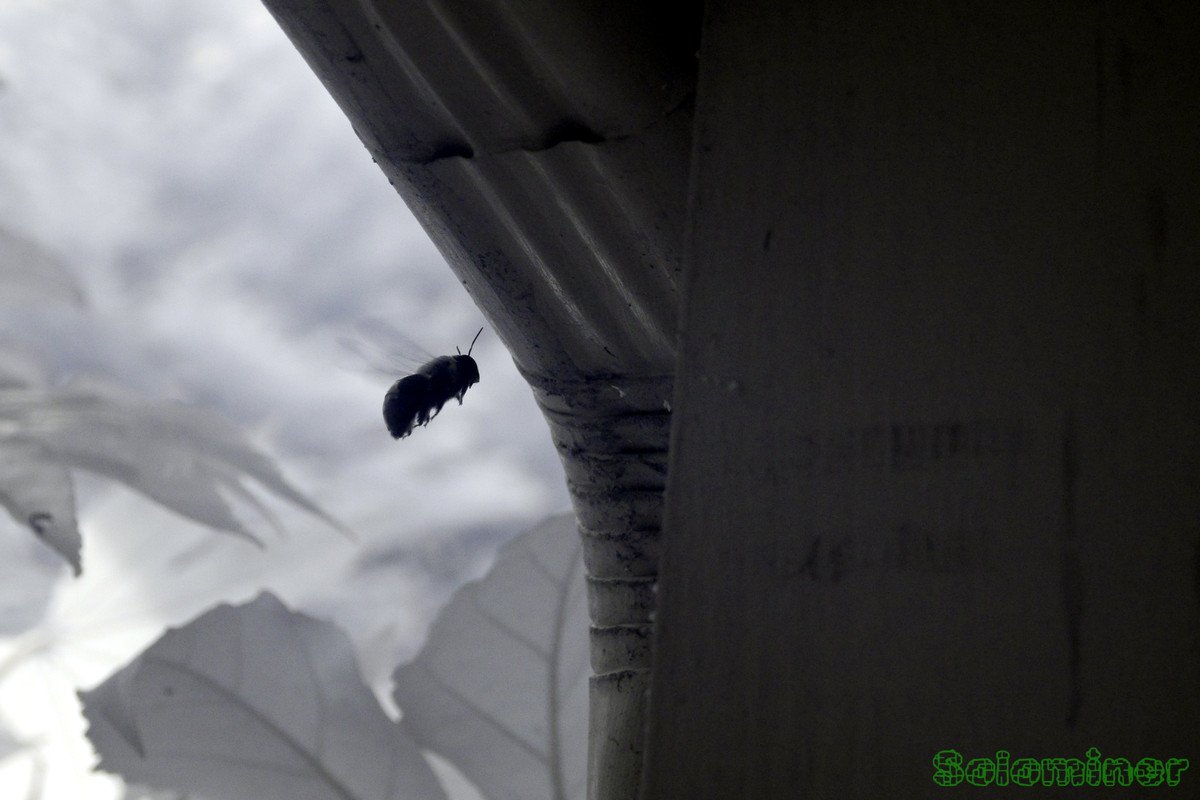
This is not a Mason Bee. It is actually as Carpenter Bee. They are much bigger and will boar holes into wood. Mason Bees will not be destructive like Carpenter Bees. As they will just make use preexisting holes. Both are considered Solitary Bees, but quite different in behavior. Though both are pollinators help out the plants around them, regardless of how destructive they are. I guess its a give and take relationship with the Carpenter Bees.
Shortly after taking these images the Mason Bees were done for the year, so I hope to capture more infrared photos next year when they return if all goes well.
I take pictures with a special camera. Its a Mirrorless DSLR that has been modified by Life Pixel to see light in other wavelengths. This allows my camera to see light in the Infrared [IR] around 1300 NM wavelength, through the visual spectrum and into the Ultraviolet A and B wavelengths roughly into the 300 NM wavelength.
I carry many filters on me to make the photos you see in my blog, these filters screw on my lens and help me isolate certain wavelengths for certain scenes. These filters can be IR / UV pass-through filters to assist me get a natural photo taking out the UV and IR light. Or I may use a Infrared pass-through filter capture just IR light. I can do the same with UV light as well, though I need some better filters which they can cost a few hundred dollars for true Ultraviolet pass through filters. So for right now I have B + W 403 bandpass filters that still allow some IR light in, due to their cheaper material.
There are also exotic glasses made of sapphire and germanium I am open to working with to replace my silica glass hot mirror with a material that allows even longer wavelengths of infrared to enter my cameras sensor. Special sensors, lenses and filters of that material would be needed as well, so it would be a big project but one that may give some even more unique photography results.
Addresses below to help me buy better camera equipment and support me to travel to locations to do photo and video and overall great blogs in new places. I would be happy to list some of the contributors in my posts for donations that help me along the way.
Coin
Address
 BTC:
bc1qhfmvd2gywg4fvrgy2kkkkyqta0g86whkt7j8r7
BTC:
bc1qhfmvd2gywg4fvrgy2kkkkyqta0g86whkt7j8r7
 LTC:
ltc1qdyzm5cwgt8e2373prx67yye6y9ewk0l8jf3ys9
LTC:
ltc1qdyzm5cwgt8e2373prx67yye6y9ewk0l8jf3ys9
 DASH:
XkSqR5DxQL3wy4kNbjqDbgbMYNih3a7ZcM
DASH:
XkSqR5DxQL3wy4kNbjqDbgbMYNih3a7ZcM
 ETH:
0x045f409dAe14338669730078201888636B047DC3
ETH:
0x045f409dAe14338669730078201888636B047DC3
 DOGE:
DSoekC21AKSZHAcV9vqR8yYefrh8XcX92Z
DOGE:
DSoekC21AKSZHAcV9vqR8yYefrh8XcX92Z
 ZEN:
znW9mh62WDSCeBXxnVLCETMx59Ho446HJgq
ZEN:
znW9mh62WDSCeBXxnVLCETMx59Ho446HJgq






