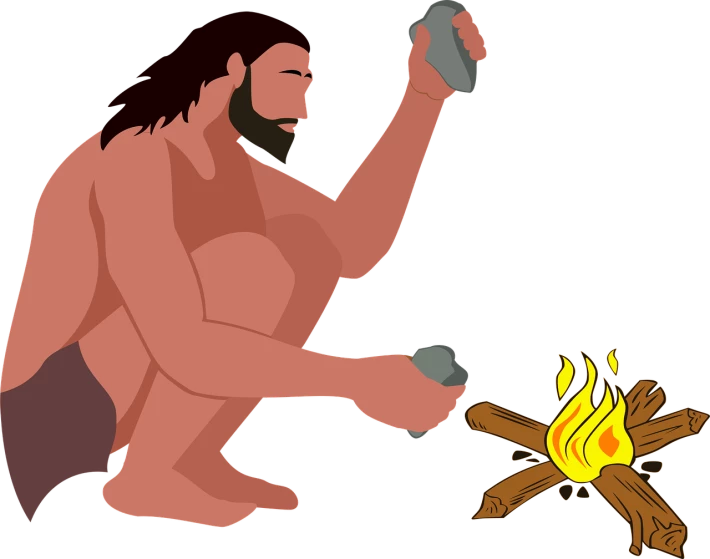
Three hundred thousand years ago, nine subspecies of humanity lived on Earth - but now only one remains. How it happened that Homo Sapiens outlived all of its other species?
Neanderthals (Homo neanderthalensis) were stocky hunters adapted to the cold steppes of Europe. The Denisovans who were related to them inhabited Asia, while the more primitive Homo erectus lived in Indonesia, and the Homo sapiens lived in central Africa.
Several low-growing species with a small brain lived next to them: Homo Naledi in South Africa, Homo luzonensis in the Philippines, Homo floresiensis ("hobbits") in Indonesia and the mysterious "cavemen" in China.
However, about 100,000 years ago, they all disappeared. All this resembles a mass extinction, but scientists still have not found traces of environmental disasters - the fall of asteroids, volcanic eruptions, climate change. A much more realistic hypothesis is that one of the species - Homo sapiens - left Africa and went to conquer the world.
This led to the real "sixth extinction", because human activity affected almost the entire biosphere of the earth, from the disappearance of mammals of the ice age to the deforestation of tropical forests for arable land and construction sites. However, the most significant victim, apparently, were our relatives - direct competitors for resources and territory.
We are used to perceiving our ancestors as good-natured collectors and hunters. However, in fact, the history of mankind is of constant wars. The wars of primitive cultures were intense, widespread, and extremely bloody. We find evidence of this around the world. A 9,000-year-old Kennewick man has a spear sticking out of his hip. In the village of Nataruk in Kenya, 27 remains of men, women, and children, approximately 10,000 years old, were found - they were brutally massacred.
However, it is unlikely that other members of the Homo family were more friendly. Even today we see manifestations of collective violence among primates, which means that war as a concept appeared even earlier than modern man. Traces of injuries left by man-made tools are often found on the bones of Neanderthals - apparently, it was they who gave Homo sapiens a great advantage. Tools, however, made it possible to cultivate a wider range of plants and domesticate animals, feed large tribes, and make life easier.
But this is not their only advantage. Cave paintings, carvings, and musical instruments allude to a much more dangerous revolutionary device: the ability to subtle abstract thinking and communication. The ability to plan and agree, to observe hierarchy and to distribute roles - this is what makes people a truly formidable tool of war.
By the way, evidence that our species interacted closely with each other is stored in our own genes. Residents of Eurasia still have traces of DNA of Neanderthals, among Australians, you can find the DNA of Denisovans and so on. Our ancestors mated with representatives of related species, and then ... Then they all somehow disappeared.
Due to the fact that humanity multiplies and multiplies exponentially, it required more and more resources and space under the sun. So there is nothing surprising in the fact that the more progressive, numerous and skillful subspecies eventually crowded out the rest - alas, this happens all the time in the history of the Earth.





