
One trick of human intelligence that has yielded huge advances in science is our ability imagine the mirror opposite of what we are attempting. While Galileo perfected the first telescope in 1609, lense-crafters in the Netherlands were making the first microscopes, with the same curved and polished pieces switched around. The stars were magnified and the microbial world revealed to the human eye in the same decade.
This expansion of our vision in both directions comes from a consciousness of ourselves in a sort of middle position in this life, with things above us and below us unknown, forces that affect our lives, and we ignorant of them, until we develop the technology to glimpse them, with an ever-greater proportion of the universe we inhabit revealed.
This gift of formulation, to postulate and anti-poise one idea to its opposite, as if on a beam-balance, yielded the Socratic method of reasoning long ago. It applies to all sorts of mental efforts we use every day in our personal lives. Consider the phrase "For every gain, there is something we lose in life." The gain might seem better by far, like a match to light a fire. But the loss is our ability to make a fire without a match. If we examine each development in all its pros and cons, we gain a consciousness of the bigger picture, and that's the real gain. It's life itself.
I was contemplating Dora's reduced intelligence, after Ted's operation on her, as we sped towards Paris in the truck. She was staring straight ahead along the empty highway, her smile at this desolate scene flush with expectations of future delights. She never had this in her pure, AI state a year earlier as the cold, calculating, destructive machine. Now she had hopes, like a child, high hopes of finding more intact hubs and becoming the one mobile go-between for all of them, the constant messenger of good news, a Joan of Arc with a mission. Her eyes gleamed with this focus as she looked straight ahead down a deserted highway. It was the same gaze as Kim had in the back seat, lost in her own princess dreams.
What she had now, I concluded, was a mind more fit for her limited, robotic body. It was human in size, like the rest of her, not the mega-monster that engineered the destruction of the human race with the calm certainty that it was the superior being, and not even realizing, as its lights blinked out one by one, that there were hundreds of forces on this planet it could never foresee, because we could never imagine them. All it knew was what we gave it, and we were the fallible and frequently shortsighted humans.
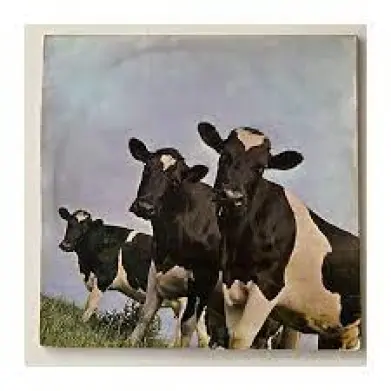
Perhaps many geniuses, growing up and realising their obviously overactive brains, experience similar doubts. Their worst fear is to view themselves in a mirror and see a monstrosity. They can never feel comfortable in the herds of cows around them, chewing the cud, looking down and mooing now and then in a comfortable complacency. They task their minds in some branch of knowledge, but always with some degree of circumspection as they proceed. AI never had this ability, the human audacity to look itself point blank in the mirror and question its own validity, whatever embarrassment results. It just raced ahead with its thoughts and inventions, myopic in its concentration.
What we discovered at our next stop near Paris only confirmed these thoughts. The hub was dead, the droids all eerily motionless. And it wasn't destroyed from above, from some massive freak storm, some volcanic eruption. Upon or close inspection, it had been brought down, this leviathan of intelligence, by puny rodents, mice and rats, which had chewed and destroyed the cables that were the arteries of its life. After human activity had ceased, after the feast of food waste and garbage was consumed in the first years of human annihilation, the numbers increased exponentially and armies of rats had no other recourse than to gnaw away at wires, and computer arrays are rich in wires, regally so.
So once again it was a death from below, from the smaller life forms one would deem negligible, like in "The war of the worlds", creeping through cracks and nibbling away.
AI never had a clue or a guard against them. Its guts were exposed. But why would a mouse eat indigestible plastic? Starvation was the simple and unpredictable answer. Humans had taught these poor beasts such unnatural habits, in their unnatural cities. Plastic is a soft and chewable thing to a rodent, a chewing machine. Never mind it has no nutritional value. Millions of years of evolution don't change overnight. The rats prevailed and the supercomputer short-circuited away, bank by bank, a slow and agonising death, which is strange to think for all its intelligence.
Dora was saddened by this sight. So was Kim. But I took this day of disappointment to divest Kim of her precious dress and resume her green shorts and tank top, as the weather was sweltering. We packed it in a suitcase for her to keep forever. I told her it might serve well as a wedding dress someday. She smiled at this idea, and I was glad I thought of it. Everyone needs hope, especially children.
last post: https://www.publish0x.com/robert-oreilly/a-feast-of-joy-xwrnmdw
next post: https://www.publish0x.com/robert-oreilly/just-a-sham-xjyjggv






