
I'm taking a break from my autobiography to give you the last four chapters of my novel 'Pandemica'. All the earlier chapters were included in my posts from last January to March. The book is not yet published but will be available on another site soon. I'll post the link when it's there.
I thought the story was finished last February, as the last page, called 'conclusion' indicated. But then the Russians invaded the Ukraine and this strange spin in world events put the thought into my head, "what if they invaded us, after a terrible pandemic, when our populations were back to the level of two hundred years ago?" So I was inspired to continue my fiction through another five years and a large scale war, and tie-up loose ends with many of the characters in the previous chapters, some sad and some happy endings. If you're familiar with them I hope you enjoy this tale.
Previous Chapter ...
Interlude
Rumors of War
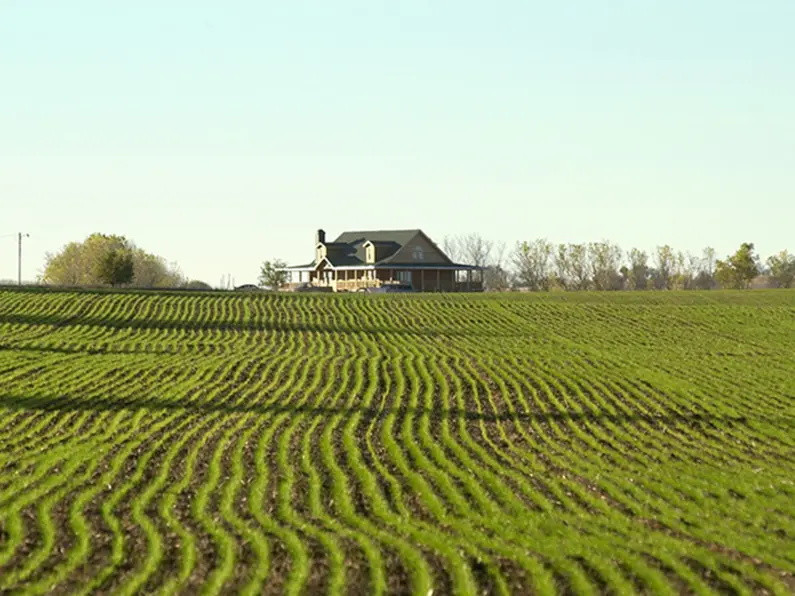
Peace and prosperity. Joe’s new house.
I never did write that history of the world I promised, though I thought about it, my feet up on the desk, leaning back in the chair, toying with the idea and a pen playing between my lips, or else smoking my pipe. I’d switched from cigarettes. It seemed more refined as I was getting older. I was almost thirty-three now.
Some might call it an oral fixation. I spent five or six hours a day there, mostly reading whatever book fancy led me to take from the shelf, usually some biography or poetry, neither here nor there, just meandering. My mind would wander like that. Call it idleness. Not a single word was set to paper, though there was an open notebook and a blank page before me.
Yet these were purely happy years. I think such inner satisfaction precludes mental efforts, any monumental undertakings. You feel content, as if everything is already achieved in life. Our farm was prospering and the children growing like the corn in the fields and our entire country was at peace. What more could one ask?
We’d expanded our acreage to over two thousand. When Jim’s hospital was restored he kept four of the soldiers to help out. Two had first aid training and all of them wanted to become doctors. So he treated them like interns. There wouldn’t be any schools open for a long time.
On a parallel plan we employed the other eight soldiers, who were eager to stay with us, in construction. This was Bill’s idea. He didn’t want his knowledge of carpentry to pass away. So he took charge of them and on the far side of the fields, closer to Tom’s farmhouse than ours, they built a fine, large house for Joe and his wife and son, with Tom’s help. We were one big family but that distance gave everyone the privacy they needed.
For supplies they simply went to any nearby lumber yard or hardware store and took what they needed. Bill would hobble down his staircase to a truck and be driven across the fields where he’d sit in a fold-out chair like a movie director making a film and do just that, direct the construction. The soldiers each had their own new trucks and all the tools you could imagine. Everything you could find was free to take.
The soldiers loved this life, the open air, the easy pace, and Bill’s mild-mannered instructions and fund of knowledge. They liked Joe too as he watched their progress, full of compliments. One Christmas they drove in two more tractors, an excavator and a bulldozer as gifts, then built a barn for him to keep them in. We felt as rich as any kings, feeding off the former wealth of America.
But nothing lasts forever.
By the Spring of the third year Sheila was still away on her mission around the globe, delivering the vaccine. We knew it would take time. But all of us expected her back any day. Nancy was raising Sheila’s child, my child, Louie, along with our darling Sophie, and Jane’s girl with Jim, Helen, all together in one big household, as brother and sisters, as they really were. They were almost five now and talkative. I was just beginning to read them quality bedtime stories on the couch after dinner.
In all this time we received only two letters from Sheila, a year apart. There was no postal service, and it took a courier from Washington to deliver them, when some delegation from her latest port of call visited. Europe now had four labs in operation, the Middle East two, one in Turkey and one in Israel. In the next letter they had sailed around the horn and set up labs for the remnants of India and the far East, China and Japan, sadly depopulated, and were heading to Australia, then across the Pacific on her way home. She said in the second she wanted nothing more than to be back here with us and her child, forever.
From this I deduced their mission wasn’t going smoothly. A month later I received a telephone call from Durham. It was the elder doctor in charge. He had a message for me but couldn’t make heads or tails of it. It had been sent short wave through many stations and was garbled. It was from Sheila, meant expressly for me and simply said: ‘learn Russian.’ The other parts were incoherent except for two words: ‘war again.’
I told this to the others, as they were all collected around the rare phone ring that evening. I’d taken one beginner's course in Russian towards the end of my school years but realized I had too many other interests on my plate and dropped it. But I took this cryptic hint as serious. We had a Smithsonian sized library on computer disks, and I printed out instruction books and texts at various levels and resumed the study. It was a pleasant relief from the boredom I was starting to feel. Now I had a mission.
Besides, I always wanted to read Dostoevsky in the original and spent most of my time and energy at it. It seemed like a command and revived me to life again. My coffee consumption went through the roof. In six months I was fluent as far as reading went. My accent was probably horrendous. But I read everything that Gogol, Pushkin, Dostoevsky and Tolstoy wrote, which was quite a bit. I enjoyed them immensely. I glanced at a few ‘Pravda’s’ but the communist material was all rant, like a rabid dog foaming at the mouth. The last great author was ‘Sologub,’ who wrote ‘The petty Demon.’ Stalin was no patron of the arts. Nabokov was smooth in prose but a pervert. I was just starting Solzhenitsyn when our lives changed.
This was when Sheila returned. There were only two of our soldiers left in town. One ran a store there with his newlywed Anna, now eighteen. They met a year earlier when he was learning carpentry under Bill. He was the youngest of the lot, handsome and fit. I suppose it was the sight of him working shirtless all summer, high up on the rafters of the new barn, fearlessly walking the beams, sweat pouring down his tanned skin. She watched him work, brought all of them lunch but he received the special smile. Soon there were long walks in the woods, and then the swing seat on Joe’s new veranda after dinner, as he was invited to stay, on her insistence.
I never liked him much because it deprived Miranda of her closest friend. Then again, after puberty and dating began, Anna changed. She turned seventeen a month after Miranda reached fourteen. Their interests were now worlds apart. At the same time Miranda had another concern, more pressing then Anna’s frequent disappearances into town. It was Bill.
Poor Bill had died three months earlier, barely sixty. It was a slow passing away, lasting four months. Miranda was his nurse, day and night at his bedside. I know this is cynical, but her kindness and care probably even prolonged his life, as such loving care does.
Then again, a fragment of a Latin poem by an old man comes to mind:
“Make me lame in the hand, in the foot, the hip,
Constrict my body with ulcers and pains till I spit out my last tooth.
Life, while it lasts, is good.”
She truly was his angel those last months. Jim could do little to help. It was his battle wound, never quite healed and his heavy drinking, always on the increase to alleviate the pain, less walking, less eating, hardly ever leaving his loft the last months, saying the stairs were too much for him. I’d visit but with every social call he’d insist on drink after drink. He lost strength, confined himself to his den, then the couch, then his bed, his deathbed.
He was spoon fed by Miranda towards the end. She could never forget the crosses he’d carved for her, so beautiful, and how it saved her mother. The last days when his breathing grew weak, we all visited his bedside for hours. But he could barely speak. The last day he could only smile at Miranda, holding back her tears. Then he passed, her hand in his.
He was buried beside her father and brother, at her request. She spent hours at his tool bench in the barn and made a cross similar to the ones he’d made, with his name, matching them surprisingly well, taking a week where he took one-night, strange task for a girl not yet fifteen.
After she finished that cross and planted it she came to my study, misty-eyed, and asked if I’d read her some poetry to console her, something sad and about death. It seemed an odd request, but I complied. I took down a gold-leafed anthology of English verse and glancing through it I read her the ‘Annabel Lee’ by Poe, ‘Remembrance’ by Emily Bronte and a few others on that note. But not to be too gloomy I finished with ‘Finis’ by Walter Savage Landor and ‘Invictus’ by Henley, saying they reminded me of Bill. Then I gave her the book as a keepsake for Bill. She was so pleased with that she gave me a hug and told me she’d read the whole volume and keep it as long as she lived.
We spent the next hours talking about him. I began, staring off into space, remembering what a master craftsman he was, yet never boasting about it, and how smart and cool in a crisis, how he saved all our lives with his wits and bravery on the day of the battle by sending her and her mother to the bunker right away. All of us owed our lives to him. She told me how kind he always was to her and what I didn’t know, how he’d sometimes take her to his workbench, even when his side was hurting, before Anna arrived, and teach her the tools and tricks of woodworking. That’s how she was able to make the cross.
Our interview was so pleasant she asked if she could visit me in the afternoons and just sit and read quietly, not to disturb my studies. I said that would please me a great deal, and it did. The next day, around two, she came in the open door and asked for something to read. But she insisted it had to be sad. I’d thought about this the night before and had just the right book for her, handing her ‘The Red Pony’ by Steinbeck.
We grew closer with each visit. She lost all interest in farming chores. She’d help us mind the toddlers a few hours each morning but in the afternoons she’d come with me to my study and sit in the easy chair beside my desk, pulling it up close to share the same desk lamp. I always pulled the damask curtains closed to keep out the afternoon sunlight. There was another light, a small chandelier but I rarely turned it on. She would take whatever book I gave her and read for an hour as I studied my Russian. Then we’d close them and talk till dinner about anything that came to mind. I gave her stories, not fairy tales but pieces of life, more Steinbeck at first. But after the sadness phase passed, I gave her the short stories of Maupassant and Poe, then a longer work, ‘Wuthering Heights’ to read. She took it to bed with her; a sure sign she liked it. After that she read through a whole shelf of novels, Balzac and Hugo, then ‘Germinal’ by Zola. I picked each one and she loved them all. And I was proud of her advancing skill and knowledge and our mutual love of literature, so shared.
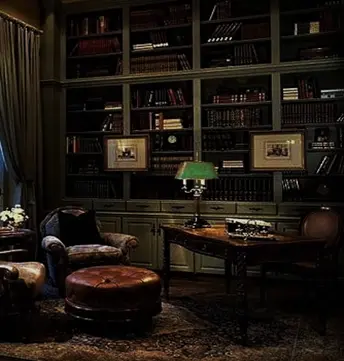
The study
It was something about the dimness and silence of the room that attracted her. It had been my habit all along to study by that one dim light. When Nancy used to see me in that semi-gloom on a bright day, the heavy velour curtains pulled tight, my first excuse, that I was trying to save on power, didn’t fly. I told her it was complicated. I was a night owl by nature. I used to read till three or four a.m., my favorite hours of study, and this recreated the ambience. It was the same in the stacks of the Doe library where I read for so many years, between the dim rows of shelves, half-blinded for minutes when I’d step out into the sunlight.
Now there were two of us, her chair pulled up to the side of my desk, our books close together under the Victorian lamp with its stained glass, bent over and reading away. I asked her at first if she wanted more light. But she insisted on this, maybe because she knew it was my habit. But it was more than that. She liked the closeness to me and could feel the warmth of the light bulb, it was so near. It must have had a holy or reverential feeling for her, those sessions of reading, almost like the candlelit alter of a church, the desk being the alter.
This was our daily ritual until Sheila returned and no one dared question it. The door was always open, and the others wondered as they passed by why we didn’t turn on the chandelier or open the curtains like any normal person would. We read with our heads bent close to our pages, side by side, under the dim green lamp.
But curiosity got the better of them. Jane and Jim confronted Nancy, and she posed the burning question one night in a similar near-darkness in bed. All I could say was that she mimicked me in a gesture of fondness and liked the atmosphere. It had a special aura. There was no explaining such things, except that it gave her some kind of mystical feeling, which was something very rare in life, and not one to be diminished or critiqued. The fact that she was reading fine literature each afternoon was all that mattered. How or where she read didn’t matter at all. No one said a word after that.
Here is a link to the beginning of the book.






