

The honeycombOS was specifically designed and tailored for running on and meeting the demands of IOTA-based nodes and clients and tangle-related tools. (The tangle is IOTA's ledger which maps and records transactions as directed acyclic graphs, where arrows indicate dependencies and nodes constitute transactions and the information they contain - it is perhaps worth mentioning that complex systems are usually designed as DAGs, or directed acyclic graphs.)

An IOTA tangle graph visualization.
It is an embedded Linux distribution that is mostly based on Poky and built with tools provided by the Yocto Project (Poky being the reference distribution of the Yocto Project that is used to bootstrap one's own from it, completely built from source without any binaries involved) and OpenEmbedded (which ships together with Poky).
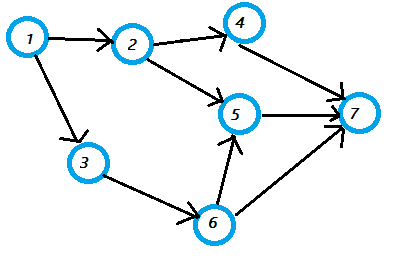
A Directed Acyclic Graph, or DAG.
The honeycombOS distribution was built with the IOTA community in mind - a fairly large and wide spread community also, from what I have observed and followed, and one very much connected with academic institutions, IoT-related enterprises and experimental projects related to this emerging domain of the Internet-of-Things (and how this constitutes an Internet that is different in kind from the one we currently have).

IOTA projects, experiments and undertakings tend to be a collective endeavor and this distro is designed to standardize and make the iterative processes of community feedback faster, better, more streamlined and reliable (while also helping improve the distro itself).
Currently, honeycombOS mostly consists of:
-
Hornet (v0.4.0): a light-weight alternative to IOTA's full-node reference implementation (IRI), written in Go (rather than Java).
-
GoShimmer (v0.1.3): an experimental prototype implementation of an IOTA node software operating without a/the Coordinator (centralized entity ensuring validity of transactions and making sure no shenanigans take place while the network is still in its nascent stage of research and development).
-
IOTA Commander (v0.1.0): A console/CLI-based app for interacting with the IOTA tangle (shared/distributed DAG-based database of audit trails).
The OS has been tested on Raspberry 3 and 4 boards and on the ROCK64 single board computer (micro-processor), but - being as minimal and lightweight as possible - it can be built on any board supported by OpenEmbedded.
A much more detailed guide and instructions on how to build and set up honeycombOS and get it configured, up and running can be found here and the latest release available is located here within IOTA's official GitHub repositories.
A More Detailed Description of the IOTA Protocol and Enterprise
The IOTA Foundation was founded in Berlin as a non-profit entity financed entirely by cryptocurrency. IOTA itself implements a cryptocurrency that it uses, but one very different in purpose, concept and application than other cryptocurrencies in the space (and neither does it implement a blockchain-based model or energy intensive PoW consensus, as Bitcoin and many others do).
IOTA is instead a "machine money" currency designed as unit of measure between devices and machines and in view of their self-organizing capacities of operating as autonomous economic agents. IOTA is thus entirely focused on the domain of IoT, working simultaneously on numerous projects (such as swarm intelligence, economic clustering, precision farming applications, smart grid and smart cities designs, etc.)
All of which tends to make IOTA more popular among the more developed and technologically advanced countries, such as Germany, Taiwan and the Netherlands. The people behind the IOTA project and its various branches believe that in the age of ubiquitous IoT devices, "data will be the new oil", thus allowing for feeless data transactions that don't necessarily transact value and the cryptocurrency implementation of the IOTA token is just one of the many components that make up the enterprise of this highly ambitious and forward looking project.
More on the Linux Distribution
With the above said, one can easily deduce that much of what IOTA does is experimental and few things are even close to being production-ready. The honeycombOS distro (which is supported by the IOTA ecosystem development fund) contains the regular IOTA node implementation (as re-written in Go, there are also others in Rust, C, Python, etc.), in addition to the one intended to eventually enable IOTA to operate in a fully decentralized manner, which the need for supervision from a central entity (in this case the IOTA Foundation itself, which monitors the Coordinator, which ensures the integrity of incoming transactions and that no double-spends occur, until the network and its tangle have gained enough weight and momentum to be able to ward off such threats without human intervention).
All this is by and large community-run efforts, but not without some large companies and corporate entities involved as well, considering the potential of IOTA in the long-term (for their own businesses and the opportunities of being ahead it might present them with). Among those partner companies are Bosch, Volkswagen, Fujitsu and many others, but also government institutions and municipalities (such as that of Taipei city and Utrecht in Netherlands).
And, as with complex systems in general, IOTA's approach is one of cautious trail-and-error, given the uncharted territories they are threading upon.
Additional Links and Resources:
-
IOTA link directory (a repository of links and resources about everything IOTA-related).
-
IOTA official community boards and forums at iota.cafe.
-
An article about IOTA's controlled agent node for swarm intelligence (as an example of what IOTA involves and invests itself in) and the concept of Economic Clustering within IoT.
-
Another Publish0x entry on honeycombOS.
- IOTA StackExchange.
Personal Notes and Remarks
Personally, I consider IOTA one of the few interesting, worthwhile projects in the space. One that has the clear purpose of what it is they are doing/pursuing as a technological experiment involved in the research and development of mapping yet uncharted territories. And also potentially along the way (the IF) getting to become an institutional entity (consulting and providing expertise to governments and other agencies on relevant issues, before they've gone to do anything too catastrophically stupid in their enthusiastic incompetence for miracle technological solutions to everything and proposals such as militarized autonomous drones and what not).
IOTA is also quite ambitious in its undertaking of solving problems that are quite difficult to even begin to address, practical quantum-proof cryptographic hash algorithms being just one among many roadblocks and obstacles along the way and the so-called Internet-of-Things is really rather more of a separate parallel, data-centric and machine-oriented one (not to mention the ternary vs. binary logic part of the story), rather than part of the global Internet infrastructure as it is today. It is envisioned more as a dynamic locally self-organizing and data and value exchanging devices and machines, operating as ad hoc meshnets and providing a wide range of services on demand.
So, from a market value and price expectations perspective, IOTA - especially if you have no real use for it other than just speculation - is not something you might be interested in. If, however, you are an entity, company, corporation or academic institution which is invested in the potential and possibilities of those future horizons, then IOTA has probably already caught your attention in terms of substantial investments with longer-term horizons. The IOTA community itself - with most of the speculators impatient to pocket large amounts of quick profits, while lacking much understanding of the nature of what IOTA does and how it does it, already gone and moved on - consists mostly of engineers, technically inclined people and curiosity-driven experimenters collectively involved in the various ongoing IOTA-related projects.
Alas, I have never yet personally had the time to tinker around with things like single board computers and micro-processors, although I've had the intentions and desire of getting more into the so-called DIYBio movement (Do-It-Yourself Biology), where one can easily and cheaply assemble himself essential biotech and biometric equipment, such as the now well-known OpenPCR and what I had been myself most interested at the time, OpenEEG (electroencephalography) and the biofeedback functionalities it makes possible (measuring the frequencies of brain waves at different regions while observing how your thoughts and actions affect them, thereby learning to condition and train yourself in how you feel and react to different external stimuli and internal processes).





