
Publication in Russian on the Zen blog
https://dzen.ru/a/aFmYS89sGhUbWTvF
No monuments or memorials can convey the enormity of military losses, or truly perpetuate the myriads of senseless victims. The best memory for them is the truth about the war, a truthful account of what happened, and the opening of archives.
(N. Nikulin. Memories of the War)
Why did I become interested in German history? I believe it is vitally important because history teaches us lessons about how evil begins and develops, how ordinary people become part of it, and how the silence of the majority ends.
Here's why:
1. To recognize how dictatorships come.
The Nazi regime did not appear suddenly. It came through elections, propaganda, fear, and false promises.
If we know how it happened, we can spot the signs early on — when the government abolishes freedoms, suppresses opposition, divides society into "us" and "the enemy," uses wars to strengthen internal control.
2. To understand how ordinary people become accomplices.
Most Germans were not sadists or fanatics.
They lived their lives, did not ask questions, believed in the radio and newspapers, and said:
"I have a job, food, and order — so everything is fine."
Knowing how indifference works, we will be able to avoid repeating the same mistakes.
3. To distinguish truth from propaganda.
The Nazis used lies masterfully:
They declared victims to be criminals, presented aggression as “defense,” and justified murders with “humanitarian goals.”
If we do not know how it was done then, we will not be able to recognize lies today.
4. To remember the price of silence.
Those who resisted died. Those who remained silent thought that everything was fine and peaceful, but war, bombing, and hunger returned to them. Then trials and the realization of guilt.
The history of Nazism is a reminder that silence does not save. It costs dearly later.
5. To protect humanity.
Nazism destroyed millions of lives, but first and foremost, the idea of a person as an individual.
History helps us remember that it is important not just to “be for our own,” but not to betray humanity.
Knowing the history of other people’s defeats means having a chance not to repeat them.
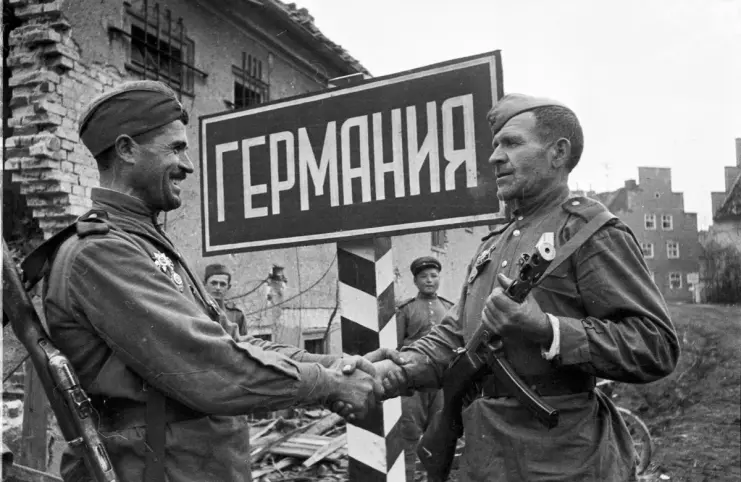
How did everyone miss Hitler?
Let's look at this topic to see how it happened that the leaders of countries allowed Hitler to raise his head and start a war.
It is interesting that before the start and even in the first months of World War II, many countries tried to "not anger" Hitler, avoided direct conflict, negotiated and pretended that nothing terrible was happening, hoping to "wait out the storm" or avoid involvement. Well, no one wanted to quarrel, Germany was already a serious opponent by this time.
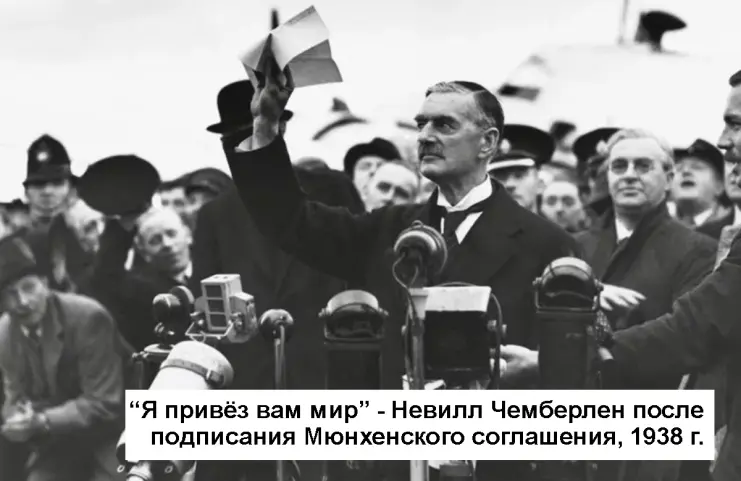
The main approach at first was the policy of appeasement. British Prime Minister Neville Chamberlain sincerely believed that if you go to meet Hitler halfway, he will "get full" and stop demanding more.
Thus, after the Munich Agreement of 1938, which allowed Germany to annex the Sudetenland from Czechoslovakia, Chamberlain returned to London with the phrase: "I have brought you peace." He thought that was the end of it. (As it turned out, the peace treaty was just a piece of paper).
Many other countries also tried to isolate themselves from this, to remain neutral. Some concluded their own peace treaties with Hitler, some made concessions, some stood aside, some openly condemned fascism, but continued active political and economic cooperation with Germany, and even won their interests under the cover of noise.
Everyone wanted to avoid war, they were waiting for something. Later, there were some weak attempts to introduce sanctions that did not work. But Nazi propaganda used this to their advantage, convincing the Germans that the whole world was afraid of them, hated them and wanted to strangle Germany.
Before the start of the active phase of the war (and even a little after), many leaders hoped that it would be possible to come to an agreement with Hitler, that he would “take his own and calm down.”
This was a desire to avoid a new slaughter, like in the First World War, but it played into Hitler’s hands. He felt his impunity and only increased his aggression until it turned into a war, which everyone was trying to turn away from.
When talking about World War II, perhaps the most important question is: Why did Hitler start this war? This is one of the key points that is often missed. The common assertion that he wanted to take over the world is too abstract. Maybe the whole world wanted it, maybe not. But it is absolutely possible to find out what his motives were. After all, Hitler started the war, among other things, to solve internal problems and hide political and economic mistakes. Here's what it looked like:
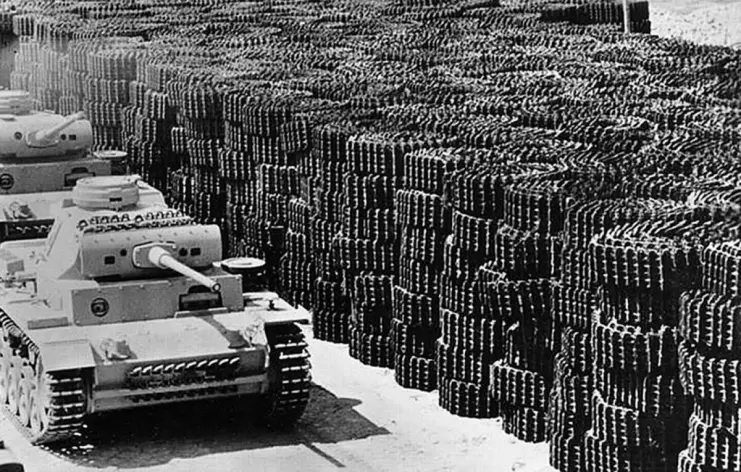
1. The economy of the Third Reich was a time bomb.
In the 1930s, Germany was actively developing industry, but the entire system was based on government orders, especially military ones.
This created the illusion of growth, the people seemed to live well, but in fact it was a bubble.
By 1939, Germany was on the verge of economic collapse: currency shortage, lack of raw materials, budget overstrain.
The way out? The seizure of new territories with resources - first Poland, France, Ukraine, and Belarus along with the rest of the USSR.
2. War as a tool for distraction and consolidation.
When problems, popular discontent, and tension accumulate in the government, then it is possible to find an external enemy, start a war, and call on society to unite.
Inconvenient contradictions are hushed up by the slogan: “First victory, then we’ll sort it out! Now is not the time to scold the government!”
This is an old tactic: external aggression as a cover for internal failures.
3. Hitler promised the impossible.
He promised: to cancel the Treaty of Versailles, to restore sovereignty, to give everyone work, land, to expand borders, to create an empire.
But all this could not be achieved by peaceful means.
Therefore, war was built into the very essence of Nazism - as a way to fulfill promises by force.
4. Psychology: you can’t retreat.
By 1939, Hitler had already done so much that refusing to war would mean admitting mistakes.
He was cornered by his own ideology: either expansion or collapse.
Yes, Hitler started the war not only for ideological or strategic reasons, but also as an attempt to escape the consequences of his own policies.
He knew: without war, everything would collapse. So he bet on war - and dragged the entire country into disaster. And he paid for it.
Let's think a little about the choice.
When the war returned to German cities, it did not distinguish between those who were for the war and those who were against it. Those who admired Hitler and those who resisted perished. The economy collapsed, the country collapsed, the illusions of a prosperous life collapsed.
Nazi propaganda suggested: "Now is not the time to argue, you need to be with your army, with your government, because the enemy will spare no one."
Some chose power, others chose conscience. It did not help the first. Alas, the second either.
However, Jesus Christ Himself said that it is more blessed to suffer innocently for the truth than for guilt. Under the dictatorship, there was no safe choice for the Germans. Those who supported the government did not suffer the choice, and in the end they got what they deserved.
The rest had two options, either to speak or to remain silent. Speaking is scary, because you can lose your freedom, health, even life.
Silence is also scary, because your conscience stays with you, and evil grows.
But between complete silence and open defiance, there is always a space of choice, and this choice is not the same for everyone. There are several important points in this whole story.
1. You don’t have to be a hero to remain human.
You don’t have to go under fire to have the right to internal protest. Being honest within yourself, not believing in lies, not participating in evil - that’s already a lot.
2. Remember and keep your voice - even in silence.
You don’t have to speak out loud - but you can think, remember, write down, support those around you. History is not only actions, but also testimony. Even if you simply don’t betray the truth yet - that’s already disagreement.
3. There are different forms of courage.
Not everyone can come out with a protest - and not everyone should. But you can support a loved one who doubts; not inform, not participate in bullying; read, think; maintain the ability to feel the pain of others. And these are not trifles at all.
4. The way out of loneliness.
You can be sure that German anti-fascists felt a sense of loneliness when everyone around them was giving the Nazi salute. But even in such conditions, they gathered in groups and understood that they were no longer alone.
In general, you can remain silent outwardly. But if sympathy, truth and refusal to participate in evil are alive inside, this is much more than those who serve an inhuman system "for the sake of stability".
But, since the world is unfair, the righteous can also suffer because of unrighteous people. The history of Germany clearly shows this.
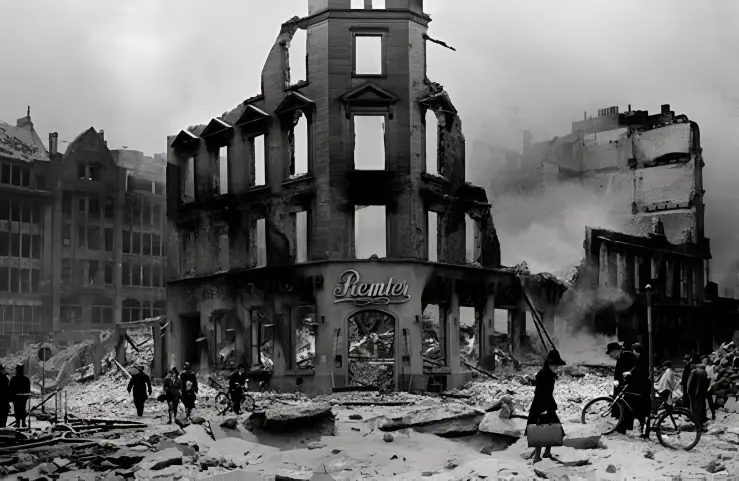
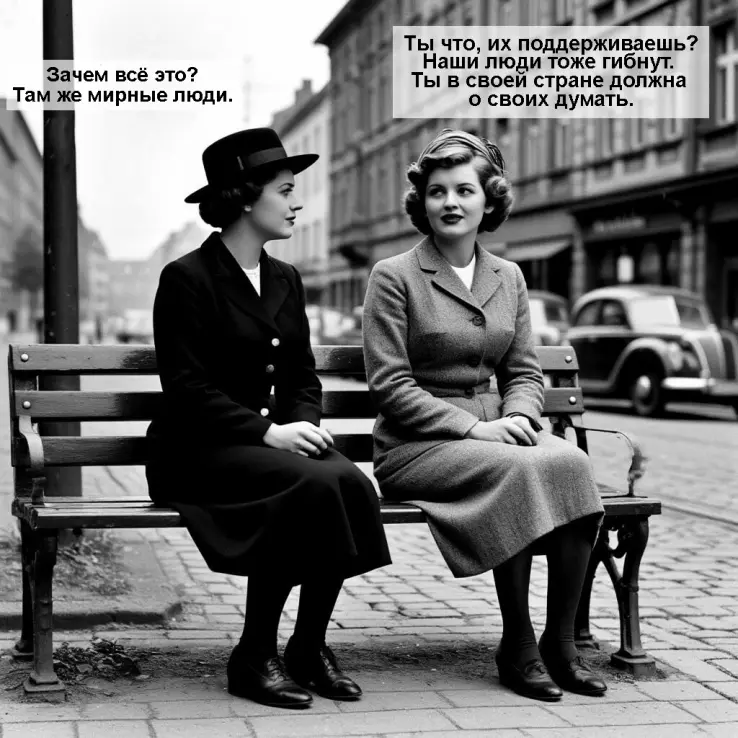
Germany, 1939-45. These were approximately the thoughts in the heads of people intoxicated by Nazi propaganda and double standards. Studying history is a fascinating thing, it helps to understand some events.
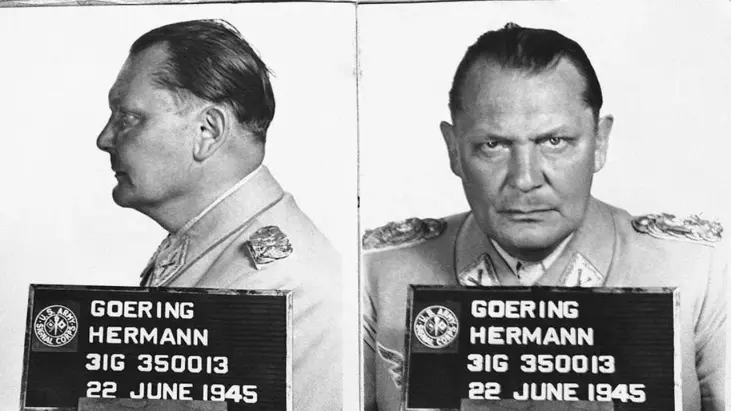
- Naturally, the people do not want war, - Goering shrugged. - Why should some poor peasant risk his life, if the most he can count on after the war is to return home safe and sound? The common people do not want war, neither in Russia, nor in England, nor in America, and Germany is no exception. That is clear. But in the end, the policy of the country is determined by the leader, and it is not difficult to persuade the people to agree to go to war, and the state system does not play a special role.
- True, with one difference, - Gilbert objected. - In a democracy, the people have the right to have their say through their elected representatives, and in the United States, only Congress has the right to declare war.
- All this, of course, is fine, but the people, regardless of whether they have the right to vote or not, can always be forced to obey the Fuhrer. It is not difficult. All that is required is to tell the people that their country has been attacked, to accuse all pacifists of lacking patriotism and to claim that they are endangering the country. This method works in any country.
(Words of Hermann Goering from the book "Nuremberg Diary" (Gustav Gilbert))
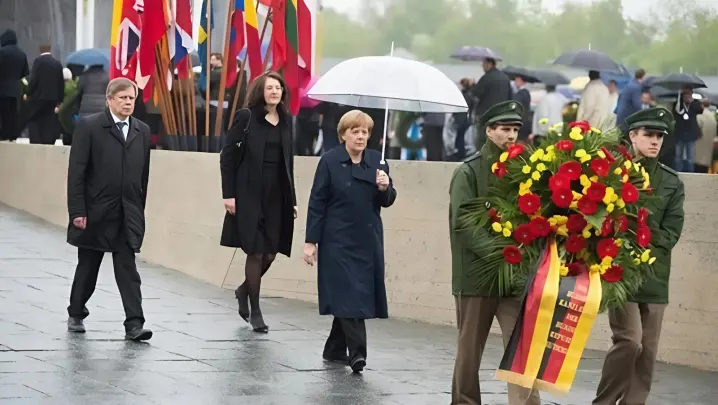
Does Germany celebrate May 9?
Of course, Germany cannot celebrate as the losing side of the war in the usual sense.
Germany celebrates the day of surrender and the end of World War II (May 8, 1945). It is not considered a public holiday, but this date is marked as a day of remembrance and reflection.
How exactly is May 8 celebrated in Germany:
Official ceremonies:
Commemorative events are held, especially in Berlin and other large cities, where politicians, veterans, and diplomats lay wreaths at monuments to the victims of the war.
Media and exhibitions:
Museums, television, and the press often publish materials about the end of the war, the crimes of Nazism, the fates of the victims, and the significance of liberation.
No day off:
May 8 is a regular working day (an exception was in 2020, when Berlin made it a one-time day off in honor of the 75th anniversary of the end of the war).
Tone:
The main emphasis is on liberation from Nazism. This is different from Russia or the former Soviet Union, where Victory Day has a more solemn and festive character.
"God is not a player, He is a judge - that's the tragedy,
Luck and chance do not play a role
Life is not a game, and a game is not life
And woe to those who identify them..."
Anton Kaigorodov
https://t.me/glavliber
https://youtube.com/@buratinko
I express my thoughts, try to live and be a human being.
I write and shoot. Join me
Author's video content
https://www.youtube.com/c/ViolettaWennman
Political trash
https://www.youtube.com/@Ship-Shard
Highly Social on Zen
https://dzen.ru/shipshard
I invite you to the uncensored telegram channel.
https://t.me/shipshard

From the author's telegram channel:
When you hear: "That's it"
And the noise and swearing will die down,
It will turn out that you are in nothing,
In nothing to blame.
That you yourself were meanly deceived,
Signing "for",
And God's dew will brightly
Sparkle in your eyes.
You will find the right words
And build bridges,
You will justify yourself
And you will condemn everyone.
The world will become simple again
And the heart beats in rhythm,
You will easily forgive yourself
And life will float again
You will find the right words
And build bridges,
You will justify yourself
And you will condemn everyone.
You will cry perhaps in silence
And you will brush the burden off your soul,
You will wash your hands and forgive
And you will live on.
(Originally by Sergey Plotov, was remade for the song)
https://t.me/shipshard/3549
I invite you to the uncensored telegram channel.
https://t.me/shipshard






