
The First World War represented a new era of financial strategy by the wealthiest and most powerful people in the world. With the increase of technology, Money Changers could now work together through their country’s Central Bank operations to help create favorable policies, gradually increase the wealthy’s power, and intentionally strip citizens of their freedom. Money Changers like the Rothschilds, JP Morgan jr, Henry Ford and the Federal Reserve played a significant role in the financing of the first world war.
The first family we will discuss is the Morgans. During World War I, the banking family was able to make immense wealth from the war. John Pierpont Morgan had died in 1913, so wasn’t able to see the beginning of the Federal Reserve System or the start of the World War. However, his son, John Pierpont Morgan Jr. was there for it all. Even before the United States' entry into World War I, the American investor was fast at extending loans to some of the world’s superpowers.
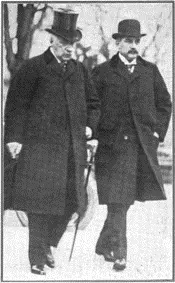
(Jack Morgan walking alongside his father J. P. Morgan in the last known photograph of the two together (ca. 1913))
Morgan served as an advisor on the New York Federal Reserve Board from 1914 to 1919 along with numerous of his Money Changing friends such as Benjamin Strong, Paul Warburg, and more, which let him have immense control over the financial conditions in the United States. Personally, the first loan Morgan made in the World War was to Russia, for a meager sum of $15,000,000 to help bootstrap the military efforts (Horn, 2000. pp 85-90). He would later form a syndicate to lend $500,000,000 to the British and French governments that would be vital in their war efforts. Not only did Morgan’s companies lend the Allied powers money, but his institutions were also able to become the sole agent for Great Britain’s purchase of food, chemicals, cotton, weapons, and more from 1915 until after the United States' entry into the war because of Morgan’s close relationship with Great Britain’s United States ambassador Sir Cecil Spring Rice. Through these deals, Morgan’s company took a 1% commission from the transportation of an immense quantity of resources required during a war effort (Chisholm, Hugh, ed. (1922). "Morgan, John Pierpont”. Encyclopedia Britannica).
In the early stages of the war, Morgan Jr. flew out a representative to the Bank of England where a deal was struck that made Morgan the individual and private underwriter for British and French war bonds. From then on, the Bank of England and J.P Morgan had a special relationship who acted as agents for one another in a number of business deals. Over the course of the four-year conflict, J.P Morgan’s company was able to loan $1,500,000,000 (non-adjusted for inflation) to the governments of France and Britain (Geoffrey Wolff (2003). Black Sun).
Many politicians, money changers, and citizens became apprehensive of Morgan’s large contributions to the European Allies. They believed, and rightfully so, that Morgan was forcing the United States to have an interest in the outcome of the war because the government wanted the loans they made to Morgan paid back. If the allied powers were to lose, then Morgan or the government would not get paid their principal or interest from the European Powers they were lending to or supplying, thus creating a conflict of interest between a supposedly neutral country.
Not only did politicians become worried, but citizens as well. In July 1915, an assassin made his way into Morgan Jr’s. house and was shot twice. The shooter's justification? Morgan’s immense profit that he was gaining from the war, where innocent kids, children, women, young men, and families were being ripped apart.
Finally. JP Morgan’s company was selected as the agent to facilitate Germany's reimbursement payments that were decided in the Treaty of Versailles, allowing him to take a handsome percentage in the process.
The Rothschilds also played an interesting role in financing the World War. Since nearly a century before the conflict, Europe has predominantly been created in the view of the Rothschilds because of their large financing of the continent's most significant powers. Now, the world war had destroyed a decent portion of their wealth because of the immense damage done to the infrastructure and economy. The Rothschilds had to split many of their assets into separate organizations to avoid trust and tax laws. However, their goal and grip on society and the economy remained the same through their control of international business agents that acted in the interest of the elite.
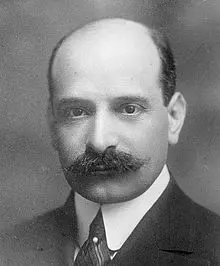
(Paul Warburg C. 1910. A Rothschild Financial Agent)
The stock markets were closed, banks were closed and governments were focused on how they would feed troops, as opposed to growing their economy through loans. Many of the older generations of Rothschilds who created the wealth for their family died before they could see the result of the war. Their heirs took on different roles but the most important ones formed international banking relationships got positions in parliament or congress, were directly involved with central banks, and financed different countries in war. These circumstances allowed the Rothschilds to maintain substantial control while staying out of the spotlight. Nonetheless, the years following the war were viewed as an opportunity to buy when there is blood in the streets and the Rothschild family always had idle capital standing by to capture the occasion.
Henry Ford
Henry Ford was a Detroit-born engineer and businessman that was born in 1863 in Michigan. Ford had been interested in engines during his youth and always had a job that was focused on engineering. By 1896 Ford was able to hand build 3 working cars in his garage (Ford, Henry. 2019. My Life and Work).
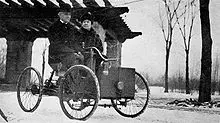
(Henry and Clara Ford in his first car, the Ford Quadricycle)
In 1891 Ford got a job at the Edison Illuminating Company of Detroit (Today known as DTE) and was quickly promoted to chief engineer. In this position, Ford got the opportunity to meet Thomas Edison who was excited about his automobile projects. Using this momentum Ford started the Detroit Automobile company in 1899, but the company failed to attract large interest because of the expensive prices and operations came to a halt in 1901 (Ford R. Bryan, "The Birth of Ford Motor Company).
Ford's next project would be to create another company that would focus on building faster and cheaper vehicles. In 1901 he started the Henry Ford Motor Company with a number of important stockholders. In 1902, one of Ford’s advisors brought Henry Leland into the company as a consultant, So Ford left the company. The reason Ford left the company was because of the differing views they had in regard to the development of cars. Leland would eventually reorganize the company and name it Cadillac (Ford R. Bryan, "The Birth of Ford Motor Company").
After this failure, Ford went back to work at making better, faster, and cheaper vehicles and in 1903 was able to gain more investors, including the Dodge Brothers, to create the Ford Motor Company. The Dodge brothers would go on to become a supplier of Ford for the next decade, until in 1914 when they created their own company and started developing numerous products with engines that could be sold to the military and civilians.
Ford’s most important contribution was the assembly line that made owning a car easily accessible to lower and middle classes citizens because of the cheap cost of production, something Henry Ford always was aware of. With the ability to manufacture cars at lightning speed, Ford was also a large contributor to the war effort by converting his factories into assembly plants that would produce wartime goods. Although Ford himself was against the war, he consistently blamed German-Jewish bankers as the cause of the World War and would continue to hold a prejudice against religion for the rest of his life. This prejudice was so public that even the Nazi party used Ford’s statements as propaganda and rationalization for their inhumane actions and was awarded the Grand Cross of the German Eagle, a medal given to foreigners sympathetic to Nazism. (Wallace, Max. The American Axis: Henry Ford,).
Ford’s company would go on to become so large that by 1932 they manufactured 1/3 of all automobiles in the world and had subsidiaries in Australia, Britain, Argentina, Brazil, Canada, Europe, India, South Africa, Mexico, and the Philippines.
The Federal Reserve
When the United States joined the war in 1917, they were expecting the war to come to a quick end without large financial costs being incurred. They were mistaken. In total, the war cost 33 billion, which was 4200% larger than the government's revenue in 1916 (Alex Mathews Arnett, "Claude Kitchin Versus the Patrioteers," North Carolina Historical Review 14#1 1937). This meant the only way the US Government could make up the deficit was by increasing taxes, issuing debt or printing money, which they did all three. It’s a good thing the US had just created the Federal Reserve System in 1914.
The First World War was the Fed's first true test of how they would handle substantial turmoil in the economy, and it was unclear if they would be successful or suffer the fate of the historical American Central Banks.
During the first World War, the United States experienced volatile inflation that skyrocketed to nearly 20%, then dropped to around -12% in the years following the war, causing deflation. These drastic price swings caused a substantial burden on the lower and middle classes and the economy as a whole.
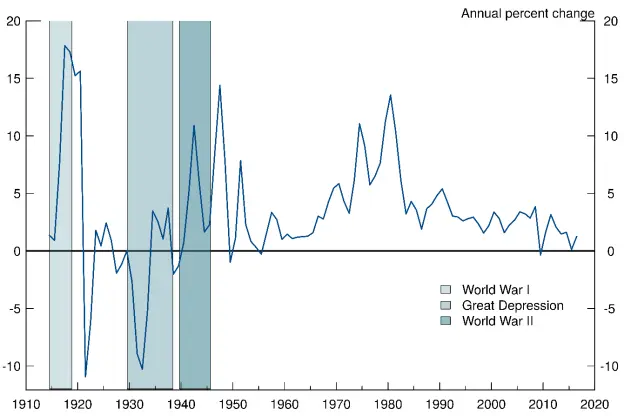
(Department of Labor, Bureau of Labor Statistics,)
What caused the inflation? Exceptional demand for products that went beyond the United States' productive capacity, forced the government to take alternate measures to stimulate production, such as printing money or issuing debt. Another large factor in inflation was the Federal Reserve's mandate to maintain a Gold Standard. Meaning dollars that were issued were redeemable for a fixed amount of gold. However, during World War I, numerous European countries exited the gold standard to print more money that could be used for government and military expenditures. Thus, investors fled to buy up United States dollars by depositing gold. This led to the amount of money in the economy significantly increasing. Partnered with excess demand, this led to runaway inflation.
In addition, during the early stages of its life, the Federal Reserve didn’t have enough gold to back up the amount of currency in circulation. To combat this lack of gold and the potential for bank runs the Federal Reserve increased interest rates, to try and bring the demand and supply of gold into balance. However, this increase in interest rates further attracted foreign investors to flee their native currency and deposit gold into the United States system. This increase in the money supply led to inflation deepening, foreign and domestic money changers becoming richer, and the lower and middle classes becoming poorer.
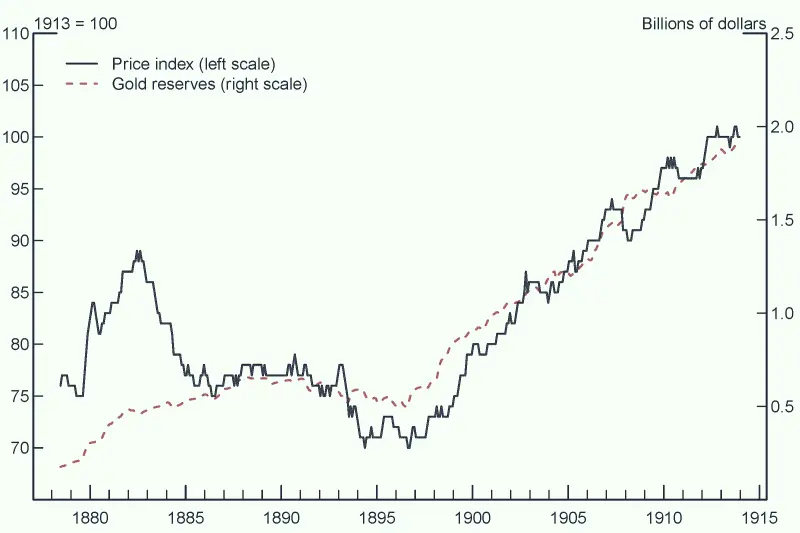
(Gold reserves and price-level data are from the National Bureau of Economic Research)
The most lucrative measure the United States took to raise money for the war during world war I was the issuing of war bonds that were marketed to the public in troves. Millions of posters would be created, actors would advertise, and politicians would give speeches all with the goal of raising funds for the war. They were successful. By the end of the war, the United States had issued $21,000,000,000 in debt to domestic and foreign investors (Charles Gilbert, American financing of World War I. 1970).
Most of this money would be used to pay for the European Allied Powers' military gear, food, and other equipment and it was coming from the United States taxpayers. Furthermore, the demolition of Europe made countries rely more heavily on the United States to fund their efforts, as opposed to Britain whose reserves were running out. This created an immense demand for United States dollars and began the catapult of USD becoming the world’s reserve currency, “By war's end, the United States had become the world's most important trading nation as well as its largest banker. Its tax-collecting arm, the Bureau of Internal Revenue, had quadrupled in size, and the income tax, which now produced thirty-one times as much revenue as it had in 1916, had solidified its position as the most powerful fiscal device of the modern U.S. state” (www.encyclopedia.com).
One example would be the stability of the Goldmark, the currency created from the Reichsbank (German Central bank until 1945). This currency was able to maintain its peg against gold until the beginning of World War I when Germany required immense funding for its military efforts. After the currency lost its peg, it became the papiermark which was the foundation for the hyperinflation that would cripple Germany’s economy in a few years. When the papiermark arrived in the economy, numerous German investors would flee to an economy with a more stable currency, even if it was their country’s opponent in war.
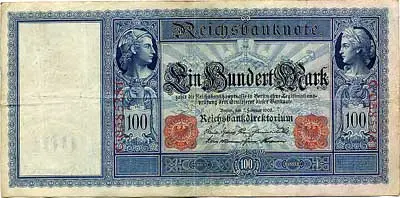
(100 Mark banknote from 1908)
Ill leave you with a quote taken from the Federal Reserves of St. Louis’ website, “The Fed’s founders had wanted to foster the US dollar as a global currency by establishing a market for trade acceptances, bank drafts used to guarantee payment for imports or exports. The war created the conditions for such a market by making trade credit harder to obtain in Europe. To finance their operations, traders all over the world bought trade acceptances denominated in dollars, increasing both the international use of the dollar and business for American banks with overseas branches” (https://www.federalreservehistory.org).
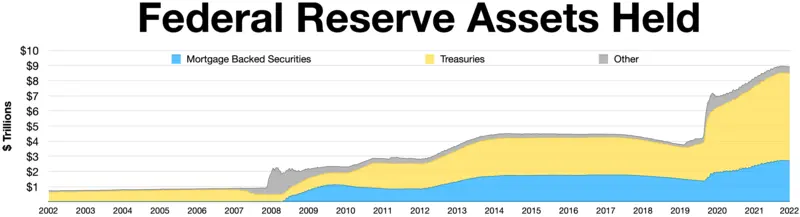
(Federal Reserves Assets)






