
While I was buying my laptop from the Mexican Nazi last winter, he showed me some clips from a new Star Wars movie, something animated. He was very excited about the picture quality and resolution, and was in awe of the "set," or "fake digital wallpaper," depending on your perspective. I didn't say anything, but I thought it looked terrible. It was like watching a cartoon. Digitized people doing digitized things on a digitized backdrop, everything simulated. Perspective, lighting, shadow, all of it simulated. Rain, sunlight, hellfire, none of it real.
It would be difficult to recreate hellfire, but sunlight? Shadows? People?
Simulated beyond recognition, lowering the standards for film yet again. I'm not entirely against CGI, but as a general rule I think it should be employed in only very rare, select circumstances. By Peter Jackson, maybe.
I don't care about the LOTR films; they're entertaining, even good, but they don't do much for me personally. I like them well enough, and they are one of the few instances of using CGI to paint a vast landscape that I find remotely acceptable. Probably because they're fantasy films.
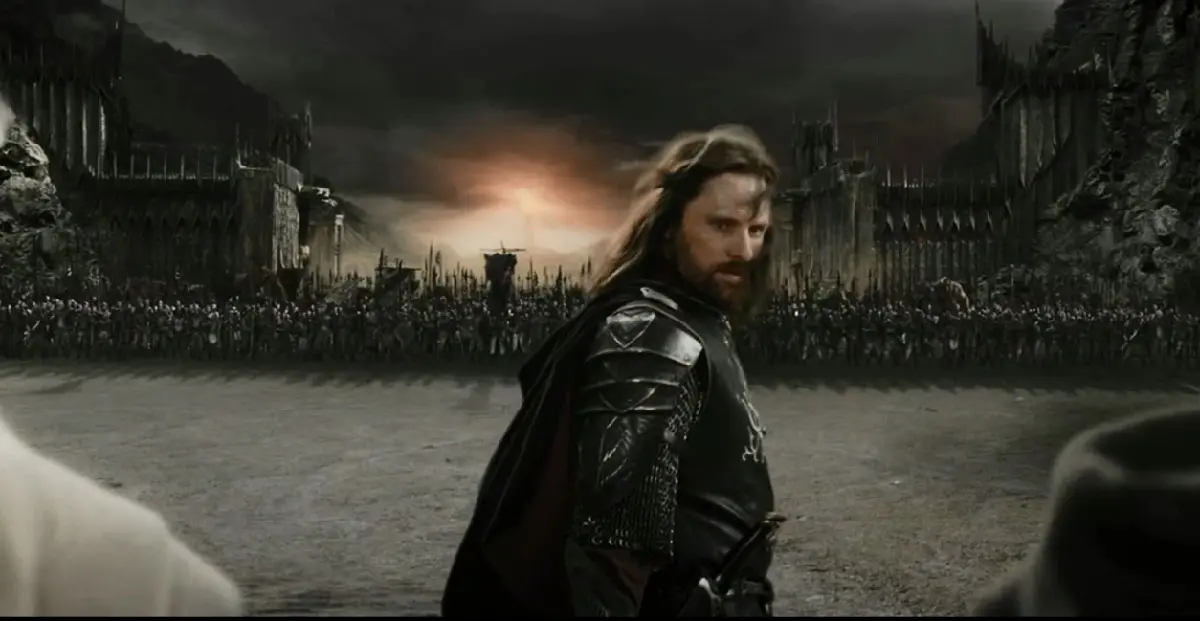
I guess it looks great, but it doesn't suspend my disbelief. Peter Jackson is no slouch, but all I see is a bunch of soda addicts sitting in a computer bunker in Burbank, getting paid union scale to simulate something that an innovative, visionary filmmaker would actually try to shoot.
Recreate, in other words. Recreating scope, as opposed to simulating it.
To recreate scope, it is necessary to find a vast landscape to film, a hill on which to perch the camera, and, in the case of Lawrence of Arabia, hundreds of people to ride actual horses into "battle." The shot would take days to prepare, and a second take would require a fair amount of time, in terms of getting everybody "back to 1" (starting position), all the horses together, etc. I don't know, but wouldn't be surprised if David Lean filmed the attack on the Turkish city in Lawrence of Arabia in one take. It's a massive shot, and the scale of it adds a great deal to the epic quality of the film.
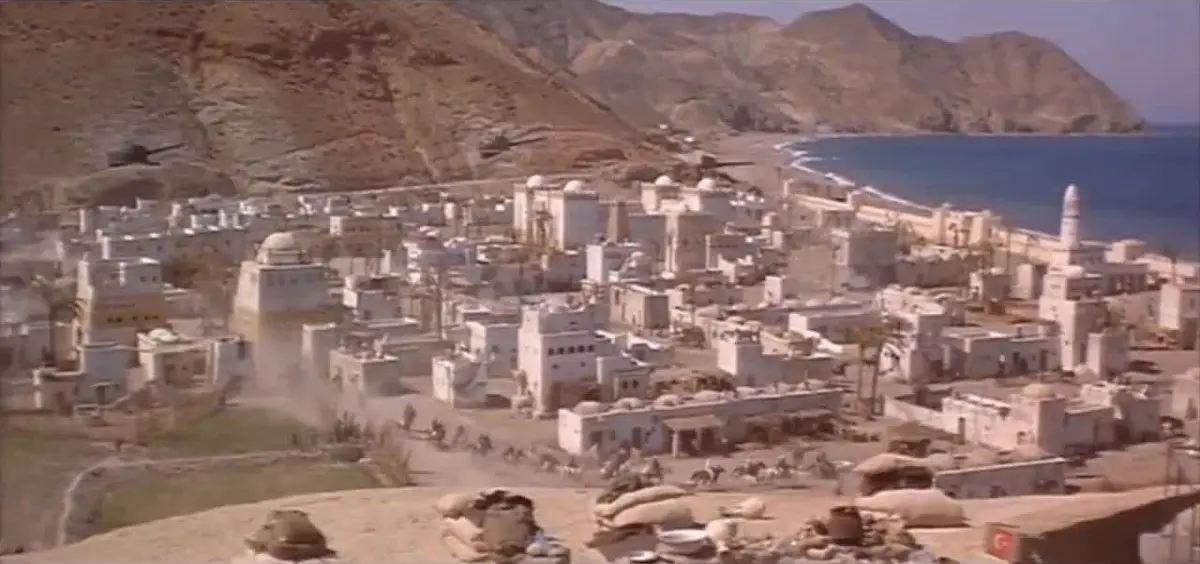
None of the horses are "blocked" (if that's the right term), or copy-and-pasted by some overpaid pizza junkie in the San Fernando Valley. All of them are actually being filmed, from a not-insignificant distance, running through the real city with real people riding on their backs.
As such, you can believe the shot. It takes no effort to suspend your disbelief, because there's nothing to disbelieve; there's nothing to "look through," "not see," or "ignore" in order to enjoy and believe the film. The shot in fact is amazing. A grand spectacle of a recreation of historical events, rather than a simulation of them.
In direct contrast, the to-my-mind overrated Inception by Christopher Nolan wouldn't exist without the platoon of codewriters mainlining high-fructose corn syrup while creating high-definition digital wallpaper that is profoundly unbelievable. The fact that the story mostly takes place in dreamland, where dream logic rules, makes no difference. I'm still being asked to believe what I'm looking at, to believe in its reality, even in the context of a movie about a dream. I am simply unable to comply with this request.
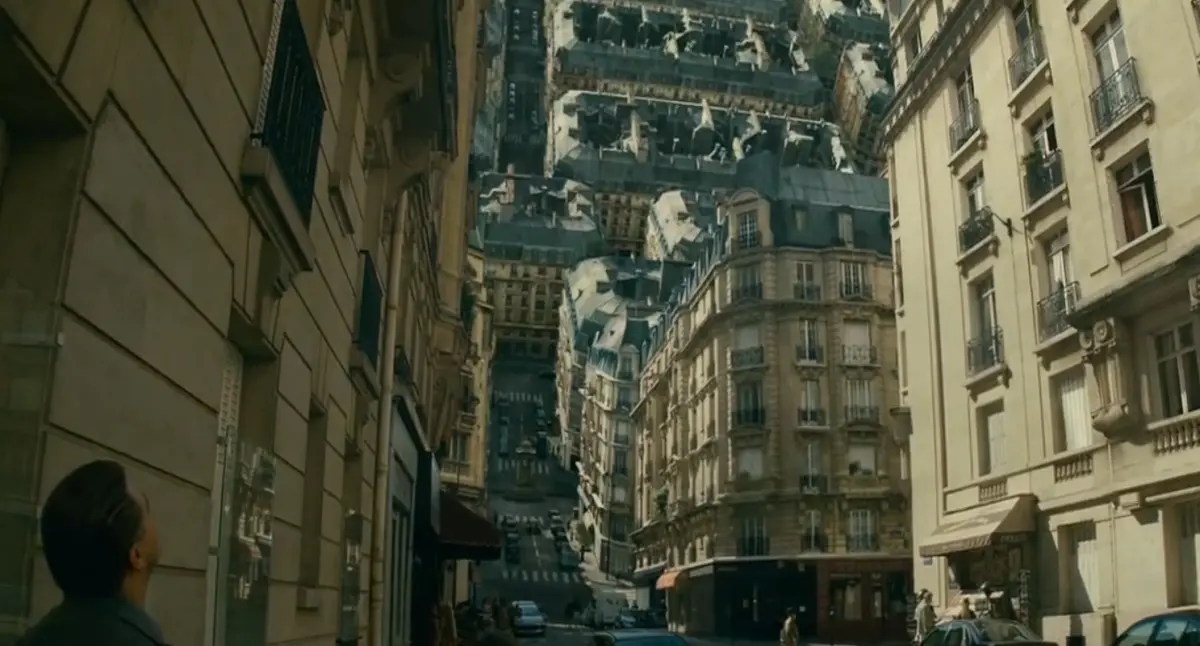
If anybody can do it, people like Christopher Nolan and Peter Jackson are at the top of the list, but even though it's of course physically impossible to film many of the scenes in Inception in the real world, all that means is that I'm being asked to believe completely in things that are completely unbelievable. I am being asked to participate in the effort required to make the film believable.
This is a great artistic flaw in filmmaking today. The Star Wars examples are obvious, but as someone who grew up with the original trilogy, I find that shooting thousands of photographs of scale-model spaceships frame-by-frame against a painted backdrop to be exponentially more believable to the eye than anything simulated by a computer. The shots are recreated by physical objects: puppets, models, paintings. They are not simulated in a digital laboratory.
It is for this reason that any and all uses of CGI are an artistic cop-out, when used in certain films. Obviously, there are numerous examples in which CGI makes perfect sense. Movies like Sin City, for example, employ an artistic and visionary use of CGI. It's a comic-book film and an interesting aesthetic trip, and makes no demands on the audience to look at digital wallpaper, but actually see a vast landscape.
Personally, I prefer the real thing. The cemetery at the end of The Good, The Bad, and The Ugly was actually built for the film. It's a film set, and is still there, somewhere in Spain. I've read that it actually has the vibe of a graveyard.
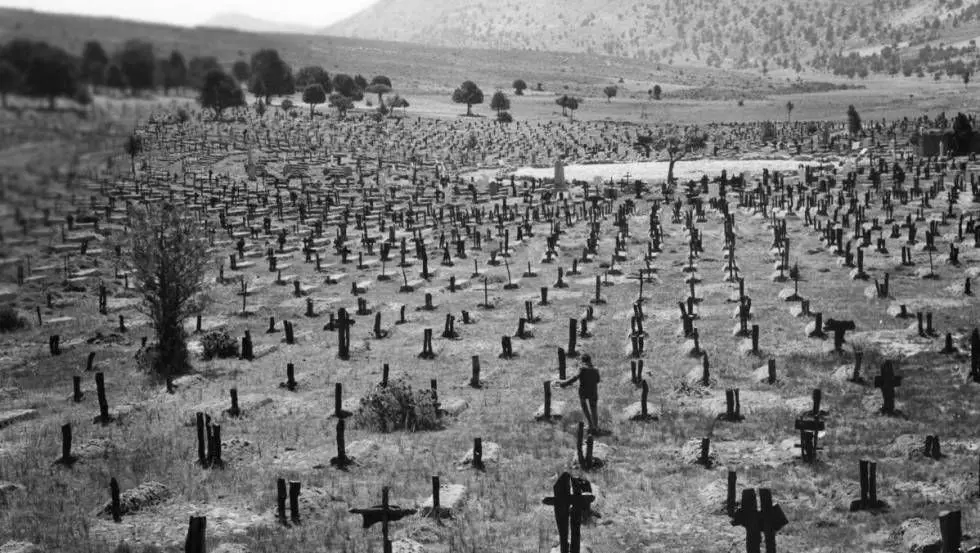
If it has the vibe of a place it was built to duplicate, that quality will be captured on film. In contrast, if it was blocked and pasted in a computer lab, it will have the vibe of a fancy screensaver. The fact that you can actually visit the "Sad Hill Cemetery" in northern Spain almost 60 years after filming is one of the reasons that The Good, The Bad, and The Ugly has stood the test of time. That feeling is what separates real films from fake ones. Who cares what commercial park the new Star Wars wallpaper was manufactured in?
Nobody. In the future, the digital simulations will appear dated to everyone. They will appear as dated as they immediately do to those of us who are unimpressed with them today. Digital simulations are entirely dependent on the technology available at the time, in ways that real movies are not. So, regardless of anything, the fake digital movies will be obvious products of their time in a way that films like Lawrence of Arabia could never be, though Lawrence of Arabia was obviously filmed in the 1960's.
Lawrence of Arabia is an obvious product of the 1960's, and yet it's timeless.
Because it's real.
Even The Corpse Bride by Tim Burton was shot frame-by-frame using puppets and models. Whether the backgrounds are real or not (I don't remember), the fact that the film looks digital, but is in fact filmed, is a definite artistic achievement.
And as a pre-emptive afterthought, there are always complimentary comments on ASMR videos in which the subject has built a real background as opposed to using a green screen. It is always seen as an extra effort, and is usually appreciated.
Of course, it is an extra effort. That's the point.
If people have opinions about it in ASMR videos people make at home and which they can watch for free, why do they shell out actual money for a feature-length digital simulation that insults them and forces them to lower their standards to suspend their disbelief and have a good time?





