
Dark Energy Crystals are a living and breathing currency within Splinterlands. They have value as real money, and new layers of utility are continually added to them as the game matures and its player base grows. Especially since the addition of the Uniswap Liquidity Pool just a few months ago, more and more players are wondering about DEC as a cryptocurrency. They're thinking about the big picture, the total supply, liquidity, utility and value... You know, all those complex aspects in which crypto traders absorb themselves.
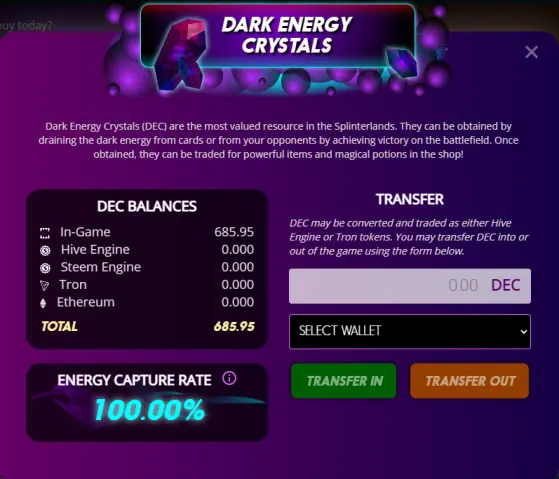
I have been approached individually by several different investor-minded players new to Splinterlands lately and asked about the details of Dark Energy Crystals. I did not fully grasp these details until recently, but because I do now, I will share them with you in the way that I understand them in hopes that you all may realize that great measures are always being taken to protect the integrity and delicate balance of this Splinterlands asset.
What are Dark Energy Crystals?
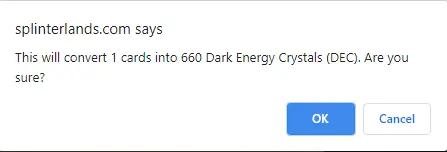
DEC is the main in-game currency of Splinterlands. For players who have made the $10 Summoner's Spellbook upgrade to earn rewards, they are earned with every Ranked win. They can also be found in Loot Chests or won in tournaments. Additionally, when you sell cards to other players on the market, you are paid in Dark Energy Crystals. Every Splinterlands card is also burnable for a set amount of DEC, depending on variables like Edition, BCX, Rarity and Foil.
Currency that can be Transferred
Splinterlands Credits cannot be transferred from one account to another, nor can they be transferred "out of game." Through this ironclad rule, Splinterlands has made it possible and simple to accept more than 20 different cryptocurrencies for the purchase of Credits, as well as Paypal. If Credits were transferable, Splinterlands would then be entering the heavily regulated realm of the exchange, which can be incredible costly and difficult to navigate. It's best to think of Credits as your Splinterlands purchase balance, but DEC are much more than that.
Transferring to other accounts means that players are welcome to arrange their own deals, that they can transfer the currency freely among themselves. But Splinterlands takes it further than that with Dark Energy Crystals, allowing them to be transferred out of game to various exchanges where pairings with other currencies are listed.
The transfer-to-exchange aspect of DEC is what allows money to essentially be withdrawn from Splinterlands. The main exchange that facilitates this is HIVE-Engine, the 2nd layer DEX of the HIVE blockchain. To learn more about interacting with HIVE-Engine for Splinterlands assets, visit THIS LINK. Additionally, there is a DEC-ETH pairing on Uniswap to which members of our community provide liquidity for additional rewards. DEC can also be sold on the popular TRON exchange, TRONTRADE.
A Way to Ensure Value
$2 Splinterlands Booster Packs always cost 2000 Dark Energy Crystals. This is true through Splinterlands.com even while secondary markets tend to have them listed for slightly lower prices. This means several things.
If the value of Dark Energy Crystals drops too low, players can be confident that they will always be able to purchase Booster Packs with them at a set rate of 2000 for 1 Booster Pack. If the prices of cards drop too low, players will always have the option to burn those cards for Dark Energy Crystals, which can be taken out of the game and exchanged for HIVE, BTC, TRX, ETH, etc. The burn value of cards protects against any of them dropping to negligible values, and the pack price in Dark Energy Crystals ensures that DEC will always have a set value of 2000 = 1 $2 Pack.

A Delicate Balance
In order to protect the supply of Dark Energy Crystals against inflation, a carefully balanced system of faucets and sinks are in place. As new players join Splinterlands and as the game continues to mature, new cards are continually released. Cards are not reprinted, but once the print runs of Reward cards and Set cards are complete, new cards must be brought in as the supply for the older cards begins to decrease. Once cards are no longer offered in Reward Chests (printed), the circulating supply will only decrease, as players combine to level them and others burn cards for Dark Energy Crystals.
At a glance, it may seem that this system constantly adds Dark Energy Crystals to the total supply. If this is your impression, then so far you are noticing only the DEC faucets and perhaps you are not paying close enough attention to the sinks.
New cards being printed and new cards being released = the faucet.
Various methods by which DEC are not spent, but burned = the sinks.
The only means by which DEC flows from a faucet is new cards being added to the game. More cards means that more players are earning more Dar Energy Crystals, but it also means that more cards are being burned, which also means more Dark Energy Crystals. Creation of new cards is a powerful faucet whose intensity continually grows as more players become involved with the game. It is necessary to have multiple sinks where the DEC overflow can drain (burn).
Breakdown of DEC Usage
Here is a list of everything you can do in Splinterlands with Dark Energy Crystals, and whether or not each is a sink.

Purchasing Booster Packs - Not a sink. This DEC (as is all money from purchased Booster Packs) counts as company revenue.
Purchasing Azmare Dice - SINK. - All DEC received for purchases of DICE are burned from supply.
Purchasing Land - Not a sink. - Counts as Splinterlands revenue
Purchasing Skins - SINK. - Burns DEC from total supply.
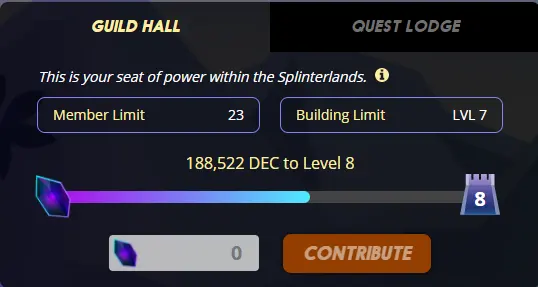
Contributing to Guilds - SINK. Leveling Guilds with DEC is costly because it offers earned DEC bonuses and discounts on SINK purchases.
Purchasing Potions - SINK. - Potions increase rarity drops when opening packs. DEC is burned.
Market Fees - SINK. - Small market fees are collected on DEC-based market transactions, which are burned.
Basically, purchases of Booster Packs and Land are the only two types of purchases for which Dark Energy Crystals are retained by Splinterlands. The others involve systematic burning of the DEC.
More Sinks Will Come
Now that you understand the need for both faucets and sinks in terms of Dark Energy Crystals, you probably realize that more sinks will be needed as the intensity of the faucet grows. If the Splinterlands player base doubles overnight (for example), there needs to be a system that makes sure the DEC sinks do not overflow, leading to inflation.
I believe that this was all considered very carefully by the Splinterlands founders and developers before Dark Energy Crystals were even created, even before the game was released. When looked at in its entirety, the Dark Energy Crystal system is a beautifully rewarding one that will continue offering players, collectors and investors new value for years to come.
If you would like an even more detailed breakdown, feel free to email [email protected] or ask in the Splinterlands Discord Server and you'll be pointed in the right direction.

Thanks for reading NON-Fungible Stew!

-Chris
Random Links
Play Townstar by Gala Games
Earn BTC when you Buy Stuff with Lolli
Buy Awesome Custom Shades from Knockaround
Get the Best Custom Embroidered Merch from Queensboro
Join Publish0x and Earn Crypto Rewards!






