
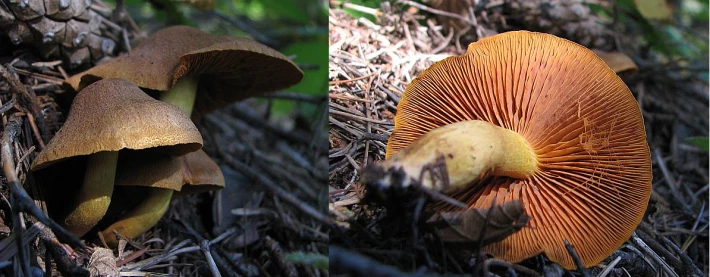
Cortinarius cinnamomeus - Hat diameter 10 to 80 mm. Young arcuate, then low-arched, spread out, with a small umbo has a middle, dry, smooth or slightly fibrous surface, slightly squamous, dull, nut-brown, olive-brown, sometimes also reddish, olive-yellow at the edge; margin incurved at first, then straight; it is not water-absorbing.
Lamellae thin, uneven, notched, densely set, initially intensely orange, later rusty-ocher, olive-ocher; straight or uneven blade, sometimes with rusty spots.
Stem 20 to 80 mm high, up to 0.7 mm thick, slender, cylindrical, dry, silky shimmering, yellow, yellow-green at the top, with remnants of rapidly disappearing yellowish veil, at the bottom covered with brown fibrils.
The flesh in the hat is only fleshy, light yellow in the middle; at the bottom of the stipe slightly darker, unchanging, with an unpleasant, bitter taste and a weak, musty, radish smell.
Occurrence: On the ground, in mountainous, mossy and moist spruce forests, sometimes under pine trees or in deciduous forests, quite common, growing in groups. From August to October.
Value: Inedible and even poisonous fungus






