
The Mediterranean Sea has shaped our culture and our history, it has given us life, joy and much wealth, but it is also the scene of conflicts and misfortunes.
The weight of history sinks in its waters, from the lighthouse of Alexandria to the columns of the Atlas, where Greeks, Phoenicians and Carthaginians, Etruscans, Macedonians and even Normans have sailed. Pirates have also hidden themselves in coves of Greek islands or the Balearic Islands and the Venetian and Genoese sailors enjoyed great fame (perhaps Columbus was also one). Even Napoleon was born and died here, in Corsica and Santa Elena island.
This sea has been decorated with a multitude of stories, legends and novels. Homer told us the Odyssey through the Aegean, the Count of Monte Cristo remained on an enclosed islet thinking his revenge, and after reaching the center of the Earth, Jules Verne decided that they should leave through the Stromboli volcano. And another volcano, Etna remains as a witness, in an almost eternal sleep, taking center stage in Sicily from years to years. But it was the Romans who made it theirs, the Mare Nostrum, ours.
From the Roman Empire was born a civilization, endowed with an unique language, that has never died. And the most beautiful languages arose from Latin. Only in Spanish and Italian languages can you sing those beautiful songs as “Nací en el Mediterráneo" (I was born in the Mediterranean) by Joan Manuel Serrat or “Sapore di sale” (Taste of salt) by Gino Paoli.
Blasco Ibáñez's house in Valencia is still on the Malvarrosa beach and Sorolla's paintings show us still lifes of the sea, with fishing boats, walks along the shore and children playing with the waves.
Ships and ships have crossed the trade routes from all ports, from the Athenian Piraeus to La Spezia, Genoa or Barcelona, crossing the Strait of Messina or the Strait of Gibraltar where the known-world finished with the mythologycal pillars of Hercules. And with trade and profits, another business developed, tourism. The cruises have gone around all the beaches, islands, cities and coastal towns, showing us the colors and landscapes of the blue, golden or white coast, and the Turkish, Dalmatian or Amalfi coasts.
Its biodiversity has given us the greatest natural treasure, and the healthy Mediterranean diet. It gives us health and life: olive trees, fish, fruits, vegetables, legumes... and that good climate, the sun that always shines over the sea surrounded by the blue sky.
But the future doesn't look so bright if we don't take care of it; the dangers of overcrowding, illegal fishing and pollution threaten our paradise.
And sadly, it has become the frontier of paradise. As in Greek mythology, it seems that the sea has become the territory of the ferryman Charon who took to the other world the soul of the recently deceased who paid him an obol, the Mediterranean is becoming his hell and an underwater cemetery. In the depths we find amphorae or sunken ships, but also the drama of people who come or are brought, some fleeing, others do not know what plans they have while from the north they stare at the crises of others.
From Roman conquests and Phoenician businesses, we have moved on to front-line hotels filled with tourists, fishermen with trawl nets, and conflicts and people crisis. We are forgetting about cultural exchanges and natural beauty, to focus on current problems.
The Mediterranean has always taken care of its different civilizations and peoples, who have taken advantage of and enjoyed everything that this unique sea has given us, we cannot allow it to stop being what it has always been.
About all this I am writing I feel pride, but also sadness. Although there is something I do not doubt, every time I sit down and look at the sea, I feel it as mine, it is the Mare Nostrum and it is also my land.
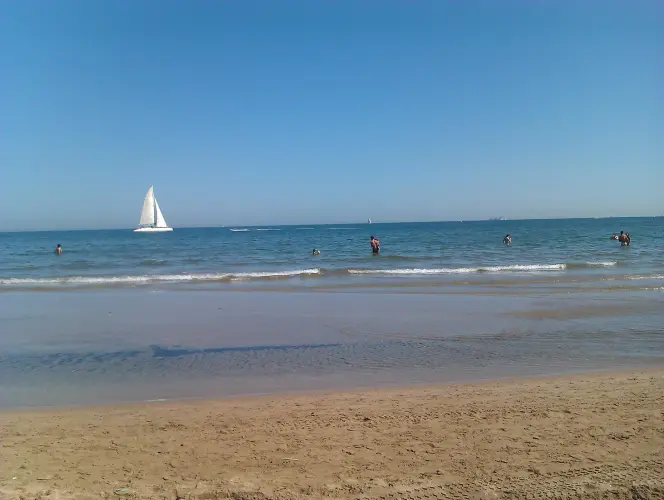
My/Our loved Mare Nostrum
My LBRY channel: https://lbry.tv/@duvinca:5






