
In a market environment defined by frenetic trading and the relentless pursuit of the next AI unicorn, the Daily Journal Corporation (DJCO) remains a defiant anomaly. As we step further into 2026, with the S&P 500 experiencing daily volatility, the investment portfolio built by the late Charlie Munger continues to practice the ultimate contrarian discipline: aggressive inactivity.
While hedge funds are churning their portfolios to capture the latest semiconductor trends, Daily Journal’s strategy is a masterclass in patience. The portfolio managers have stayed true to the Munger ethos—finding a few great businesses and holding them through thick and thin. This stillness is not negligence; it is a calculated bet on the durability of the American financial system over the flashiness of Silicon Valley.
1. The Legacy of Concentration
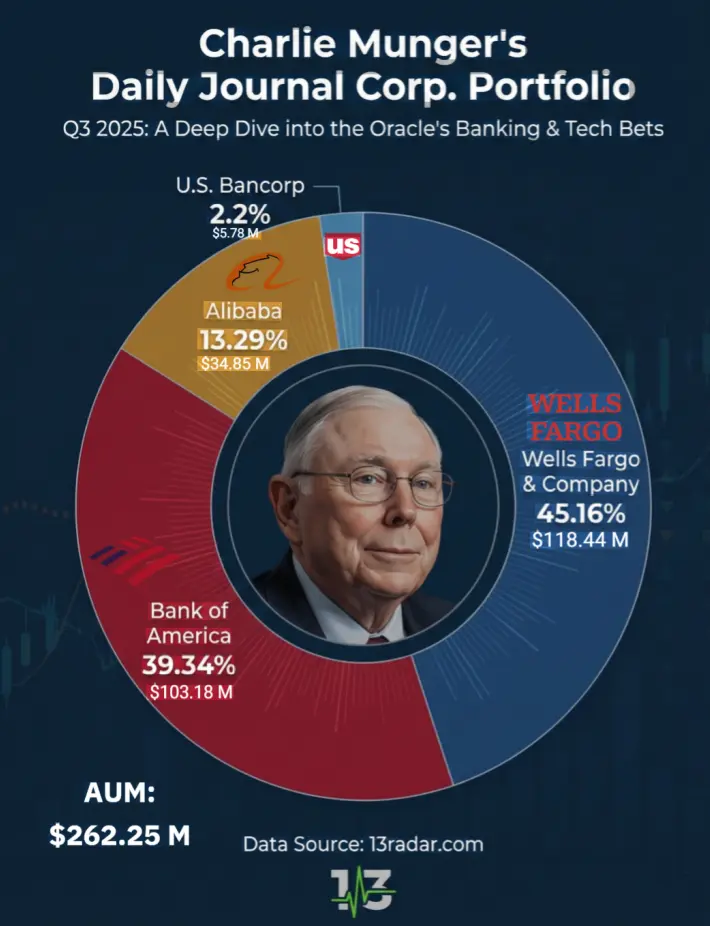
Most institutional portfolios look like a grocery list of 50 to 100 stocks. Daily Journal’s portfolio looks like a postcard. It holds a tiny handful of positions, primarily concentrated in traditional banking and international e-commerce. This level of concentration violates every modern rule of diversification, yet it eliminates the risk of "diworsification"—buying sub-par assets just to fill a quota.
The thesis is clear: If you understand the banking cycle and the long-term value of the US dollar, you don't need to hedge with 50 other mediocre ideas. You just need to be right about the big ones.
✨ 2. VS. The Market: A Study in Discipline
To understand just how radical this approach is, let's compare the typical 2025-2026 fund manager behavior with the Daily Journal approach. The contrast is stark and educational for anyone prone to over-trading:
- The Typical Fund Manager:
👉 Rotates sectors quarterly based on Fed rumors.
👉 Chases momentum in AI and Crypto.
👉 Pays massive transaction costs and capital gains taxes. - The Daily Journal Corp:
👉 Holds positions for decades, not quarters.
👉 Ignores "Macro Noise" to focus on "Micro Economics."
👉 Benefits from the tax efficiency of zero turnover.
3. Validating the Thesis with Data
Critics often argue that this lack of movement is a sign of stagnation. However, looking at the historical filings tells a different story. It shows a portfolio that was positioned for a high-interest-rate environment long before rates actually stayed high.
For investors analyzing the durability of this strategy, a review of the daily journal corp 13f q1 2025 holdings tickers provides the necessary baseline. Even a year later, the consistency of these holdings serves as a reminder that in investing, sometimes the hardest thing to do is absolutely nothing.






