Hello HODLers!
The Awakening of a Bitcoin Whale 🐋
In the last few hours, the crypto market witnessed another moment straight out of Bitcoin’s early mythology.
A Satoshi-era wallet, dormant for 13 years, suddenly sprang back to life, moving 909.38 BTC to a new address. At current prices, that’s roughly $84.6 million — moved in a single transaction, without warning.
What makes this story even more fascinating is when those coins were acquired. According to Arkham Intelligence on-chain data, the wallet received the funds back in 2013, when Bitcoin was trading below $7.
Back then, the entire stash was worth just over $6,000.
Fast forward to 2026, and we’re talking about one of the most impressive long-term investments in financial history.
To put things into perspective:
-
The same amount invested in an S&P 500 ETF would now be worth around $37,000
-
Gold would have delivered roughly +150%
-
Bitcoin? Nearly a 14,000× increase
No traditional market even comes close.
Liquidation or Security Move?
Naturally, whenever a long-dormant whale moves, the same question dominates the conversation: Is a sell-off coming?
Between 2024 and 2025, wallets inactive for over a decade collectively moved more than $50 billion in BTC. In several cases, part of those funds eventually reached exchanges, fueling fears of large-scale profit-taking.
That said, a transfer to a new address doesn’t automatically mean an imminent liquidation. In many situations, it’s simply the first step, not the final one.
There are several plausible explanations:
-
Security upgrades (moving coins from old, potentially vulnerable wallets)
-
Custody changes or inheritance-related restructuring
-
Preparation for future financial planning, rather than immediate selling
And then there’s a topic that’s gaining increasing attention…
Quantum Risk and the Silent Shift of Old Coins
One of the less discussed — but increasingly relevant — motivations behind these movements is the growing debate around quantum computing risk.
In theory, sufficiently powerful quantum computers could one day challenge the cryptographic foundations of Bitcoin. While most cryptographers agree that a real threat is not imminent, research papers and industry discussions are pushing the ecosystem toward post-quantum migration strategies.
From this perspective, moving old coins isn’t bearish at all.
It may simply reflect highly sophisticated, long-term holders repositioning their assets in anticipation of future protocol upgrades — not panic, but preparation.
A New 2026 Trend?
What’s different now is frequency.
These Satoshi-era awakenings are no longer rare, headline-grabbing anomalies. They’re becoming a recurring pattern. And that’s why many analysts no longer see them as isolated events, but as part of a broader structural shift in Bitcoin’s lifecycle.
Early adopters are aging. Regulatory clarity is improving. Security standards are evolving.
And Bitcoin itself is entering a more mature phase.
The big question isn’t whether these whales will move — but how the market will interpret their moves.
So far, Bitcoin has proven remarkably resilient.
And every time a 13-year-old wallet wakes up, it quietly reminds us of one thing:
conviction still beats speculation — by a long shot.
🔥 MY PASSIVE EARNINGS: What I’m actually farming right now🔥
1. GRASS — (DePIN/AI)
Grass is a decentralized network that lets you turn your unused internet bandwidth into crypto rewards!
Just install the browser extension, desktop app (2× rewards) or mobile app (3× rewards) — and start farming Grass Points automatically while you browse.
🔥 At the end of each season, your Grass Points are converted into $GRASS tokens — and Season 1 has already rewarded thousands of users (including me!).
👉 Farm Grass airdrop now: https://app.grass.io/register?referralCode=lNAoYuHQUPN22mF

2. UPROCK — (DePIN/AI)
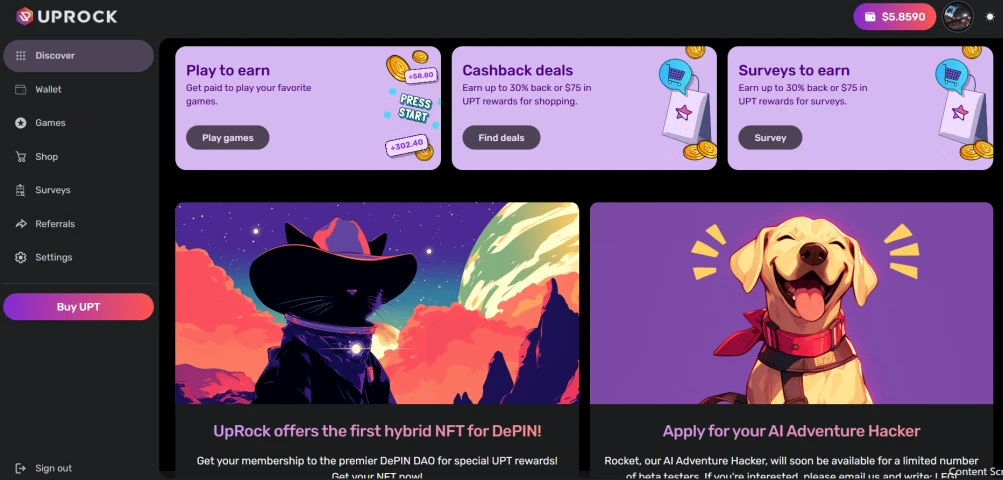
Earn $UPT in multiple ways: share your unused internet bandwidth via desktop app or smartphone, play games and answer surveys!
👉 Start earning $UPT now: https://link.uprock.com/i/f38853d4