
Every week there is a Splinterlands challenge that can be found in this week's post. I also encourage Splinterlands players to partake in the challenge because they get to learn about the game. In this week's challenge, we some tutorials and tips for players.
What is attack order?
This information comes from the support page for attack order but every Splinterlands fight uses the same factors to decide which monsters attack first in a battle. Knowing this is important to optimize your lineup, and I have lost a lot of fights because my opponent had a faster lineup. With a faster lineup, you get to attack first and this is a serious advantage over your opponent.
Attack order Variables
- Speed
- Attack Type (Magic first, ranged second, armored strike third, and melee last)
- Rarity
- Level
- Random
Above is the list of how the attack order is decided. Speed is the most important thing, followed by attack type, rarity, and level. I knew that magic was first and ranged second, but I did not realize that armored strike was third. Rarity and Level also factor in and I have won matches because I had higher level cards. If all the above factors are equal, the game randomly decides the order for those cards. So depending on how the fight goes, luck can be a huge factor.
Exceptions
There are a few exceptions and the first is the skill ambush. These cards will always go first at the start of the battle regardless of their stats. In brawls, the home team also has an advantage in a tiebreaker for attack order. I did not know that Brawls had this exception until I read the support article. Another exception is status effects such as earthquakes, poison, and other factors where the bottom team always takes the damage first. I don't think this matters as much though because it still hits both sides before the battle ends. So the only exception for that would be the skill that deals damage to your opponent upon death.
The last exception is for the ruleset Reverse Speed. The order for determining the attack order is the same, but for each part, the order is swapped. For example, lower speed moves first rather than higher speed. In attack type, melee damage is first then armored strike. The same can be said for rarity and level where lower rarity and level moves first.
Example of Attack Order
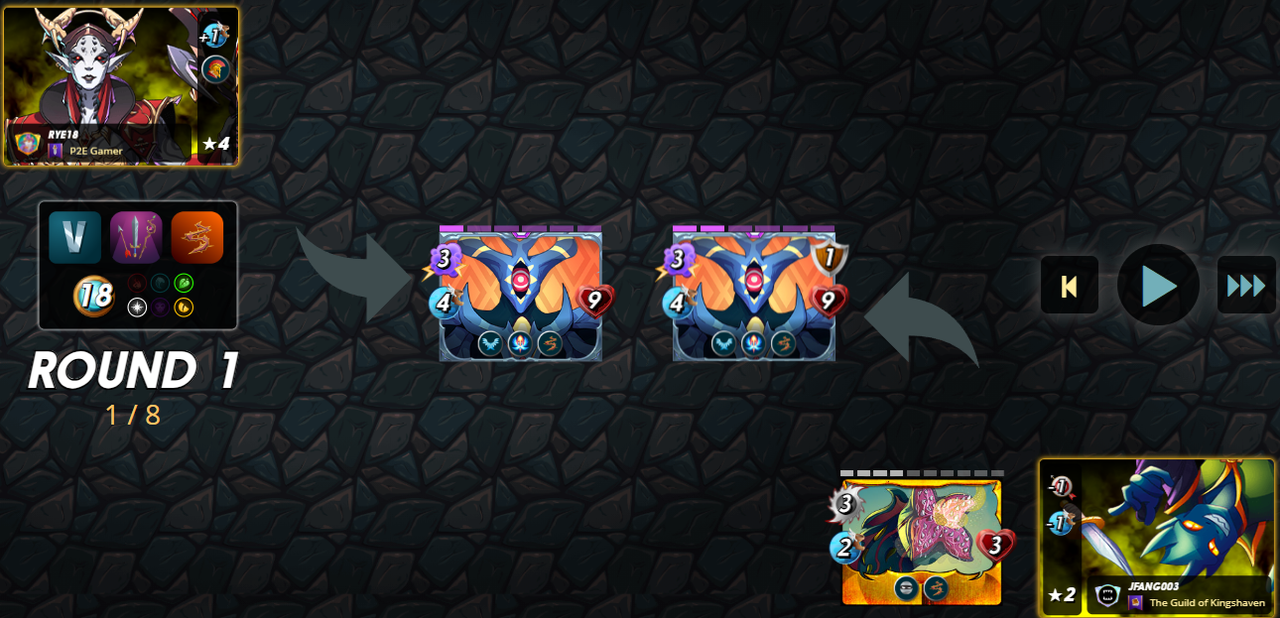
In a post earlier this week here, I had a fight where I won because I had a higher level Night Reaper than my opponent. Since it was a higher level, my Night Reaper would have the attack order advantage over my opponent and that is why I won the match. If both of our Night Reapers were the same level, it would be up to a game of luck as to who would win because it would fall under random.
Conclusion
This challenge was to look into some tutorials and tips so I picked the Attack Order as it is valid in all matches. I learned a few new things such as the Brawls home team advantage and armored strike going before melee attacks. There is much to learn about the game even after this long and knowing how attack order works helps in creating lineups.
Do understand how Attack Order affects fights now? I think it's an important part of the game and it will help you win more fights.
Feel free to leave a comment if you read my post. If you have any questions, feel free to ask and I will do my best to answer.






