
In the Cosmos ecosystem, a new layer1 is emerging and has a specific goal: to create a fair blockchain that allows developers to benefit from the value generated by the protocol on which they build. Archway, a blockchain developed with the Cosmos SDK and enabled by the IBC protocol, seeks to create the best development environment for projects and their communities, considered in the long run to be the determining factor in the success of any network.
How it works
To allow developers the widest possible range of choices, Archway supports the CosmWasm, Rust, and Wasm programming languages, which alone encompasses more than 40 languages including Python, C++, Go and, Java. In addition to the Wasm virtual machine, two modules are added to ensure that the value capture mechanism works: the rewards module and the tracking module.
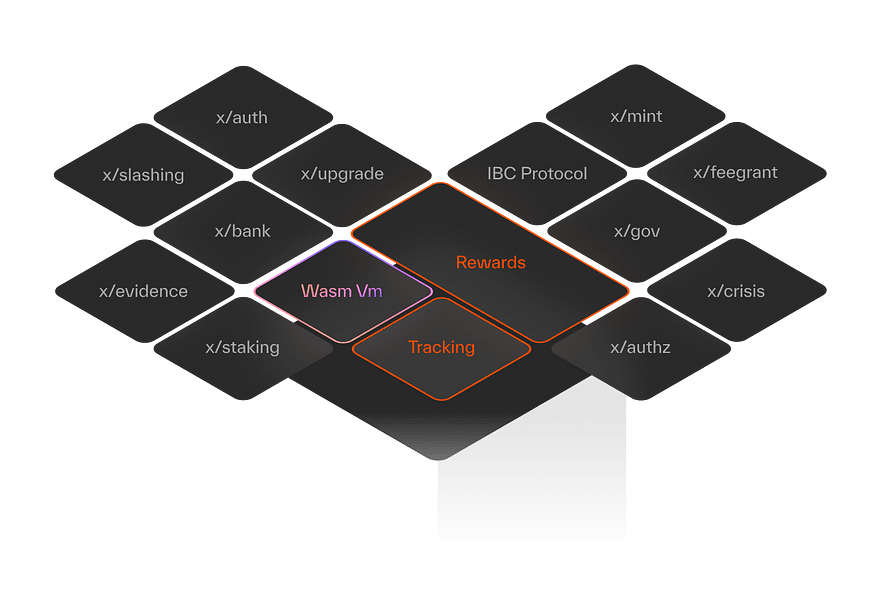
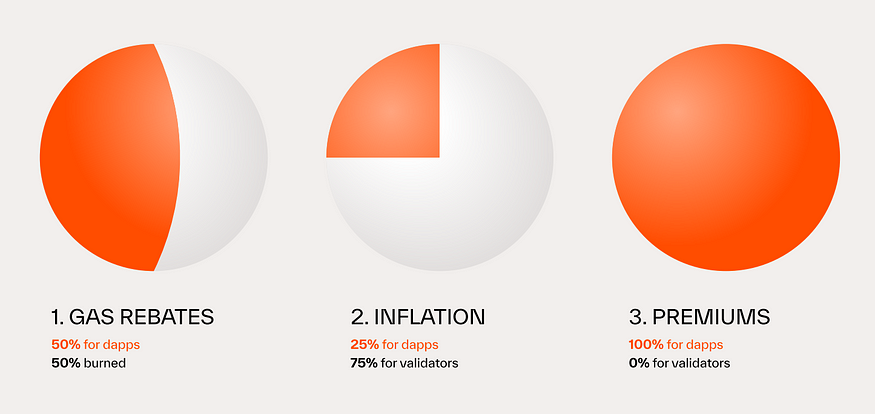
In this system, dapps can capture the value they generate through three mechanisms:
- Gas rebates: the protocol divides the revenue generated from transaction fees between validators and dapp developers in the form of fee discounts. Validators are compensated for the lower fees by potentially more transactions and, therefore, future growth in the network. These parameters can be changed in the future through governance.
- Inflation: in line with the model proposed by Cosmos Hub, inflation in ARCH token supply will be between 7 and 20 percent, depending on how many tokens are actively staked on the network. Archway will initially distribute 25% of this inflation to dapps (devflation) and 75% to validators. In the future, these proportions can be changed by governance vote. The percentage of inflation allocated to contract creators is in turn distributed in proportion to the transactions generated by individual dapps.
- Premium: On Archway, developers can set a custom (premium) fee for interacting with their dapps. This commission is set by default by the protocol to 0 ARCH and can be changed at any time from the launch of the smart contract. Developers, who can decide whether and on which transactions to place this additional commission, get 100 percent of the revenue generated in this way and can dispose of it at the convenience of the team and community.
The Archway team also announced the launch of its wallet, ArchX. The wallet, currently in the testing phase, will be available for iOS and Android and will allow, in addition to sending and receiving tokens, staking, and interaction with all of the protocol’s dapps.
Use cases
The possible uses by projects of the proceeds thus generated are endless. They can range from creating and funding a DAO (Decentralized Autonomous Organization) to incentives for participation in governance votes, from supporting the development team to partially eliminating transaction fees for its users.
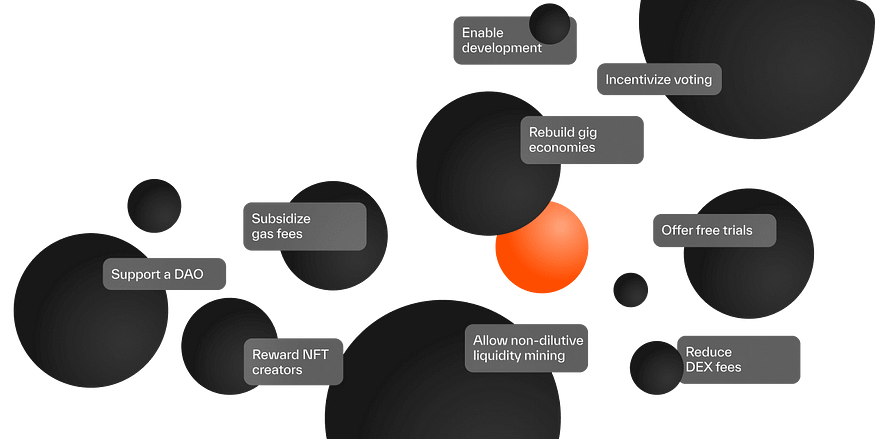
Thanks to this infrastructure, developing within the Archway network will allow developers to recover much of the added value generated by dapps and reinvest it within the community and the project. The more dapps are developed on this network, the more users join and the more transactions are made, the more liquidity generated by the protocol to be redistributed.
Before concluding, let’s come to the juiciest part of the issue: airdrop for community members.
Genesis Airdrop
To ensure the decentralization of its governance token and reward the most active members of the Cosmos community, Archway decided to distribute $ARCH in airdrop.
To be eligible, users had to meet at least one of the following requirements as of January 16, 2023, 18:03 UTC:
- Have more than 25 ATOMs in staking at any number of validators. Each staker meeting this condition will receive ARCHs in a 1:1 ratio to the ATOMs held in staking at the time of the snapshot (29,412,980 total ARCHs);
- Having transferred through the Axelar bridge more than €5K in assets in a single transaction. For this transaction, each user will receive 400 ARCH (2,900,000 ARCH);
- To have created a smart contract on Terra Classic (400 ARCH per user and 2,566,400 total);
- To have used the Torii or Constantine-2 testnets (25 ARCH per user and 901,525 total).
Excluded from distribution are U.S. citizens and those from prohibited jurisdictions. These 35,753,330 ARCHs, which will be distributed when the mainnet is launched, represent 3.6 percent of the total supply versus Archway’s projected 5 percent for airdrops. There will be more airdrops in the future with timing and methods not yet announced.
Check here if you are eligible and follow Archway’s social channels for more details on the deployment.
Conclusions
The security provided by the consensus fee and Tendermint consensus, the flexibility provided by the multiple programming languages supported, the interoperability given by the IBC protocol, and Comsos compatibility with EVM bridges make Archway a protocol worthy of every cosmonaut’s attention.
The tracking and reward modules also ensure that the dapp value capture mechanism works, making Archway the perfect landing place for developers who want to create an economically sustainable, multi-chain, and secure project.
The deployment of the first and future airdrops will bring much attention to this protocol. Will the first dapps on Archway be able to catalyze this attention and propel it up the ranks of the most widely used networks in the ecosystem? We are very close to finding it out.
I originally publish this article here.
Sources:
https://docs.archway.io/community/airdrop-snapshots
Follow me on Twitter: @ifiwasfrank
Buy me a coffee on starknet.social/ifiwasfrank.strk
Discover Upland and start earning!
Join publish0x, earn by reading!
Start playing Planet IX






