
Considered by many as competing projects, XRP and XLM could prove to be very complementary projects.
Dedicated to cross-border payments, XLM and XRP are making a big splash with many governments announcing new international payment systems. The goal for governments and large corporations is to reduce costs and time for international transactions. This is precisely the objective of the Ripple (XRP) and stellar (XLM) projects. Recent announcements by the US and Brazilian governments could give new impetus to their use and, at the same time, to their prices.
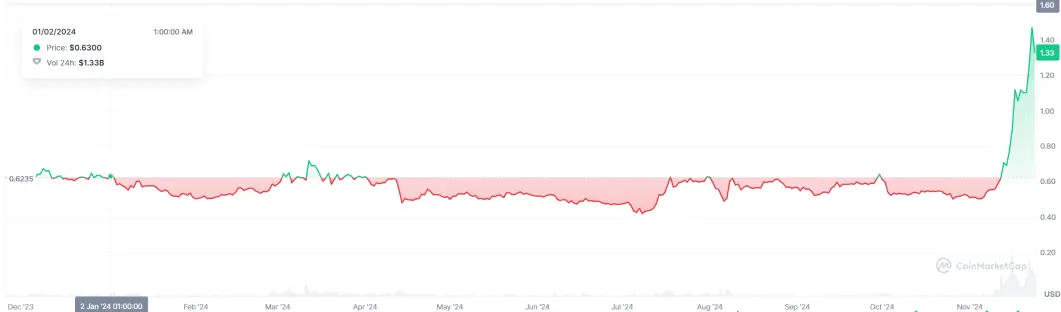
XRP
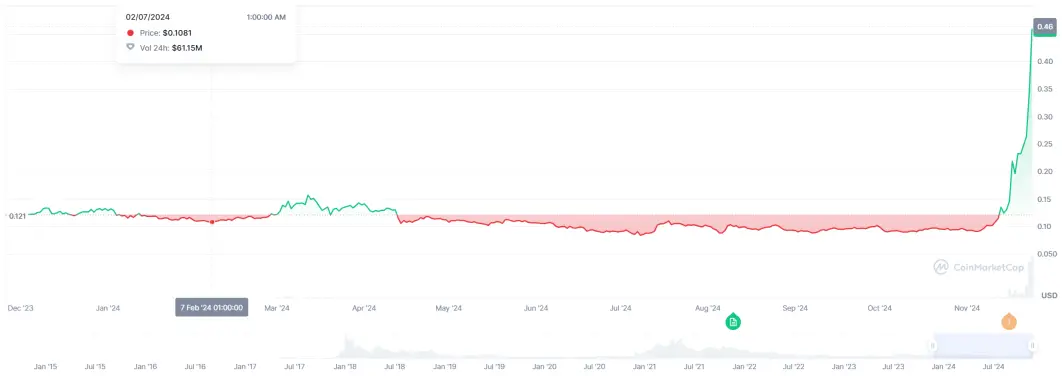
XLM
While many people think that the projects are copies, both projects stand out for their characteristics and uses. The only thing they share is their main goal: to make international payments faster, safer and cheaper. The two projects are otherwise directed to different audiences. The composition and management of the two projects are also very different.
What is XRP?
XRP is a cryptocurrency that was created in September 2012 to complement traditional payments by migrating the transactions that occur today within financial institutions to a more open infrastructure (direct competitor to SWIFT). Ripple designed XRP Ledger, a software that offers a new operating system for transactions and records on the blockchain. Like Bitcoin, XRP Ledger allows users to send and receive XRP cryptocurrency using digital signatures. The project is aimed primarily at institutions such as banks, neo-banks, payment companies and multinationals.
When XRP was first launched, Ripple initially distributed 45 billion XRP to forum users through a reward system. The remaining XRP is deposited by the company to finance its technological development. However, the distribution of its tokens continues to stir debate as Ripple is a for-profit company. This allowed Ripple to be the sole manager in financing and developing XRP Ledger, a controversial position in the decentralized world of cryptocurrencies. Many criticise the centralization of the project.
XRP Ledger technology does not require mining and does not require specialized hardware to secure its register and validate transactions. Only specific nodes, called unique nodes, can validate transactions on the network. Nodes can quickly validate transactions, in order to reflect the transactions that are taking place today between databases controlled by financial institutions. The nodes are strongly linked to the traditional and little decentralized world of finance.
What is XLM?
The Stellar Protocol was created on July 31, 2014 with the aim of changing the way currencies and assets are transferred around the world. The Stellar platform encourages a distributed network of computers (blockchain) to run software that allows everyone to send money and assets in a way that is traditionally handled by payment service providers (bank/swif/...). Stellar has also sought to position itself as a decentralized trading platform, with an integrated order book that keeps track of ownership of the Stellar Lumens assets. These assets can then be traded on its platform between users using the XLM cryptocurrency. Since October 2022, smart contracts have been available on its blockchain. The project is primarily aimed at individuals and companies.
The Stellar Development Foundation (SDF), a non-profit organization that supports the development of Stellar, has distributed the initial supply of Stellar Lumen (XLM) of $100 billion over a 10-year period. The XLM tokens issued at launch were to be distributed to users who subscribed to a subscription program, holders of Bitcoin and Ripple, Stellar partners (such as SatoshiPay and Abra) and the SDF foundation itself for its operating budget. However, the SDF foundation has encountered some obstacles with distribution and was only able to distribute 7.375 billion XLM. In response, the project team changed the sourcing and burned more than 50 billion tokens, reducing the maximum offer to around XLM 50 billion.
Stellar Core, a software used to manage its registry and validate its transactions, is at the heart of its network. Nodes running the software can be configured to serve as observers ("watchers"), able to submit transactions, archivers ("archivers"), storing network activity and validators ("validators"), who validate transactions and vote on network upgrades via the Stellar consensus protocol.
Why are the two projects not competing?
At the beginning of the article, I explained that many consider projects to be competitors yet this is far from being the case. Ripple is aimed at the interbank sector to optimize flows between financial institutions. Stellar is aimed at private users and businesses to facilitate international flows on international or domestic transactions.
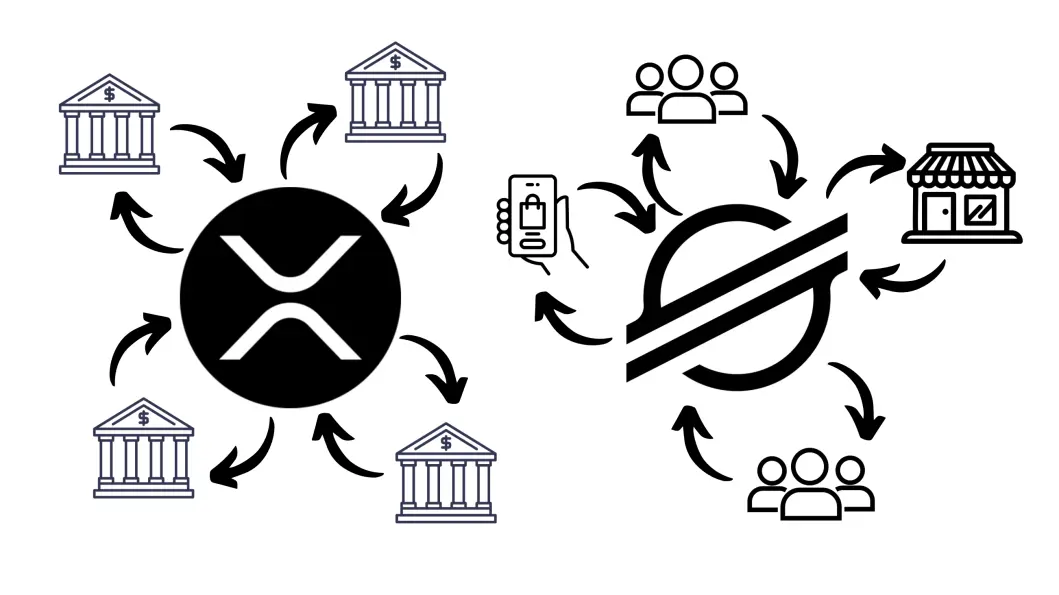
Two projects that could work on two distinct layers of transactions to improve liquidity transfer. There is a clear complementarity between the two projects. Here is a summary model of the complementary double-layer operation of XLM and XRP.
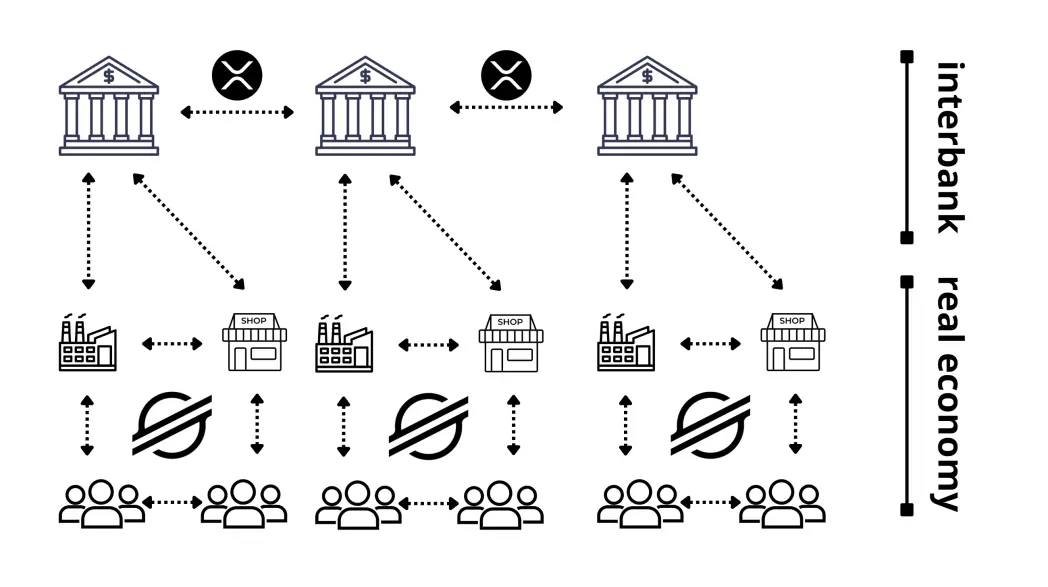
As this diagram reveals, the two projects seem to be very complementary in creating a complete transaction ecosystem. I do note, however, that adding an oracle like ChainLink could be crucial especially for Stellar. Indeed, if the project wants to establish itself in the globalized world of finance, a tool like ChainLink could be useful for more interaction with the real economy, especially regarding the management of data related to the Stellar Lumen smart contracts.




