
Blockchain-based smart contracts — Stuart
Smart contract integration is one of the big steps we need to take if we want to bring crypto into the mainstream. It’s where we connect with the real world, and also where we can really begin to appreciate the power of blockchain technology.
So let’s begin… What is a Smart Contract?
The concept of a smart contract is actually not a new one. The basic idea has been around since the early 1990’s, and was first described in 1994 by computer scientist Nick Szabo. However, the term “smart contract” was first coined in 1996 by computer scientist and cryptographer, Dr. Nick Williamson. Since then, the idea of a smart contract has evolved, and is now widely understood as a piece of code that automatically executes the terms of a contract when certain conditions are met. Smart contracts are essentially self-executing digital agreements, with no need for any third-party involvement or oversight. They are a simple, yet powerful concept. And they are the foundation of the blockchain technology. So what does a smart contract look like? Smart contracts are essentially computer code, written to automatically execute certain actions when certain conditions are met. The term “smart contracts” is somewhat misleading because smart contracts are essentially pieces of code. And as we know, code is just a bunch of 1’s and 0’s. As such, a smart contract is simply a computer program that resides on a blockchain network. This is why the Ethereum blockchain was specifically designed to support smart contracts. Smart contracts are the driving force behind Ethereum.
How Can Smart Contracts Benefit You?
Here are just some of the benefits of smart contracts: They are transparent and trustless. They are self-executing. They run on the blockchain network. They are publicly auditable. They are immutable. They are decentralized. They can be used for a variety of different applications.

Smart Contracts and the Sharing Economy
As you can see, smart contracts are a powerful tool. And they can be used in a variety of different ways. One of the most exciting areas to explore is the blockchain-based sharing economy. The sharing economy is all about peer-to-peer transactions. It’s about removing middlemen and streamlining industries and services. The sharing economy has already had a major impact on the transportation, accommodation, and food industries. And now it’s taking its next big step with the introduction of smart contracts.
Smart Contracts are most useful when they are used in a complementary way to a central system.
The Ethereum platform, for example, can be used to create a blockchain-based central system, while Ethereum-based smart contracts can be used to connect to a central system to get information on the actions performed by the central system. The potential of blockchain-based smart contracts is best revealed by considering the possibilities for companies and individuals. For example, blockchain-based smart contracts can be ideal for decentralized autonomous organizations (DAO), which is a company that does not have any intermediaries and is run by smart contracts.
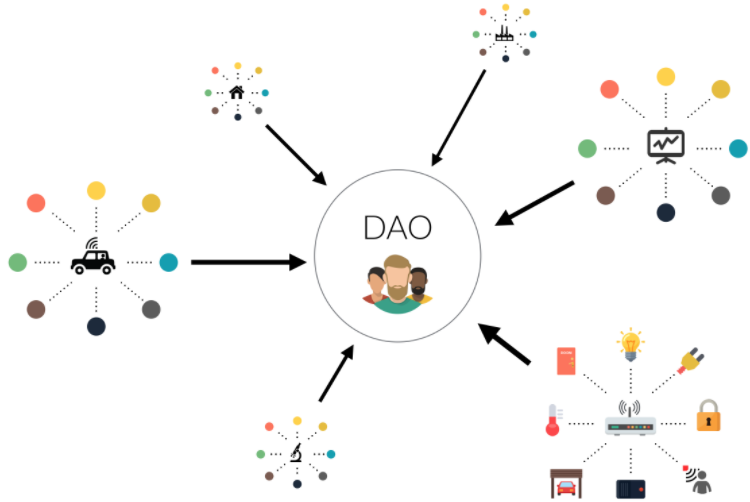
This DAO model would run on an Ethereum-based blockchain system. Another example is a smart contract that would be used to collect data on the actions performed by a central system such as a bank. This smart contract would be connected to the central system and receive information about the actions performed by the central system. The smart contract would be used to verify that the actions performed by a central system are according to the rules of the central system, and if the actions are not according to the rules of the central system, the smart contract would react accordingly. The potential of blockchain-based smart contracts opens up a lot of possibilities for the future and is only limited by the imagination of the developers and other individuals who are willing to use smart contracts in new ways.
Thanks for reading! :)
As always,
Follow me for my crypto / DeFi content to expedite your knowledge!
🤓 Hire me! 👉 DeFiknowledge.com
🟦 Twitter 👉 Stuart (@DeFiKnowledge) | Twitter





