
Today I will talk about Token Swap and Atomic Swap.
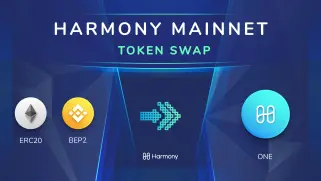
🅂🅆🄰🄿 🅃🄾🄺🄴🄽 is a process by which one cryptocurrency is updated in another at a certain rate. It is literally the replacement of one currency with another, obviously you are forced to exchange the old currency for the new one, otherwise you will lose its value. With a rebranding the tokens could change their name or symbol, while with a swap token the blockchain that supports the token is completely changed and the holders of cryptocurrencies are forced to act in some way. For example, if you have tokens on an exchange, this will take care of the swap for you.
Why do swap tokens occur? Nowadays anyone can create their own token but creating their own blockchain is not easy (in this case we no longer speak of tokens but of crypto). It is much easier to create a token by relying on an external blockchain. The most popular blockchain for creating custom tokens is Ethereum, which created what is known as the ERC-20 ("Ethereum Request for Comment") standard.
Sometimes Swap Token is also called "Token Migration" or "Coin Swap".
In summary, these are changes or updates.
What is an 【Atomic Swap】 instead? They concern the purchase and sale of tokens. It is an "all or nothing" procedure. A successful Atomic Swap implies that the buyer and the seller get the transaction as agreed by both, otherwise this does not happen at all.
This technique allows a quick change between two different cryptocurrencies, operating on separate blockchain networks. This process (also known as atomic cross-chain trading) is based on smart contracts, and allows users to buy and sell coins directly from their personal crypto wallet. It is therefore about peer to peer exchanges across different blockchains.
The exchange takes place between two X and Y users (let's say the two want to exchange Bitcoin and Litecoin):
✅X deposits $ 800 of Bitcoin (Smart Contract). A key will be generated to access it. X will get a hash
✅Y receives X's hash and will deposit $ 800 in Litecoin on this address
Thanks to the Hashlock, X using the key will unlock Y's 800 Litecoin dollars. At the same time Y will be able to access X's 800 Bitcoin dollars.
The exchange took place and the swap ended.
This process was called Atomic because the atoms are indivisible. It is a metaphor. If X or Y give up ... the contract is canceled.
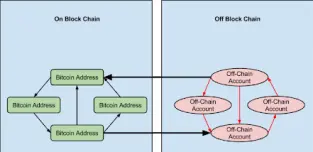
Atomic Swaps can take place in two different ways: on-chain and off-chain. 𝓞𝓷-𝓬𝓱𝓪𝓲𝓷 𝓐𝓽𝓸𝓶𝓲𝓬 𝓢𝔀𝓪𝓹 occur on the network of one of the coins in question (in this case, on the Bitcoin or Litecoin blockchain). Oͦff-̄cͨhaͣiͥn Aͣᴛⷮoͦmͫiͥcͨ Swaͣp, on the other hand, take place on a secondary level (for example on bidirectional payment channels, similar to those used in the Bitcoin Lightning Network for micropayments).
What are the benefits? Greater security, no exchanges are used, lower costs.
The disadvantages are privacy (exchanges and transactions on blockchain on chain can be traced) and the algorithm (the two crypto exchanges must be based on the same hashing algorithm: SHA-256 in the example shown).






