
In DeFi many dapps are launching what is called “Real Yield”. Basically the primordial concept of Yield Farming and liquidity provision was this:
-provide liquidity
-earn an APR deriving from swap fees and from farming the platform's native token
The platform's native token boosts the APR by attracting more liquidity. However, the aggressive farming of this token slowly brings it to $0 because it is a "farm & dump" token. Once there are no more incentives, the user removes the liquidity and moves elsewhere.
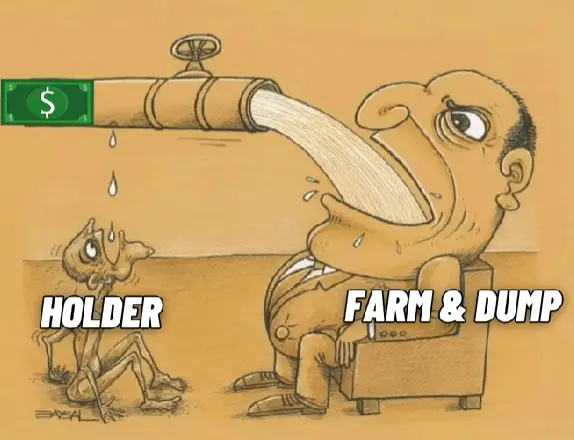
A model of this type is used, for example, by PancakeSwap with its Cake token (which in any case is subject to Burn) or, for example, by Harvest Finance with the Farm token (to mention two platforms that have been active for years). One can also mention Sunny or Saber on Solana or Osmosis on Cosmos.
A 10% yield with 8% inflation brings the real yield to 2%. A protocol that has no profits has no value, even if it can provide high APY by issuing a token that will go to 0.
WHAT IS REAL YIELD?
A real return can be the interest borrowers pay to cash depositors, the swap fees of a dex, or auto-compounding strategies using multiple platforms.
The "Real Yield" is being developed on Arbitrum which, in addition to guaranteeing an income deriving from the profits of the protocol, pays dividends in ETH. This new farming is a reaction that was generated after the disastrous collapse of Terra and what had become the largest lending platform in the entire sector: Anchor Protocol.
Things to keep in mind are:
1) If real value and revenue are not generated, the system fails because the TVL is fake (deriving only from stellar APY donated with worthless tokens)
2) User liquidity is mercenary (based on the yield offered) and if the protocol does not pay and it loses liquidity, the platform is bankrupt
WHY IS REAL YIELD DIFFERENT?
People use the protocol regardless of market conditions (even in Bear Market) because the protocol generates on-chain revenue through the products it offers. Issues of a native token are fine, only if the revenues are higher. The most popular payment choices are ETH or stablecoins. The classic farming platforms are good only in the Bull Market instead, in the Bear Market they go into a liquidity crisis because the farming tokens collapse in price and therefore the returns go down.
The questions to ask are:
• Where does the yield come from?
• How much revenue does the protocol generate?
• What is the supply and emissions of the native token?
• In which tokens are the shared revenues paying?
Examples:
1) Old farming: Liquidity pool (ETH/USDC) --> swap fee earnings + platform native token rewards (super inflation). It is not a Real Yield
2) New farming: Liquidity pool (ETH/USDC) --> swap fee earnings + automatic complex strategies (loans, arbitrage, options, etc) + ETH or Stablecoin rewards (which is a small part of the platform's earnings). The auto-compound of the LP usually works with ETH or USDC rewards which leads to the buyback of the platform's native token, which is then staked in my liquidity pool! 0 emissions...)
Some examples of this type are platforms such as: Umami Finance, GMX, Synthetix Network, Kujira, Redacted Cartel, Gains Network, Trader Joe (Joe staking is paid in USDC), Ribbon Finance, Dopex, Looksrare, DYDX. Some of these are hybrid models between old and new school, for example Synthetix Network (you earn their stablecoin sUSD deriving from the profits of the protocol and the SNX native token which remains inflationary today but burns could be expected in V3!). Some of these tokens could be good investments because the protocols generate profits, the native token has demand and low emissions. Of course, always do your own research (DYOR)! If you know of other examples, please let me know in the comments section.
P/E AND REAL YIELD
When evaluating the Real Yield, the P/E ratio is fundamental, i.e. how much revenue does a protocol generate in relation to the price of its token? This ratio is a value derived by dividing its diluted market capitalization (assuming the supply was all in circulation) by the revenue the protocol generates in a year. If known, it does not take into consideration any Liquidity Mining.
Here you can see the updated P/F ratio for each protocol: TokenTerminal (P/F Metrics).
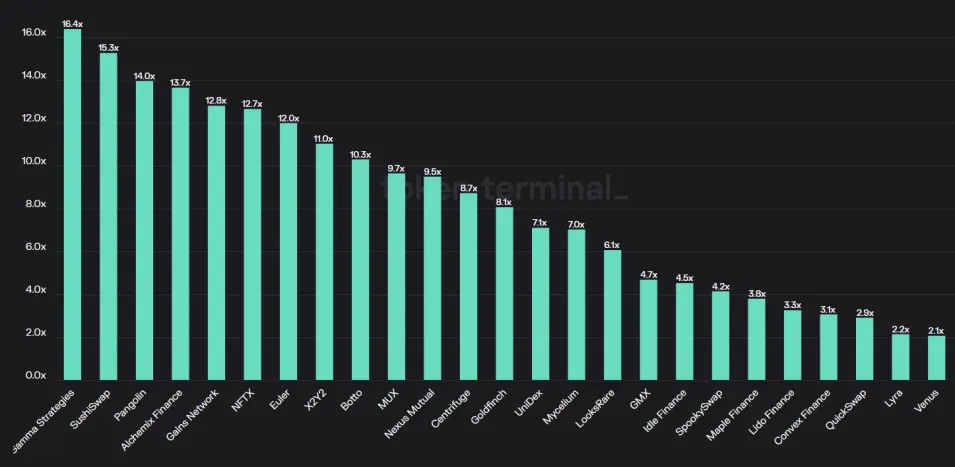
High ratio are considered growth assets. This points to positive future performance and investors have higher expectations for earnings growth and are willing to pay more for it. For this reason, investing in growth assets (high ratio) is seen as a riskier investment. Stocks with high P/E ratios can also be considered overvalued.
For example value platforms that generate a lot of revenue figure with a high ratio using a hybrid model, for example Curve Finance which provides the return not only with the revenue of the platform but also with the CRV token. Even for Synthetix Network this speech was valid until recently (the inflation of the SNX token was very high), until Curve Finance and other platforms realized that they could exploit Synthetix's dollar (sUSD) to guarantee cheaper trades and with 0 slippage on their dex and from there was the revenue explosion that Synthetix Network still generates today.
Tokens with a low market cap to earnings ratio are considered valuable. It means they are undervalued because their price is lower than the fundamentals. This price error will be a great deal in the future and will prompt investors to buy the token before the market corrects it.
Are you interested in ways to earn crypto bonus? Check it out here: Some Sites To Earn Crypto Bonus (Old & New)






