
The term "Crypto Wars" refers to a series of legal and political clashes related to the regulation of technologies that can guarantee freedom, anonymity and privacy of users (cryptography). Among the figures affected are Phil Zimmermann, Julian Assange, Chelsea Manning, Edward Snowden, Barrett Brown, Aaron Swartz, Ross Ulbricht, Roman Storm, Roman Semenov, Alexey Pertsev, William Lonergan Hill, Keonne Rodriguez and Pavel Durov, are involved in several cases of censorship and repression related to the use of technologies based on online privacy. Let's see the details on each of them. It is useless to mention Satoshi Nakamoto (and other early Bitcoiners), since the history of Bitcoin is now well known (especially on a crypto portal).
Phil Zimmermann: creator of PGP (Pretty Good Privacy) (1991)
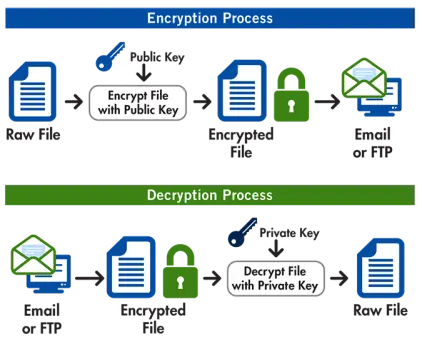
He is a central figure in the first "Crypto Wars" of the 1990s. In 1991, Zimmermann developed PGP, an encryption software that allowed users to encrypt their emails and files, thus protecting their privacy. PGP quickly became popular among activists and people concerned about government surveillance. In the US, the government viewed encryption as a "weapon." As a result, Zimmermann was investigated for years by the US government for violating export laws, as PGP was distributed globally. The case sparked a heated debate about encryption and privacy rights. The case against Zimmermann was eventually dropped in 1996, but his work marked a milestone in online privacy advocacy and gave rise to the concept of blockchain and Cryptocurrency.
Chelsea Manning: Former US Army Intelligence Analyst (2010)
Chelsea, then known as Bradley Manning, was a US military intelligence analyst. During her service in Iraq, Manning had access to a vast amount of documents, including videos, diplomatic reports, and classified military communications.
In 2010, Manning leaked hundreds of thousands of classified documents to WikiLeaks, the platform founded by Julian Assange. Among the most notorious materials was the video "Collateral Murder," which showed a U.S. airstrike in Iraq that killed civilians and journalists. Manning was arrested in May 2010 and charged with violating the Espionage Act and other crimes. In 2013, she was sentenced to 35 years in prison, one of the harshest sentences ever handed down for leaking classified documents. However, in 2017, her sentence was commuted by then-President Barack Obama, and Manning was released after serving 7 years.
Julian Assange: Founder of WikiLeaks (2010)
He is the founder of WikiLeaks, a platform that has published large amounts of classified documents (some of which came with the help of the aforementioned Manning), revealing corruption and illegal activity at the government and corporate levels. WikiLeaks accepted donations in Bitcoin to ensure the anonymity of its supporters.
Assange was accused of various crimes, including espionage and hacking, and spent several years in hiding in the Ecuadorian embassy in London to avoid extradition. His case has become a symbol of the fight for freedom of information and online privacy, and his use of cryptocurrencies has highlighted the role of cryptocurrencies as a tool to escape state control.
Aaron Swartz: programmer, writer and activist (2011)
Swartz was a brilliant programmer and a supporter of freedom of information and open source. He was involved in the development of the RSS format (for the distribution of content on the Internet) and in the organization of Creative Commons (free use and sharing of a work). Swartz is also known for his role in the fight against SOPA (Stop Online Piracy Act) in the United States.
Swartz was arrested in 2011 for downloading millions of scholarly articles from JSTOR, a digital archive, with the intent to make them publicly available. Although the original charges were relatively minor, the federal government upgraded them to serious charges that could have led to decades in prison. Swartz committed suicide in 2013, at just 26 years old, while facing a lengthy prison sentence, which led to intense debate over the treatment of whistleblowers and digital activists.
Ross Ulbricht: creator and administrator of the Silk Road black market (2011)
Known as "Dread Pirate Roberts" he is known for creating and operating Silk Road, an online black market that operated on the Dark Web, using TOR (1999) for anonymous browsing and $BTC as the primary payment method. Silk Road allowed users to anonymously buy and sell a wide range of goods, including drugs and other illegal items.
In 2013, Ulbricht was arrested and later sentenced to life in prison for a variety of crimes, including money laundering, international drug trafficking, conspiracy, and attempted murder (although the murder-for-hire charges were never proven). Ulbricht created the infrastructure but was officially charged with the illegality of the users who used Silk Road. The market was seized and shut down in 2013 but hundreds more have since sprung up. Ulbricht was pardoned by US President Trump in 2025 and released from prison.
Barrett Brown: Anonymous activist (2012)
Brown is a journalist and activist known for his work with the hacktivist group Anonymous. He was involved in the disclosure of classified information through the Stratfor project, a hacking operation that led to the publication of millions of emails stolen from the private intelligence firm Stratfor. Brown was arrested in 2012 and faced a variety of charges, including computer crimes and threatening a federal agent. Although he was not directly involved in the theft of the emails, Brown was convicted of sharing a link to classified data. His conviction raised concerns about freedom of the press and the criminalization of sharing publicly available information.
Edward Snowden: former National Security Agency (NSA) consultant and whistleblower (2013)
Snowden was a systems administrator and analyst for the NSA, the United States intelligence agency responsible for global electronic surveillance. In 2013, Snowden decided to collect and release a large amount of classified documents to reveal the extent of the NSA's surveillance programs. Snowden provided these documents to journalists at The Guardian and The Washington Post. The revelations showed that the NSA was massively collecting telephone data and electronic communications from American and foreign citizens, often without warrants and outside of proper legal oversight. After making this information public, Snowden fled the United States and moved to Russia, where he still resides. In the United States, Snowden has been charged with violating the Espionage Act and faces a long prison sentence if deported. Snowden's revelations sparked a heated international debate about mass surveillance, digital privacy, and civil rights.
Alexey Pertsev, Roman Storm and Roman Semenov: Founders and Developers of Tornado Cash (2022)
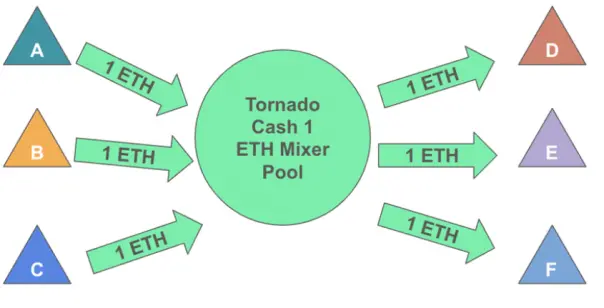
Tornado Cash is a tool that allows users to anonymize their cryptocurrency transactions by mixing them with those of other users. In 2022, Alexey Pertsev was arrested in the Netherlands on charges of facilitating money laundering through this tool. Authorities allege that Tornado Cash has been used by criminals and hackers, including the North Korean Lazarus group, to hide stolen funds. This arrest has raised concerns about possible censorship of software developers who create privacy tools. In addition to Pertsev, Storm and Semenov have also been prosecuted for their involvement in the development and operation of Tornado Cash. The charges against them focus on facilitating money laundering and violations of international sanctions.
William Lonergan Hill and Keonne Rodriguez: creators of Samourai Wallet (2024)
Samourai Wallet is a privacy-focused Bitcoin wallet, created to ensure maximum security and anonymity in transactions. It is known for integrating a series of advanced features that allow users to avoid surveillance and improve the privacy of their Bitcoin transactions (which natively, remember, has a public ledger where all transactions performed by an address are always visible). Among the features of Samourai, a mixer that allows users to mix their Bitcoin transactions with those of others, making it more difficult to trace the origin of the funds.
Stonewall and Ricochet are other techniques used to ensure greater privacy in the traceability of transactions, diversifying the paths. PayNyms instead allows users to receive payments without revealing their Bitcoin addresses. The two in 2024 were accused of money laundering because some users used it in this way.
Pavel Durov: Founder of Telegram and TON (Telegram Open Network) (2024)
Durov, known for his libertarian views and commitment to privacy, developed Telegram, a messaging platform that offers advanced encryption features. He also launched a cryptocurrency, TON, which came under scrutiny by the US Securities and Exchange Commission (SEC) on charges that it was an unregistered securities offering. Durov is considered a defender of digital privacy, and his work has put him at odds with several governments, so much so that in August 2024 he was arrested in France on charges of money laundering, terrorism, international drug trafficking, fraud, and sharing illegal material. He is also guilty of crimes committed by some users who use TON.
Are you interested in ways to earn crypto bonus? Check it out here: Some Sites To Earn Crypto Bonus (Old & New)






