
You may have heard of Bitcoin NFT, however they are not really NFT, even though they are very similar. There are two concepts to pay attention to:
1) Ordinals (generation method: rarity and association of files to each single Satoshi)
2) Inscription (the final result: similar to NFT)
ORDINALS THEORY
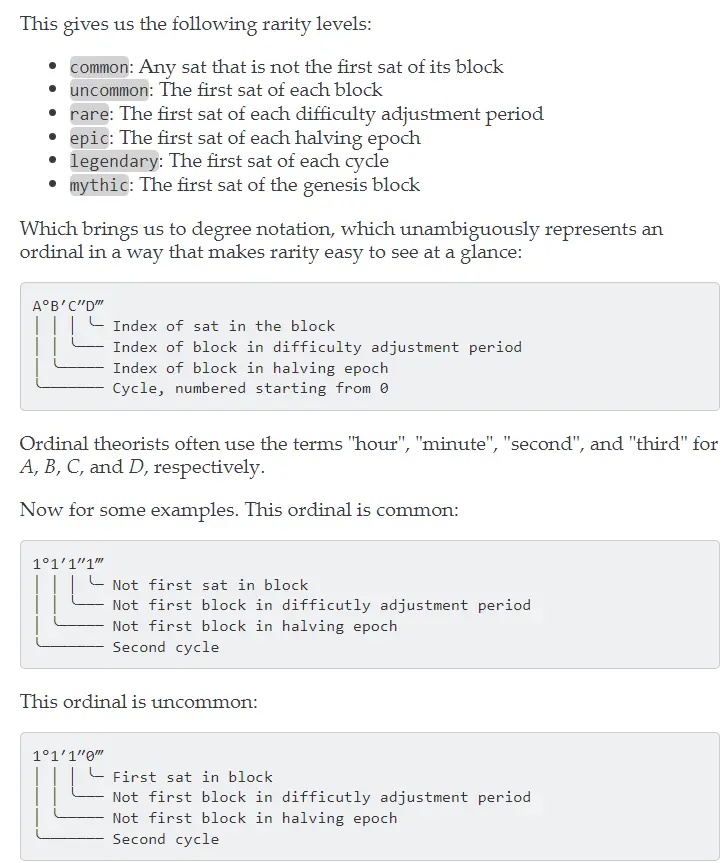
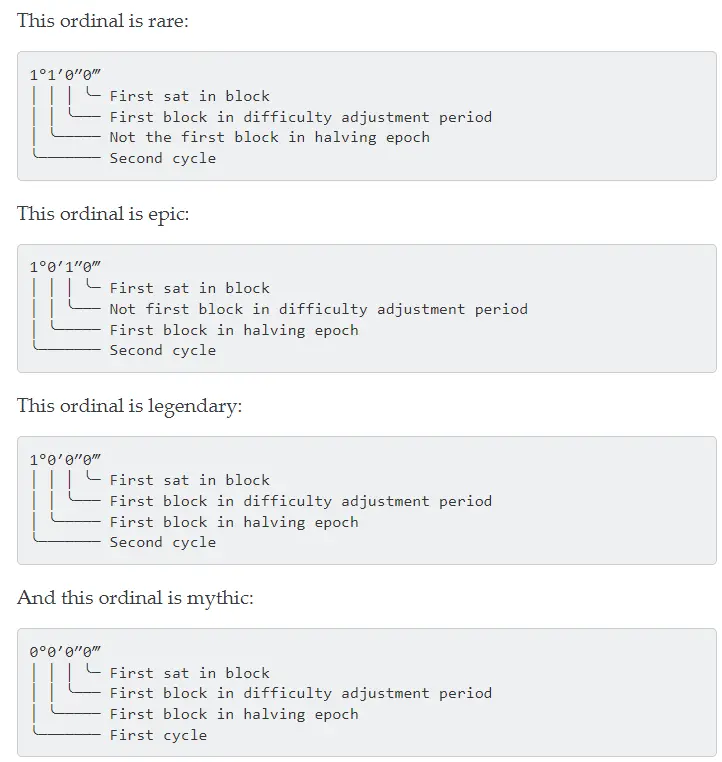
The Ordinals theory was designed by Casey Rodarmor, inventor of this notation for the Satoshi (which is the minimum unit of Bitcoin). The idea is to give a unique number to each Satoshi. This is obviously a convention because the characteristics of the protocol and of the Bitcoin transactions do not allow us to uniquely agree on an order to be given to each Satoshi. In reality this, even if it had already been done differently in the past, let's think of Colored Coins, Counterparty or those on Stacks, the first released in 2012, the second in 2014 and the last in 2017. As mentioned, I remind you that 1 Satoshi is the minimum unit of measurement of Bitcoin: 0.00000001 BTC. There will be a maximum of 21 million Bitcoins and each mined Satoshi can be associated with an Ordinal with a certain degree of rarity (basically based on when the Satoshi is mined: if it is the first of a Halving cycle, if it is the third of the current halving, if it is the second of a certain pre-established event, etc). Casey Rodarmor created a rather complex convention, in the form A°B′C″D‴, to decide the rarity:
-A: refers to the cycle (conjunction). A cycle in Rodarmor's notation means a space that lasts six Halvings, because at the end of this cycle there is full coincidence between the adjustment of the difficulty and the Bitcoin Halving itself. This event is called conjunction and the space between two conjunctions is precisely this cycle. I remind you that the Halving is the halving of the rewards that the miners receive for each block mined, it happens every 4 years
-B: Refers to the current halving
-C: The block number in the current difficulty adjustment period
-D: The number of the satoshi in the block itself
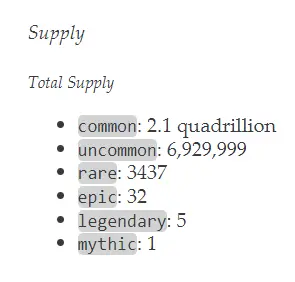
Later he then added a division between common satoshi (2.1 quadrillion), uncommon (6,929,999), rare (3,427), epic (32), legendary (5), mythical (1), changing the lexicon and the divisions from the world of NFT and video games. It is numbered starting from 0 and not from 1.
Once transferred there will be a need to keep track of the satoshi. The convention has decided to apply a FIFO method and that is "first in, first out". That is, the first satoshi to move to another address will be the first to exit.
INSCRIPTIONS: SIMILAR TO NFT
Once we understand how to identify a single Satoshi and keep track of it with this methodology, let's move on to the concept of Inscription which typically allows you to associate an image, audio, writing or video.
Someone calls them NFT, even if the creator of the whole issue himself does not seem to appreciate the name much, preferring to speak of "digital artifacts".
In short, we are talking about images (or any other type of content) that can be registered in full on the Bitcoin blockchain and which can also be transferred, in combination with a satoshi to which a progressive numbering has been attributed.
You can potentially register anything, taking into account the space limits (4 megabytes per block), even if for the moment it seems that images are the most popular. Clearly the more space the Inscription will occupy, the more the transaction will cost because Bitcoin space is limited. The entire digital artifact is stored on the Bitcoin blockchain. It is technically enrolled in the block section introduced with SegWit and also resorts to the use of Taproot tapscripts (November 14, 2021). The data is stored by the full nodes and this is one of the reasons for the controversy.
I remind you that SegWit (Segregated Witness Consensus Layer) controversial update of 2017 (which forked the chain giving birth to Bitcoin Cash), allowed a more efficient use of Bitcoin resources, separating the first part of a transaction (which contains the sender's addresses , of the recipient and the amount sent by the signatures of the transaction itself) which will end up in a separate "witness" space and outside the main block (a smaller amount of data ends up in the main part of the block and this makes the blocks more spacious).
The Taproot update (2021) has improved privacy (mixing transactions with single and multiple signatures, making it more difficult to identify inputs), scalability, security and allowed to create more complex scripts.
 We conventionally receive the Inscription associated with a certain Satoshi and future transfers will be associated with other Satoshis following the convention created with the Ordinals. The Satoshis therefore travel through the transactions, and precisely they move from the outputs (UTXO) of a transaction being "unblocked" by the inputs of a subsequent one. This is a transfer identical to a common transaction.
The content of the Inscriptions is stored directly on-chain and will remain there forever (there is no possibility of deleting it, it is not a link that refers to a central server that contains the image as occurs with the Metadata of NFT on Ethereum NFT on Ethereum save NFT in blockchain but the image is hosted on centralized servers).
The first Ordinals transaction took place on December 14, 2022. To date there are over 100,000 Ordinals. All kinds of images, memes, emojis, small videos, digital works of art but also simple writings have been recorded on the blockchain. On Feb. 1, mining company Luxor mined the largest block of Bitcoin ever with an Ordinal called Taproot Wizards based on the Magic Internet Money (MIM) meme. The chunk is 3.96MB in size, just under the 4MB limit. $209 in commissions were spent to mint it. Here you can find some markets: Ordswap.io, OrdinalHub and Ordx.io. Some wallets have already confirmed support for it: Hiro and Xverse.
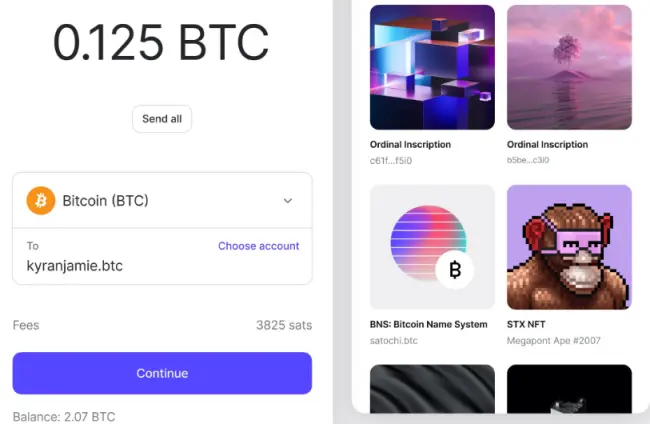
Yuga Labs (owner of CryptoPunks, BoredApe and Mutant Ape) has announced 300 Inscriptions on the Bitcoin blockchain. The collection will be called TwelveFold and will combine 3D art and manual activity. It will be the first project off the Ethereum blockchain.
CREATE INSCRIPTIONS
There are already several sites that allow you to create your own "Inscription" in a relatively simple way.
For example, you can use a third party service such as Gamma.io which allows you to upload images or texts that we want to transform into Inscriptions. We just need to visit the site, upload the image or text, pay the transaction costs on the Bitcoin network and the service fees. Later we will also have to indicate the address for receiving our Subscription.
The cost varies in relation to the speed with which we want to enter the next block and the space occupied by the Inscription.
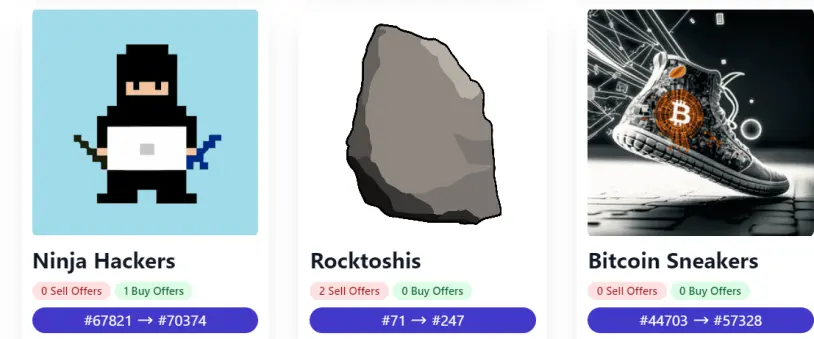
It is also possible to use Ord, a terminal software that involves downloading the Bitcoin Core full node, downloading the entire blockchain, installing the software and creating by following the guide from the site linked above. Since space in the block is limited it is as if it were going to auction. The more you offer in payment to the miners, the easier it is for your Inscription to end up inserted in the next block. When there are not many transactions, the cost will obviously be lower. When there is congestion, prices go up. Blocks containing Inscriptions tend to increase the size of the blockchain considerably. This creates two types of problems: on the one hand we will need larger disks in the future to have the complete copy of the blockchain, on the other hand we need more bandwidth to receive the new blocks. The demand for subscription space competes with that for normal Bitcoin transactions.
PROBLEMS
What should miners do? Surely if Bitcoin is decentralized and uncensored, no one should be bothered, unless it's something that could put the network at risk.
Beyond the usefulness or not, there are other problems such as the dissemination of violent content, in bad taste or material covered by copyright. In the past, however, illegal material was already circulating on the Bitcoin blockchain.
It is difficult to predict today whether this feature will have a future. Someone from the old Bitcoin guard has already hinted that they are open to a review of what blockchain enrollment allows. Others say they are more open, but this is not said to be possible forever. Some point out that flooding the Bitcoin network with images makes it more difficult and expensive to carry out transfer operations.
Adam Back: "We can't stop them, can we! Bitcoin is designed to resist censorship. But that doesn't stop us from commenting on the incredible waste and stupidity of encoding. Do something efficient, otherwise it will be another useful thing just to waste space"
Casey Rodarmor (originator of the Ordinals Theory): "For Bitcoin to be secure, the blocks must be full. Otherwise, no one would have reason to pay more than the minimum fee to include their transactions in a block"
I am for the free circulation of content, however the problem of the dissemination of illegal or violent content remains. Is it legit or not? I advise you not to try to speculate on Inscriptions because this trend is too new. It's difficult to determine if it will last or will disappear (these Inscriptions have no use and run at crazy prices!).
Are you interested in ways to earn crypto bonus? Check it out here: Some Sites To Earn Crypto Bonus (Old & New)






