
In this article we will see how smart money and whales deceive the market by forcing small players/retails to exit the market at a loss or in any case ahead of time. It should be taken into account that other parameters to consider are:
1) Volume analysis: They provide information on the strength of a price movement or the validity of a technical analysis. For example, an increase in volumes during a break of resistance or support can confirm the validity of the signal
2) Candlestick patterns: in addition to identifying gaps and breaking consolidation lines, the analysis of candlestick patterns such as engulfing patterns, dojis, hammers, shooting stars, etc., can provide further reversal or continuation signals of the trend
3) Cross-confirmations: Using multiple indicators or strategies in a complementary way can confirm trading signals. For example, a resistance break signal could be confirmed by an increase in volume and a bullish crossover on a trending indicator such as the moving average
MARKET MANIPULATIONS
To simplify things as much as possible, smart money trading follows this pattern:
1) Accumulation of assets
2) Pump
3) Re-accumulation
4) Pump
5) Distribution
6) Dumps
7) Redistribution
8) Dumps
The whales know that, due to their enormous capital, they cannot bring 10 million dollars to the market in a single transaction. Such large transactions would cause an immediate price pump or dump. This would signal to everyone that a large player has bought or sold the token. Their main goal is to go unnoticed while accumulating resources. To avoid getting caught, large whales use their capital to keep prices at certain levels. At the same time, they acquire a significant amount of tokens through numerous small transactions.
Let's quickly summarize the smart money actions:
Step 1: Buy at specific levels within the ranges
Step 2: Sell at higher levels to profit
WASH TRADING
In this case, a trader buys and sells the same asset at the same time, creating the illusion of high trading volume. This can artificially influence prices and generate false reports of trading activity.
PUMP AND DUMP
This strategy involves the massive purchase of an asset to increase its price ("pump"), generating interest from other traders. Once the price has risen sufficiently, manipulators quickly sell ("dump") their positions, causing prices to collapse and causing other traders to lose money.
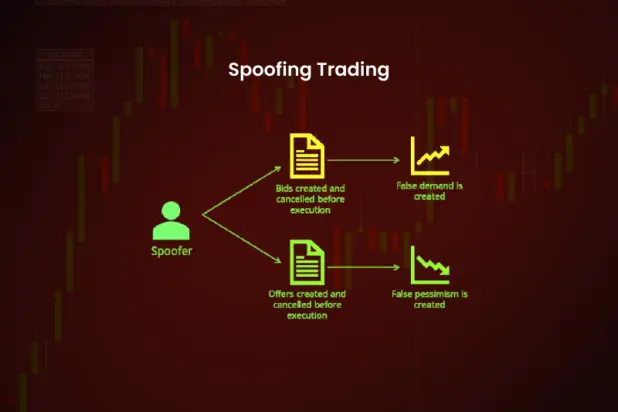
SPOOFING
With this technique, manipulators place large buy or sell orders with the intention of making it appear that there is strong interest in an asset. Once other traders react to these orders, the manipulators cancel or modify them, influencing prices to their advantage.
PAINTING THE TAPE
This practice involves making numerous small trades to create an illusion of high trading activity and interest in an asset. Even if trades are insignificant, they can influence market perception and lead other traders to make decisions based on distorted data.
BEAR RAID
Manipulators massively sell an asset short in order to cause the price to collapse. They then buy the stock back at lower prices, making a profit from the difference and hurting other traders.
FRONT RUNNING
This strategy involves buying or selling an asset before client orders (AMM) are executed in order to profit from the price impact.
FVG HANDLING (FAIR VALUE GAP)
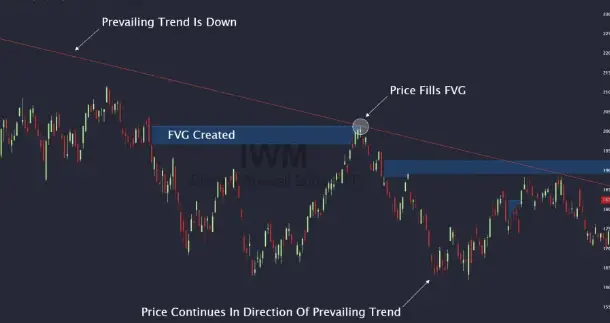
Fair Value Gaps are patterns that traders use to identify market imbalances and inefficiencies. FVG occur when buying or selling pressure causes significant price movements, creating gaps on price charts.
As time passes, the price tends to move towards the FVG close. This makes it a reliable support or resistance level. Remember that:
-The big player does not benefit when many people earn
-Smart money is always thinking about how they can fool traders
-After a pump, the price tends to move back. So that those who entered after the formation of FVG close their positions
-A short FVG acts as resistance, a long FVG acts as support
RANGE MANIPULATION
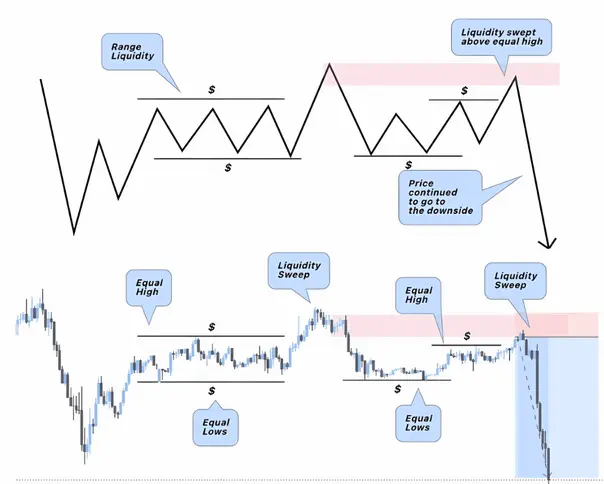
Artificially created situation. The goal is to reduce participation in the actual price movement by pushing the price in one direction, leading some traders to exit with losses. You must take into account that: Consolidation cannot last forever and that after 5-6 touches of the upper or lower lines, they are usually violated. However, when the price reaches a breaking point but then returns, it is considered manipulation.
Once manipulation has occurred, it establishes a solid support or resistance level that impacts the price reaction.
SPREADING FALSE RUMOURS
This practice involves spreading false or negative information (FUD) about an asset in order to influence market sentiments and drive down the price. Once the price has fallen to a desired level, manipulators can purchase the asset at cheap prices.
Are you interested in ways to earn crypto bonus? Check it out here: Some Sites To Earn Crypto Bonus (Old & New)






