
A few years ago, it was the turn of graphics cards (NVIDIA), and in recent months, RAM prices have skyrocketed. AI systems use huge amounts of DRAM and high-bandwidth memory (HBM), which requires much greater manufacturing capacity than traditional RAM. Rising prices are affecting not only high-performance data centers, but also computers and smartphones. Essentially, there's high demand, low supply, and prices are skyrocketing. While much production is shifting to AI-grade memory like HBM (reducing availability for PC), it's still not advisable to invest directly in RAM (as hardware) as technological progress can make it obsolete (replaced by new models within 3-4 years. DDR4 will move to DDR5, then DDR6). This is because AI suffers from a problem called a "memory wall": modern models are limited more by memory than by the CPU/GPU. GPU for AI computing are the hardware that retains the most value over time (NVIDIA RTX 4090, NVIDIA RTX 3090, NVIDIA A100 and NVIDIA H100) because they have a lot of VRAM and CUDA compatibility. In the coming years, the most important hardware change in the AI era after GPU will be the NPU (Neural Processing Unit), a processor for AI and machine learning that consumes much less power than GPU.
MAJOR COMPANIES AND STOCKS
The major companies are: NVIDIA (dominates the market for hardware, AI GPU and data center accelerators), AMD, INTEL and QUALCOMM.
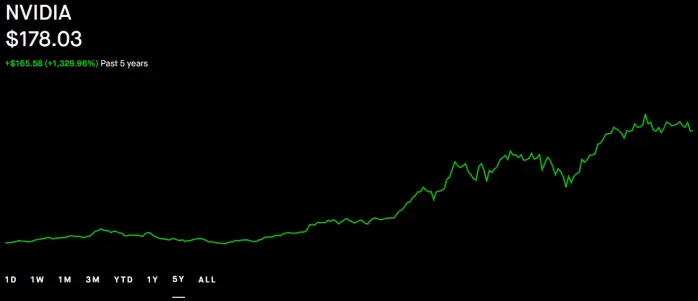
Aside from NVIDIA, which stocks should you monitor in terms of price?
1) Micron Technology (MU): Leading manufacturer of DRAM, NAND and HBM (high-bandwidth memory) used in AI servers.
2) SK Hynix: Also a RAM manufacturer, it sells to NVIDIA.
3) Samsung Electronics: Also supplies HBM for AI accelerators.
4) SanDisk (SNDK): Specializes in NAND Flash and storage for AI data centers.
4) Taiwan Semiconductor Manufacturing Company (TSMC): Develops AI chips and hardware.
5) AMD: CPU and GPU for AI and data centers.
6) QCOM: Develops AI accelerators, more focused on mobile.
7) CEVA: IP supplier for AI processors and edge processors.
- Major pure-play AI stocks: AMD, MU, QCOM.
- Minor semiconductor stocks: AVGO (AI chips), ADR/ASML, LAM.
- ETF (indexes) offering overall exposure: iShares Semiconductor ETF (SOXX), VanEck Vectors Semiconductor ETF (SMH) and Invesco PHLX Semiconductor ETF (SOXQ).
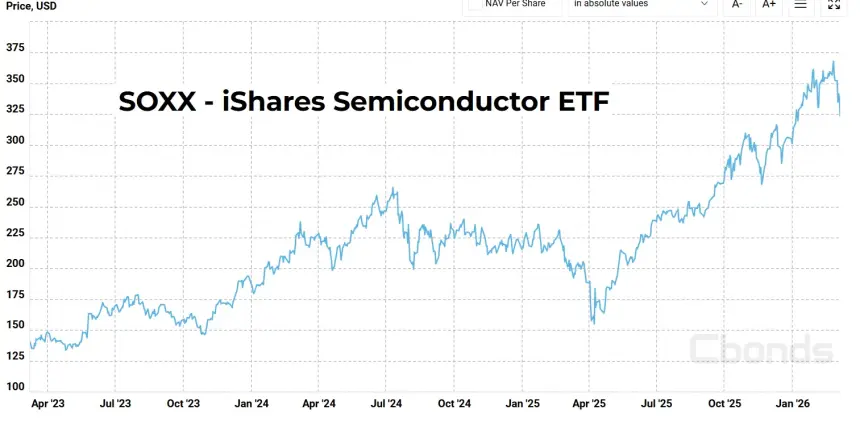
Sectors: TOPIX (silicon and semiconductor base materials suppliers), Qnity Electronics (materials, semiconductors, photoresists), BASF (semiconductor acids and solvents), HON (materials), TSE (photoresists, CMP suspensions and chip materials).
Hardware components to monitor for future exposure:
- SSD and NAND Flash (storage).
- AI GPU: NVIDIA, AMD.
- Network chips, ASIC and FPGA.
- Server accelerators and CPU (with the increase in AI workloads, server processors and dedicated accelerators such as TPU and IPU may increase in price).
- IoT microcontrollers and sensors.
Remember that semiconductors always depend on supply, demand and therefore production costs. If you want to buy some stocks on chain: Wall Street on DeFi? The Complete Guide to xStocks and How to Farm Points (No KYC)
Obviously, this isn't financial advice. It's just my vision. The future will be dominated by Bitcoin, Web3 and AI. DYOR.
Are you interested in ways to earn crypto bonus? Check it out here: Some Sites To Earn Crypto Bonus (Old & New)






