
The mystery surrounding Bitcoin founder Satoshi Nakamoto will probably remain unsolved forever. In this article I will report some candidates, analyzing writing style, computer code, theoretical ideas and time zone of writing.
As already said, the person who invented the Bitcoin protocol has never been identified and disappeared from the Internet (BitcoinTalk) in 2011. Furthermore, the BTC mined and present in his addresses have never moved from there (over 1 million BTC). It cannot be ruled out that it could be someone deceased.
HAL FINNEY
Hal Finney received the first transaction from Nakamoto's address, if it is true that for "testing" anyone would have used his same address, on the other hand it would not have been a smart move to send to an address of known identity. Finney's writing style is different from Satoshi's (comparing his papers with the Bitcoin whitepaper), it should be noted that Finney suffered from ALS and died when Satoshi disappeared from the Internet and the Bitcoin protocol. However, some evidence shows that the 2 had been exchanging messages for years (unlikely they were artificially created to simulate 2 different identities for many years).
NICK SZABO
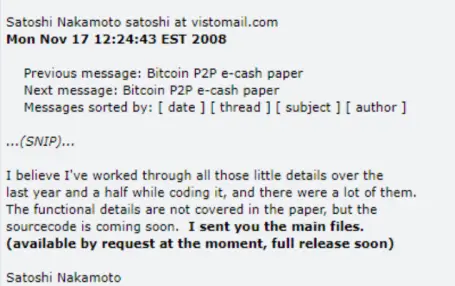
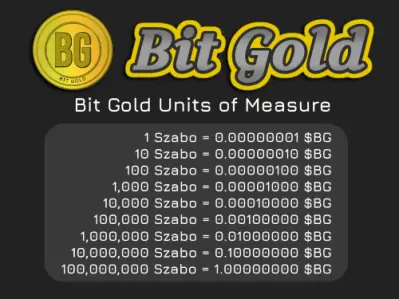
Nick Szabo's key ideas and concepts, as well as his writing style, are very similar to Satoshi Nakamoto's. He is the most suspect candidate, also because even though he denied it, he always did it evasively. There is no evidence (emails or demonstrable activity) despite his 1998 Bit gold protocol, which anticipates many concepts later developed with Bitcoin: trustless, decentralization, proof of work (or a very similar concept), timestamp server and electronic cash. He also coined the term "smart contract" (later developed on Ethereum). Stylometric analysis shows a strong resemblance to Nakamoto (although the latter seems to have a mainly British English style, Szabo's American style is also present in many emails, perhaps changing the way of writing several times was a deliberate choice). The Bitcoin whitepaper is similar to Szabo's writings in logic, numbered definitions, theoretical examples and legal structures. The style is very similar but not 100% identical. Apparently he did not participate in the early years of Bitcoin development.
ADAM BACK
Adam Back was the Inventor of Hashcash (PoW system mentioned in the whitepaper) and an expert in privacy and many cypherpunk concepts. He communicated with Satoshi in the early days and his name "Adam Back" is mentioned by Satoshi in the whitepaper. It is unlikely that he quoted himself but it is not excluded that he could have been part of the team. The coding and writing style is different, however.
WEN DAI, LEN SASSAMAN AND PAUL LE ROUX
Others absolutely worth mentioning are Wen Dai mentioned in the whitepaper, inventor of the B-money protocol but similar in style, ideas and theory. However, he was not involved in the code. Len Sassaman, an expert in cryptography, died more or less when Satoshi disappeared. Finally, a speculative hypothesis is on Paul Le Roux, a criminal expert in cryptography and anonymous networks. However, there is no linguistic evidence for the comparison.
TEAM HYPOTHESIS
A team formed by Szabo (theoretician and creator of the whitepaper), Finney (developer and initial tester) and Back (expert in communications and Proof Of Work) cannot be ruled out. This would explain 3 key concepts of Bitcoin: computer code, decentralized system and economy. Satoshi's posts and replies suggest times compatible with the British or East Coast time zone. Some periods of intense activity coincide with US holidays, compatible with Szabo and Finney (little activity appears on Saturday evenings and Sundays). The person who wrote on BitcoinTalk (obviously using TOR, VPN and anonymous Gateways) concentrated most of the posts between 09:00 and 18:00 UTC, with "pauses" between midnight and 08:00 UTC. Real analyses show a very similar pattern, compatible with the US-Eastern (or UK) time zone.
 It is curious that the creators had adopted all these anonymity precautions (since they could not have known that Bitcoin would then become what it is today) but it should be remembered that the founders of E-gold (2007), Liberty Reserve (2006-2013) and DigiCash (90s) ended up indicted. Those who designed "digital money" against the system knew they risked seizures and criminal proceedings, this can explain all these precautions in trying not to leave traces. In October 2008, the whitepaper was published, shortly after Szabo had republished his post about Bit gold. In January 2009, the first block (Genesis Block) was mined. Apparently, the code does not seem to be written by a pure academic (like Szabo), but rather by a developer used to building pragmatic software (Finney is the perfect candidate for the technical part of the initial client).
Are you interested in ways to earn crypto bonus? Check it out here: Some Sites To Earn Crypto Bonus (Old & New)





