
Bancor Network is an AMM that protects deposits and therefore liquidity providers from Impermanent Loss. What is impermanent loss?
When you deposit liquidity into a pool you will always have Impermament Loss, if you don't use Stablecoin.
We see examples:
Pool 1 -> USDC 50% / USDT 50% No Impermanent Loss (you would have Impermanent Loss, if USDC or USDT loses the peg with USD dollar!)
Pool 2 -> USDC 50% / ETH 50% Impermanent Loss
Pool 3 -> BTC 50% / ETH 50% Impermanent Loss
Pool 4 (Balancer / Beethoven X) -> BTC 30% / ETH 70% Impermanent Loss
In the first pool the two assets will always be balanced because the two stables do not vary in price (if I deposit 1000 $ USDC = 1000 $ USDT). In other cases, we will always have Impermanent Loss because one of the two tokens varies in price. If I deposit 1000 $ (1000 USDC) and 1000 $ of ETH, in a time "t1" (next) ETH will increase or decrease in price -> Impermanent Loss
The pool will no longer be balanced because I will have $ 1000 (USDC 1000) + ETH in a variable dollar amount (if it decreases or increases from the initial deposit).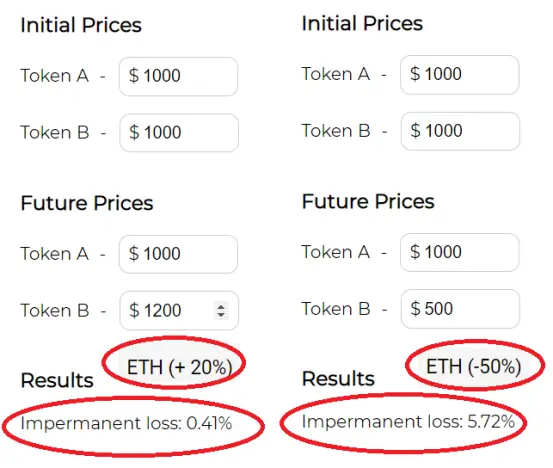
It doesn't matter if ETH goes up or down, you always have impermanent loss depending on the variation: the greater the variation, the greater the impermanent loss! Obviously it would be preferable for ETH to increase in price because the dollar value you have deposited increases!
Impermanent Loss is therefore the price difference between my liquidity pool and the same tokens contained in the wallet without adding them to the pool. Impermanent Loss is always temporary, until I withdraw. If ETH rises to $ 1100 I have Impermanent Loss but if it returns to $ 1000, it is canceled (I had deposited 1000 USDC + 1000 $ ETH).
What do I earn from these pools? The sum of these parameters:
1) POSITIVE: trade fee on the platform
2) POSITIVE: farming (usually I earn the platform token)
3) POSITIVE OR NEGATIVE: based on the volatility of the token I deposited (whether ETH goes up or down)
4) NEGATIVE: Impermanent Loss
Bancor Network is known for "repaying" Impermanent Loss and transferring its risk to its own protocol. The protocol uses the commissions earned to compensate for the loss of users. Basically I provide liquidity (only one token) which is coupled with BNT (Bancor Network token). While some pools may have high Impermanent Loss and low commissions, others may have low Impermanent Loss and high commissions. If there are not enough commissions to fully offset an LP's Impermanent Loss at the time of withdrawal, the protocol coins BNT to cover the delta (the difference).
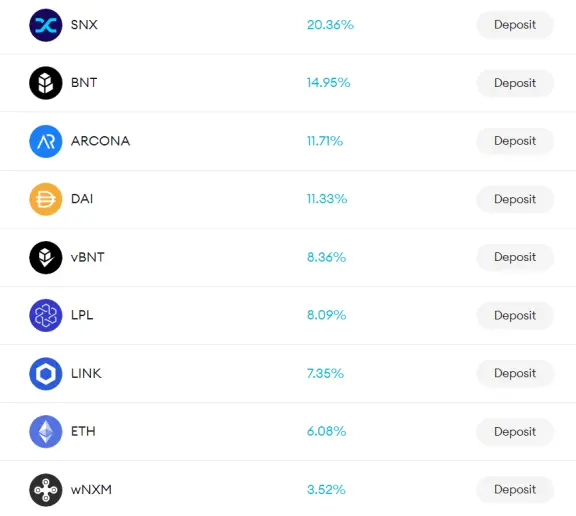
When a user makes a new deposit, the coverage offered by their insurance policy increases at a rate of 1% each day and accrues to full coverage after 100 days. After this period, any temporary losses occurring in the first 100 days or at any time thereafter are covered by the protocol at the time of withdrawal. Withdrawals before the 100-day expiration are only eligible with partial compensation. For example, withdrawals after 55 days receive 55% compensation on any temporary loss suffered. There is no compensation for withdrawals within the first 30 days (the LP would be subject to the same Impermanent Loss it would have in a standard AMM).
For example, if an LP deposits 1 ETH and the price of ETH doubles, the LP can still withdraw the equivalent value of 1 ETH, plus commissions and rewards (this is possible because we receive the BNT token which offsets the Impermanent Loss).
What is the death spiral in Bancor Network?
1) Many withdrawals -> Little liquidity
2) Unbalanced pools -> Lots of impermanent loss
3) Bancor must repay with the BNT token
4) BNT is sold and falls in price
5) Impermanent loss from pools increases more and more because BNT falls in price
6) Many withdrawals, little liquidity (bank run), a lot of impermanent loss, a lot of BNT issuance, BNT goes down more and more in price, impermanent loss always increases (because all pools are of the type ETH / BNT, USDC / BNT, USDT / BNT, WBTC / BNT, etc)
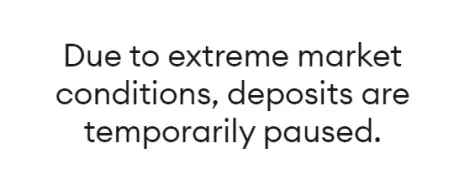
Due to "hostile" market conditions, Bancor has suspended the protection against temporary losses and deposits on the platform. It was probably the two protocols Celsius and Three Arrows Capital that caused this situation, as it seems that they used Bancor and would have withdrawn all their liquidity.
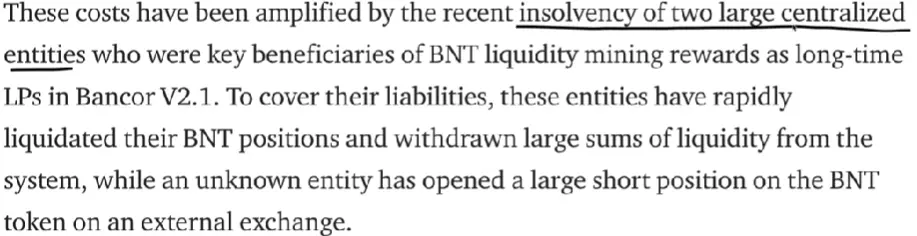
In the meantime, shorts were also opened on the BNT token on the FTX exchange. Short means, in simple terms, to earn on the discounts of the BNT token. Probably this action was carried out by a large entity that withdrew liquidity from Bancor, obtained the BNT tokens (as protection from the Impermanent Loss), opened the short and then also sold them spots for ETH. In a nutshell, BNT tokens repaid their losses, the short also allowed them to make further gains. The BNT token obviously collapsed (-49%) within 1 day!
Are you interested in ways to earn crypto bonus? Check it out here: Some Sites To Earn Crypto Bonus (Old & New)





