
If you've been unlucky in the FTX bank run, you've probably heard of Proof Of Reserves. Are exchanges safe? Where can you check cold wallets? Is Proof Of Reserves Enough? You should consider that the definitive proof is that of solvency which is given by the balance between reserves and liabilities. You remember that all these scams or failures (FTX, Celsius, Voyager, BlockFi, Hodlnaut, 3AC, AAX, etc) have nothing to do with crypto. Centralized exchanges and lenders are similar to banks. If you rely on banks you are simply centralizing this world. BTC was born to be decentralized and secure. It was born to guarantee payment without censorship and without an entity behind that manages and censors your transactions. If you are holding on an exchange you are using a bank! However exchanges compared to P2P services are cheaper to use so they need to be reliable. If you want more privacy you can use the P2P platform, but if you want to pay less commissions (giving up privacy) you have to rely on an exchange!
PROOF OF RESERVES
Proof Of Reserves is an audit concerning the liquidity available to a centralized exchange. DeFi dexes don't need to because they are non-custodial, even though the platforms are audited from a smart contract perspective. This quantity, reviewed by third parties, should cover an amount equal (or greater) to the funds deposited by customers on the exchange (Proof Of Reserve and cold wallet). Each asset should be covered 1:1, this is to ensure 100% withdrawal of user funds at any time 24/7. This reserve should prevent a liquidity crisis in a "bank run" scenario, should all users want to withdraw. Proof Of Reserve has value if it is a third party audit. Exchanges can, in turn, periodically publish audit results and allow customers to track their reserves in real time. At some point in time an auditor creates a snapshot (Merkle Tree) of all the funds of the company in question which should allow 100% withdrawals at any moment. The Merkle tree aggregates total customer funds deposited on the exchange, without exposing private data. This allows customers to be sure that the exchange they are trusting their assets to has no liquidity gap.
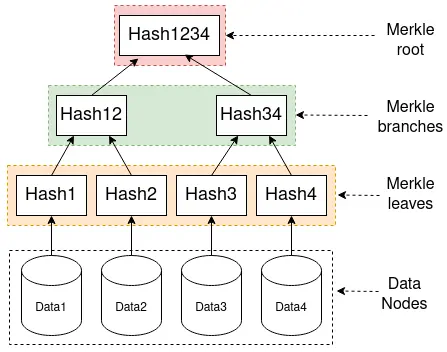
This Merkle auditor, in turn, consists of a tamper-proof fingerprint, which auditors can access to verify fund information. A possible limit is represented by the impossibility of guaranteeing variable accounting over time. That is, it is possible to verify the on-chain assets of the custodian, but not the origin of the same, which could also have been borrowed precisely to perform the Proof Of Reserve (and then be returned to the real owner. Clearly every on-chain operation is public so large movements would still be noticed). From this point of view, the (few) Proof Of Reserves that were in fashion until a few months ago seem a bit ridiculous, given that they dated back to 4-5 months earlier.
Another limit can be represented by the nature of these reserves, i.e. if they are real reserves, deriving from the sale of something else, if they are volatile cryptocurrencies (BTC, ETH, etc) or if they are stablecoins. The high limit is whether they are liquid (immediately available) or illiquid (staking, vesting, etc.) reserves. Illiquid companies should not count as a balance sheet. Obviously, having a legit Proof Of Reserve and public cold wallets does not mean that an exchange is 100% safe. It depends on how the funds are managed.
Here instead the Proof Of Reserves:
Here you can find the monitored cold wallets:
PROOF OF LIABILITIES
Proof Of Liabilities demonstrates that the exchange owes no more than a certain amount of assets (it is the sum of the liabilities of all customers). If the exchange owes 70,000 BTC and you have 71,000, you are solvent. The problem with this proof is that it does not prove that the exchange has real ownership of those funds or control of the private keys.
PROOF OF SOLVENCY
Proof Of Solvency is the final step that an exchange should guarantee: having funds greater than its debt and proving ownership. In short, it incorporates both the reserve test and the passivity test. That is, the amount held in custody must be greater than the liabilities. It is implemented through:
-a Merkle tree for the liability report ready to be tested
-Real-time auditing and verification mechanisms of reserves and liabilities
-Proof of ownership on the keys of the wallets where the funds are held
-Mechanisms to ensure customer privacy and show evidence of reservations and liabilities
Are you still using exchanges? Or are you only trading on decentralized exchanges (DeFi)?
Are you interested in ways to earn crypto bonus? Check it out here: Some Sites To Earn Crypto Bonus (Old & New)






