
You are reading an excerpt from our free but shortened abridged report! While still packed with incredible research and data, for just $40/month you can upgrade to our FULL library of 60+ reports (including this one) and complete industry-leading analysis on the top crypto assets.

Becoming a Premium member means enjoying all the perks of a Basic membership PLUS:
- Full-length CORE Reports: More technical, in-depth research, actionable insights, and potential market alpha for serious crypto users
- Early access to future CORE ratings: Being early is sometimes just as important as being right!
- Premium Member CORE+ Reports: Coverage on the top issues pertaining to crypto users like bridge security, layer two solutions, DeFi plays, and more
- CORE report Audio playback: Don’t want to read? No problem! Listen on the go.
Bitcoin
Bitcoin’s price has been in a downtrend since ~June, primarily driven by “higher for longer” interest rates and, more recently, increased sell pressure from the U.S. and German governments mass-selling previously seized BTC. Because of these factors, BTC was trading below most bull market trend lines, including the 200-day SMA, until the recent rally in July. As can be seen below, CryptoEQ's "Strong Buy Signal" marked another tremendous buying opportunity and local price bottom.
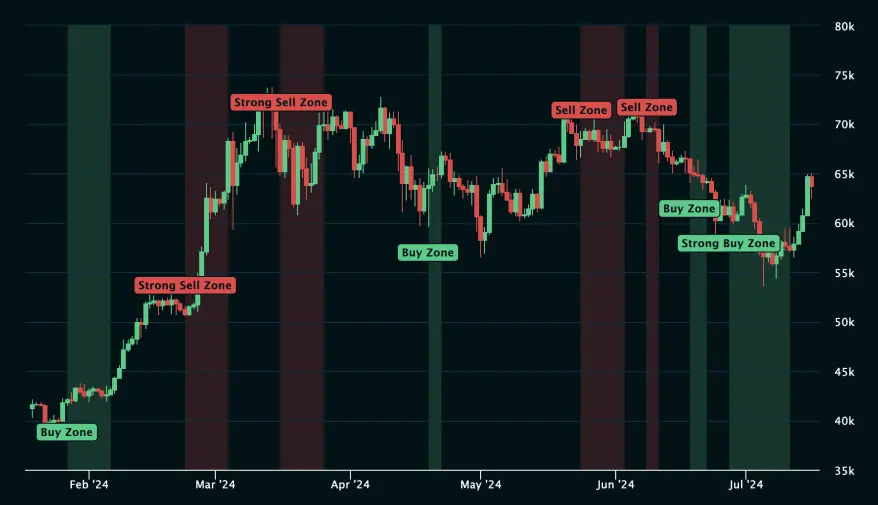
With the halving now firmly behind us and the price dipping, miners are feeling the pressure. Lower BTC price + fewer daily BTC mined = less revenue for miners. This leads to miners selling the BTC they have just to stay afloat, and, once those run out, many go out of business or get acquired.

Historically, Bitcoin prices surge in anticipation of halvings, fueled by miner hoarding which delays the long-term benefits of reduced supply. This pattern, often referred to as the "post-halving hangover," sees prices recalibrate as excess inventory is gradually sold off. The current scenario, exacerbated by the significant release of Mt. Gox Bitcoin, amplifies this effect, yet market mechanisms should eventually correct for the surplus through price adjustments.

Supporting this outlook is the behavior of Bitcoin ETFs, which have continued to increase their holdings, albeit at a much smaller clip than ~two months ago. This institutional accumulation underscores a sustained investor interest in Bitcoin, reinforcing a long-term bullish perspective despite short-term supply shocks.

Macro Charts
Everyone is looking for rate cuts in the U.S. later this year. It looks like the U.S. won’t be the only country to do so.

Unemployment is slightly rising, inching closer to ~4%, while inflation is declining (second chart). These, in tandem, will give the Fed the justification it needs to cut rates.


Risk assets, especially crypto, do well when global liquidity is rising rather than contracting. M2 is a measure of money supply that includes M1 (cash outside banks and checking account deposits) along with savings accounts, money market accounts, retail mutual funds, etc. Historically, changes in the global M2 money supply, which covers cash in circulation, deposit currency, and household savings, have been a reliable predictor for crypto market trends.
Increased global liquidity, as indicated by a rising M2, typically leads to higher investment in crypto, driving up market caps. However, since October 2023, while the year-on-year change in Global M2 has been declining, the crypto market has continued to grow, largely due to the excitement around crypto ETFs. This divergence raises questions about the sustainability of current crypto prices and whether they are overly optimistic in expecting new investments without the necessary liquidity support.

Ethereum
Following the success of Bitcoin ETFs, the approval and anticipated launch of Ethereum ETFs are set to reshape investment strategies and market dynamics. This summary delves into the key themes and takeaways from the recent report on Ethereum ETFs, highlighting the expected market impact, investor sentiment, and comparative analysis with Bitcoin ETFs.
The approval of spot-based Ethereum ETPs by the Securities and Exchange Commission (SEC) has generated considerable excitement. Initially, market analysts were skeptical about the SEC's approval due to regulatory uncertainties surrounding Ethereum. However, the approval of all 19b-4 filings on May 23, 2024, paved the way for the launch of Ethereum ETFs, expected to commence trading in July 2024.
Nine issuers are competing to launch ten Ethereum spot ETFs in the United States. Based on the performance of Bitcoin ETFs, Ethereum ETFs are projected to attract substantial net inflows. The report estimates that Ethereum ETFs will see net inflows of approximately $1 billion per month over the first five months, translating to about 30% of Bitcoin ETF net flows.
Market Dynamics and Investor Behavior
The introduction of Bitcoin ETFs provided a valuable reference point for predicting the market reception of Ethereum ETFs. Bitcoin ETFs have garnered over $15 billion in net inflows since their launch in January 2024. This success underscores the strong demand for cryptocurrency investment products among independent investment advisors and those affiliated with banks or broker-dealers.
Ethereum, however, presents a unique case. Its supply dynamics, with a significant portion locked in staking, bridges, and smart contracts, make it more price-sensitive to ETF inflows compared to Bitcoin. As of June 15, 2024, the total supply of Bitcoin held by ETFs amounted to 4.4%, driving notable price appreciation. Similar inflows into Ethereum ETFs are expected to have a pronounced impact on ETH prices due to the relatively lower supply available on centralized exchanges.
Challenges and Market Considerations
Despite the optimistic projections, several factors could influence the actual inflows into Ethereum ETFs. One critical aspect is the opportunity cost associated with non-staked ETH. Ethereum staking rewards, which provide inflationary rewards, priority fees, and MEV revenue to validators, are not available to non-staked ETH holders. This could make spot Ethereum ETFs less attractive to potential buyers compared to other investment products offering staking yields.
Additionally, the potential conversion of the Grayscale Ethereum Trust (ETHE) into an ETF could lead to significant outflows, similar to the experience with the Grayscale Bitcoin Trust (GBTC). This conversion may exert downward pressure on Ethereum prices in the short term.
Institutional and Retail Demand
The demand for Bitcoin ETFs has been predominantly retail-driven, with institutional interest gradually picking up. A similar trend is anticipated for Ethereum ETFs. While the largest wealth management platforms have yet to fully embrace Bitcoin ETFs, there is potential for significant inflows once these platforms begin offering Ethereum ETFs to their clients.
Institutional buyers, including banks, hedge funds, and pension funds, have shown increasing interest in Bitcoin ETFs, and a similar pattern is expected for Ethereum. The adoption of Ethereum ETFs by institutional investors could serve as a catalyst for broader market acceptance and increased investment in Ethereum.
Stablecoins
Blockchain technology's utility is evident in the rise of stablecoins, which have seen their market cap soar to $160 billion over the past decade, making them the third-largest segment in the crypto market after Bitcoin and Ethereum. Their primary value lies in providing a seamless means of transferring globally desirable assets, with tokenized USD exemplifying this function. Recent developments highlight the increasing mainstream acceptance of stablecoins. Circle's achievement in securing an Electronic Money Institution license marks it as the first MiCA-compliant stablecoin issuer, while Tether's new payment option in the Philippines allows 115 million citizens to pay their Social Security contributions with USDT. Additionally, new entrants like Ethena's USDe (new article here) continue to innovate in the space with its unique quasi-decentralized, delta-neutral stabilization technique. Despite their impressive growth, stablecoins still represent just 0.76% of the M2 money supply, indicating significant room for expansion.





